
Plan around a reader’s local season and question. Use trend data as a signal, then publish early enough to be useful without assuming that a calendar guarantees demand.
A seasonal article has a timing problem: it must help readers before or during the moment they are planning for. But “publish this in October” is not a useful rule by itself. The right window depends on the country, the product, the search phrase, the audience, and the time needed to prepare a clear and accurate story.
Seasonality is a planning hypothesis. A weather shift, gift-giving period, wedding calendar, travel period, or annual routine reset can suggest an angle. None proves that readers in a specific market are searching for it, that an article will rank, or that an affiliate offer will convert. The job is to verify what is observable, choose a useful reader question, and set a publication date with enough lead time.
Build the calendar from local evidence
Start with the market and the query, not a global calendar copied into a spreadsheet. A northern-hemisphere winter article may be out of season for readers in Brazil or Australia; even within one hemisphere, climate, school breaks, religious observances, and retail schedules vary.
Google Trends can help compare interest over time and across locations, but its numbers are normalized relative-interest values, not absolute search counts. Google notes that regions with similar Trends scores may still have different total search volumes. Use the tool to ask whether interest appears to rise, fall, or recur for the selected term and market. Pair it with local keyword research, your own permitted analytics, and a fluent review of the phrase readers actually use. (Google Trends: FAQ about Trends data)
Treat each angle as a hypothesis until evidence supports planning around it:
| Local moment to investigate | Reader question | Evidence to gather | Possible editorial angle |
|---|---|---|---|
| Colder or drier part of the year | What changes in my routine when the weather changes? | Multi-year local search interest, relevant climate context, and product information | How to compare moisturizers or adapt a routine without promising a result |
| Local gift-giving period | What is a useful gift within this budget or for this recipient? | Local retail calendar, prior-period interest, current price and availability | A comparison guide with transparent criteria and clear affiliate disclosure |
| Wedding, graduation, or other event season | What can I prepare ahead of the event? | Regional event timing and local search language | A realistic planning timeline, with no guaranteed appearance outcome |
| High-travel or warm-weather period | What should I pack or check before a trip? | Local travel calendar, destination context, product labeling | A practical packing or routine checklist based on documented product use |
| Annual routine reset or seasonal transition | Which habit or product choice should I revisit? | Search interest, reader questions, and the limits of the product evidence | A decision guide that distinguishes routine advice from product claims |
The rows are prompts, not predictions. If local evidence does not support an angle, leave it out or choose a question with clearer reader value.
Read trend curves without turning them into sales forecasts
Google Trends samples and normalizes searches to make comparisons within a selected time and location. It does not provide an absolute search-volume count. A rising curve is a clue that interest may be changing; it does not tell you how many people will read an article, click an affiliate link, or generate a credited order. (Google Trends: FAQ about Trends data)
Before building a seasonal cluster, record:
- the exact keyword or topic and its local-language variations;
- the market and date range selected in the tool;
- whether the pattern repeats across more than one year;
- related reader questions and the evidence behind them;
- the article’s purpose and the outcome you can actually observe;
- what remains uncertain, such as absolute demand or conversion.
For example, an editor might compare several years of local interest for a phrase about winter skincare. If the curve tends to rise before the colder period, that can support a plan to draft earlier. Record the actual query and region used; do not copy a generic curve from another country. Search data can guide the timing of a useful article, but it cannot promise a top result. Google says it does not guarantee that a page will be crawled, indexed, or served, even when the page follows Search Essentials. Its guidance emphasizes helpful, reliable content for people. (Google Search Central: How Search Works; Creating Helpful, Reliable, People-First Content)
Schedule backward from the reader’s moment
Once the seasonal window is supported by evidence, work backward. Allow time for research, source review, writing, images, editing, and the platform’s publication process. The crawl and indexing timing for an individual page is not a fixed number of days, so do not build a schedule around an invented universal SEO delay. Google does not guarantee that a page will be crawled, indexed, or served. (Google Search Central: How Google Search Works)
An illustrative process might look like this:
- Choose a local reader question. Confirm the language, market, and timing that the article will address.
- Check the evidence and offer. Verify current product details, availability, prices, and applicable affiliate terms before drafting recommendations.
- Write the evergreen explanation first. Build the reusable comparison criteria, routine context, or label-reading advice that remains helpful after the season changes.
- Add a time-specific layer. Include only the seasonal context that helps answer the reader’s question.
- Publish before the planning window closes. Set the lead time from observed interest and your production needs, not from a rule copied from another market.
- Review after the period. Record available story views, reads, referrals, and engagement; compare like with like and avoid claiming cause from a simple before-and-after change.
For a hypothetical winter-care article, an editor could begin research during the warmer months, verify whether local interest begins rising before winter, and schedule the draft and source checks ahead of that rise. The months and the search curve are intentionally left to the chosen market; no result is assumed in advance.
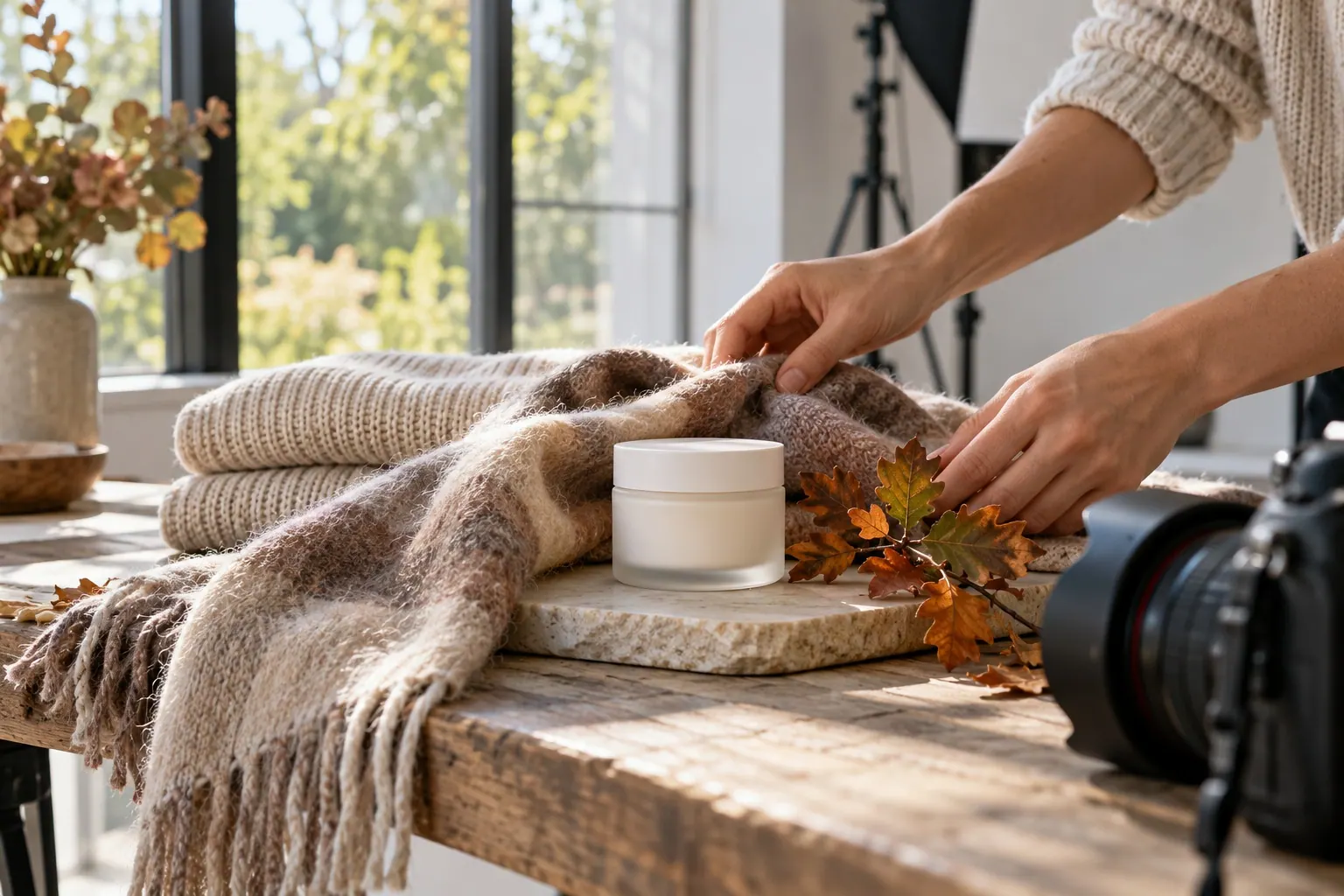
Keep evergreen value and seasonal timing together
An evergreen guide can explain how to compare ingredients, read a label, or choose a routine based on a reader’s documented needs. A seasonal article can answer a timely question and link readers to that deeper explanation where the platform and the author’s publishing setup allow it.
The relationship is useful even when an article’s readership rises and falls. Evergreen pieces still need fact checks and updates; seasonal pieces may be refreshed when the next cycle approaches. Neither format guarantees traffic or earnings. Decide whether to update, republish, or retire an article using its relevance, accuracy, and available performance evidence.
If you publish affiliate content through NutriProfits, review the current terms before planning search targeting. Its terms currently restrict advertising and search-engine positioning of partner websites using keywords containing product names. That restriction can affect a product-name long-tail strategy; verify the current agreement and the rules of each publishing or advertising channel before making a keyword plan. (NutriProfits Terms of Use)
Claims do not become safer because the season is timely
Seasonal context can make an implied promise stronger. A “summer skin reset” may suggest more than a routine checklist, and a winter article may imply a treatment result if its wording is careless. Review the net message and evidence for the exact product and market before making a health or appearance claim.
For the United States, FTC guidance says health-related advertising claims need substantiation appropriate to the product and claim. FDA explains that a product’s intended use and marketing claims can affect whether a product is treated as a cosmetic, a drug, or both. Sunscreen products have their own U.S. drug labeling and testing requirements. These are U.S. examples; rules and product categories vary elsewhere. (FTC Health Products Compliance Guidance; FDA: Is It a Cosmetic, a Drug, or Both?; FDA: Sunscreen Drug Products)
Avoid claims that promise a specific result or timeline unless the exact claim is properly supported and allowed in the relevant market. If you cannot verify the statement, use a narrower description of the routine or remove the claim.
When an article includes an affiliate link, disclose the financial relationship clearly near the recommendation or link. FTC guidance for the United States says a disclosure should be clear and conspicuous, and closer to the recommendation is better. Check local rules for other markets. (FTC Endorsement Guides: What People Are Asking)

A short planning check
- Which market, language, product version, and reader question does this article address?
- What evidence supports the seasonal window, and is it local and multi-year where possible?
- Am I reading relative search interest as a signal instead of an absolute volume or sales forecast?
- Can I finish research, claims review, images, and editing before the relevant planning period?
- Does the headline use words that a reader might search for while accurately describing the article?
- Do affiliate terms allow the planned keyword and promotion method?
- Are claims and disclosures clear for the product and audience?
- What will I measure after publication, and what can that measure not establish?
A calendar is useful when it helps you answer a reader’s question at the right time. Choose the market, verify the signal, work backward from the production date, and let the evidence decide whether the seasonal angle belongs in the publishing plan.