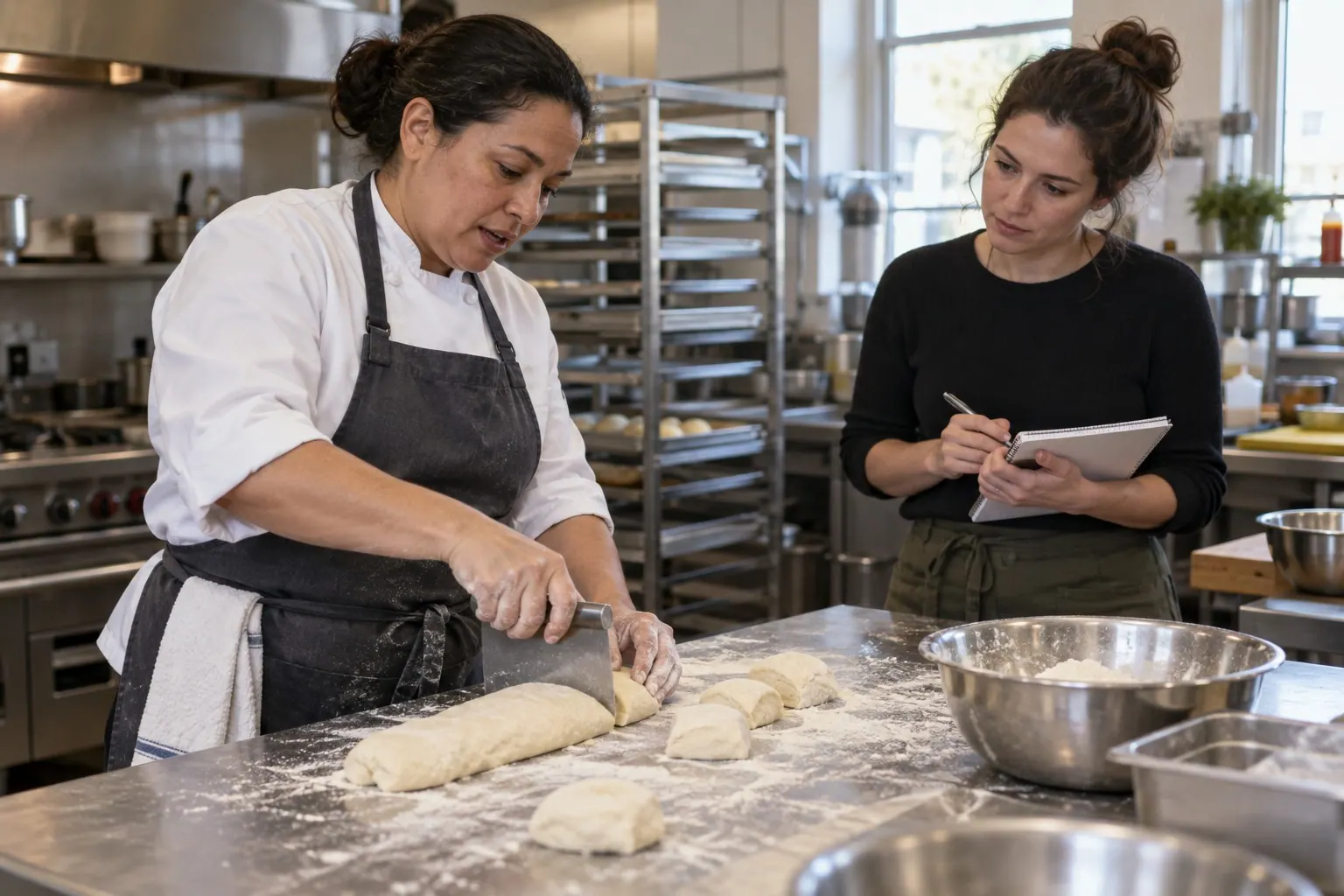
Ask an experienced professional how they complete a familiar task and they may say, “I just know what to look for.” Then give them a real example to review and they can explain what stands out, which choices they considered, and what they would do next. The work is visible before the method is written down.
That gap is where course development should begin. An operator can help an expert surface and organize their knowledge, but cannot manufacture the underlying expertise. The goal is to turn demonstrated practice into a sequence learners can follow, with the expert checking accuracy throughout the process.
Gather the material that already exists
Before scheduling a course outline session, collect examples of the expert’s teaching and work: workshop recordings, public lessons, procedures, checklists, repeated learner questions, and cases the expert is permitted to discuss. Ask which materials still reflect current practice and which are outdated.
Treat questions and audience comments as clues to investigate, not proof that a paid course will sell. If a learner question appears often, ask what situation sits behind it and whether the proposed product can help. Keep a note of the source and context rather than turning a comment into a claim about the whole market.
Ask about specific cases
General prompts such as “What should the course teach?” can lead to broad topic lists. Ask the expert to walk through an actual task or a case they are authorized to discuss:
- What was the situation when the work began?
- What information did you look for first?
- Which options did you consider, and why?
- What changed your decision?
- What mistakes or risks did you watch for?
- What would make you pause, refer the work, or decline it?
- What did the client or learner need to do after your work?
Use more than one example when possible. Differences between cases often reveal where a rule applies, where judgment matters, and what exceptions should be explained. If a case includes confidential information, remove identifying details or obtain appropriate permission before using it in teaching material.
Surface the decisions, not only the steps
A checklist can show sequence while hiding judgment. For each action, ask what the expert needs to notice, what choices are available, and what conditions would change the next step. Record the expert’s language closely enough that they can recognize their own reasoning in the draft.
The operator can prepare a provisional outline from the interview, but should mark uncertainty instead of filling gaps with generic advice. Return those questions to the expert. The expert then corrects the interpretation, supplies missing context, and decides what belongs within the method’s scope.

Collect examples and boundaries
Learners need more than definitions. Gather examples that show a method in use: a completed worksheet, a demonstration, a before-and-after draft, a decision the expert revised, or an anonymized case with permission. Ask what the example does and does not demonstrate.
Record boundaries with the same care as success examples. When should a beginner seek feedback? Which conditions are outside the expert’s service or qualifications? What result cannot be guaranteed? These answers help make a course description responsible and keep the material useful to learners whose circumstances differ from the example.
Define what a learner will practice
Write learning objectives in concrete terms. Prefer “compare two options using these criteria” or “prepare a first draft using this sequence” over “master the topic.” The objective should describe a skill the course can teach and the learner can practice.
Then place objectives in a sensible order. What does a learner need to understand before attempting the next task? Which ideas can be taught together? Where does feedback become necessary? If a course requires prerequisites, name them before purchase rather than hiding them in the first lesson.
Begin with what the learner already knows, then show the new idea in a demonstration they can examine. Guided practice gives them a place to make mistakes with support before attempting the task independently. Their work then tells the expert what to clarify or teach next. The pace and support should follow the learner’s needs; a neat lesson sequence cannot guarantee a common outcome or timetable.
Build lessons from the map
For each lesson, identify one purpose, the expert’s explanation, a relevant example, and an activity or reflection that lets the learner use the idea. Keep supporting material close to the lesson where it is needed. A worksheet should have instructions and an explanation of how the learner can assess their work.
The expert reviews the outline and the final lesson content for subject accuracy, omissions, and scope. The operator can make the sequence easier to navigate, edit for clarity, and check links or access. The expert remains the authority on whether the instruction represents their method.

Test the learning path before expanding it
Give a draft lesson or small workshop to a limited group of intended learners. Ask them to complete the exercise and note where they hesitate, misinterpret an instruction, or need information the lesson does not provide. Ask the expert whether the work reflects the method and what feedback they would give.
Use observations carefully. A learner’s confusion can point to an unclear explanation, an unaddressed prerequisite, or an activity that needs context. It does not automatically mean the entire curriculum is wrong. Revise the material, then test the relevant part again.
Keep learner data and case material private. Get consent before collecting feedback for public use, and do not turn a learner’s private result into a testimonial without explicit permission and accurate context.
Map the curriculum to the delivery platform
Once the learning sequence is clear, choose how to deliver it. Systeme.io currently describes course hosting with lessons and downloadable materials, as well as drip scheduling among its platform features. Confirm current plan limits, supported formats, and account settings before promising a particular delivery experience. (Systeme.io features)
A platform can organize modules, access, and release timing. It cannot decide whether a lesson is accurate or whether a learner’s exercise demonstrates understanding. Plan who answers questions, how learners receive feedback, and what happens when a video, link, or access rule fails.
A hypothetical example
Imagine a sales trainer who teaches professionals to handle a difficult pricing conversation. The operator reviews existing workshop material and interviews the trainer about several permitted examples. Together, they identify the decisions the trainer makes, such as clarifying the buyer’s concern, explaining a trade-off, and deciding when a proposed discount would be inappropriate.
The trainer reviews a draft sequence and supplies corrections. The operator turns the approved sequence into lessons, selects examples with permission, and creates practice prompts. A small group tries one lesson before the full course is built. The team uses their questions to clarify the instructions and checks that the trainer’s method remains intact. This illustrates a possible workflow; it does not claim actual client results or course demand.
The operator’s responsibility
A course project can be organized into four accountable contributions:
- Expert: provides and approves subject knowledge, methods, examples, and limits.
- Operator: gathers source material, asks structured questions, drafts the curriculum map, and implements the agreed delivery system.
- Learner: tests the explanations and exercises, then provides feedback under clear consent.
- Platform: hosts and releases content according to its current features and settings.
Keep those responsibilities visible throughout production. If the outline contains an unsupported claim, an invented framework, or an example without permission, stop and resolve it with the expert. Clear sequencing is valuable only when the knowledge inside it is sound.