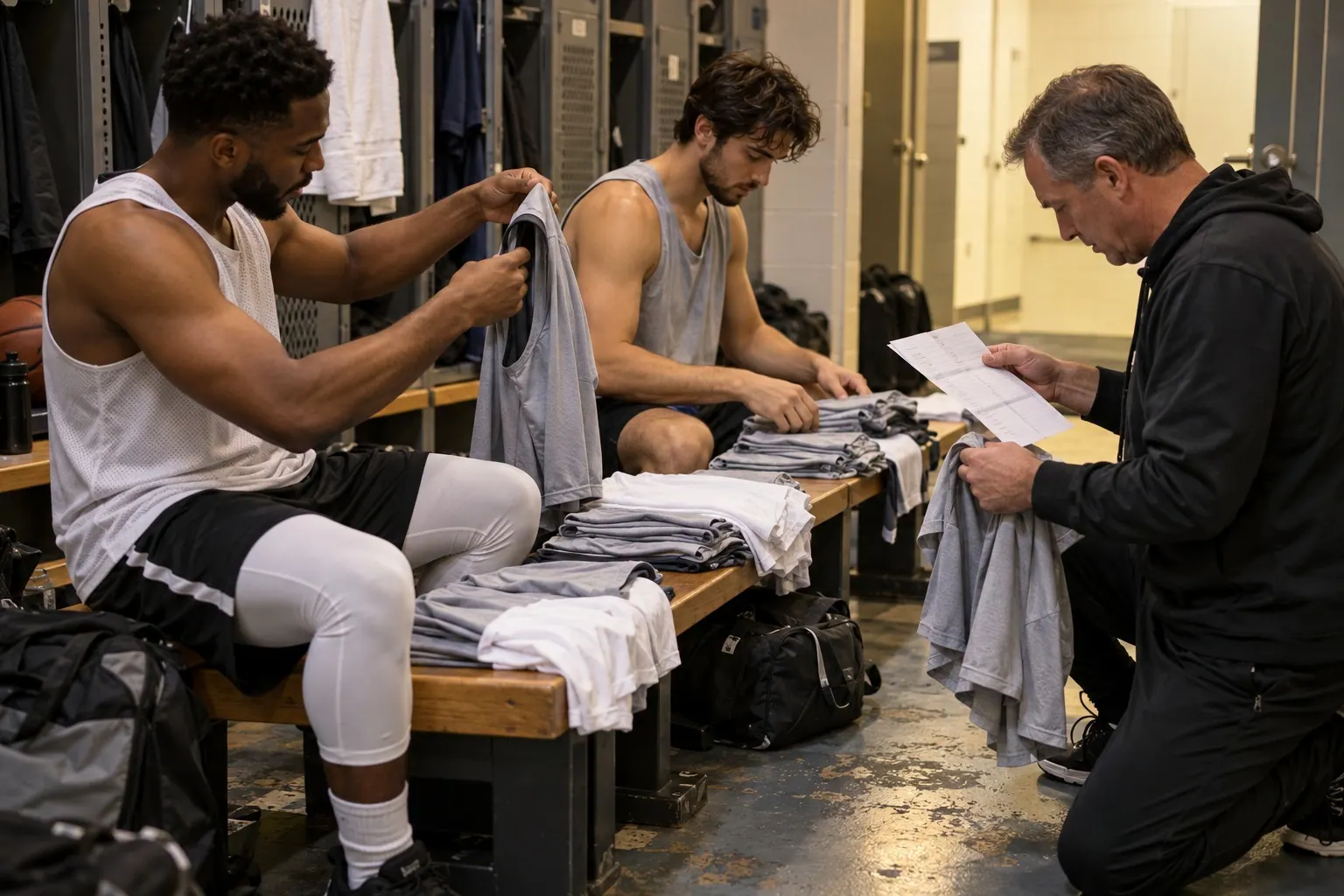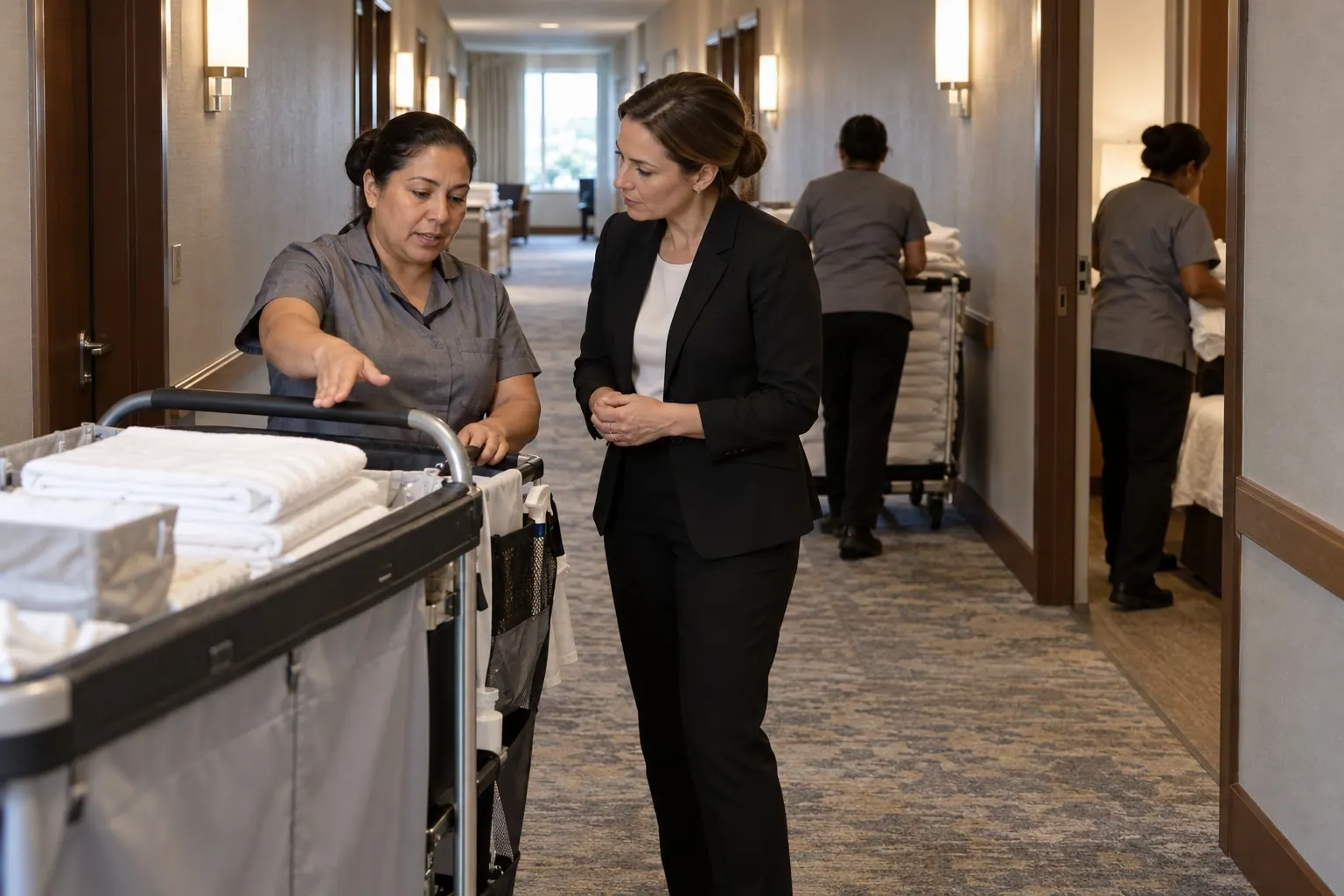
A uniform-service operator using print-on-demand can add value beyond choosing a garment: clarify staff roles, compare products, coordinate samples and sizing, assemble approvals, and manage reorders. The production platform remains a supplier in that arrangement; the operator still owns the client brief, the accuracy of the proposal, the service promise and the complete cost calculation.
A service should be priced and positioned around work the operator genuinely performs, such as product comparison, roster coordination, approval tracking or reorder support. Whether a client values those services must be established in discovery; no platform capability proves that the operator will be profitable. This article lays out a practical workflow and a cost model that keeps verified product costs separate from unpriced operating work.
The Client Base: Where the Model Fits First
A discovery call should establish whether the catalog can serve the buyer at all. Ask about the roster, garment purpose, work environment, required certifications, size range, laundering, delivery deadline and budget. If the brief includes personal protective equipment or another regulated garment, do not assume a print-on-demand catalog item meets the requirement; identify the applicable standard and use an appropriately documented supplier. A branded layer can be considered separately when it does not replace required protection.
Keep the first conversation focused on evidence and constraints: who wears each item, what each person does, how the garment is cleaned, what the buyer must verify, which sizes are needed, and when the order must arrive. Record unknowns rather than filling them with assumptions.
From client brief to repeat order
Discovery and brief. Convert the role-mapping conversation into a written uniform brief: roles and headcounts, environments (heat, outdoor, client-facing), wash frequency per role, presentation tier per role, budget envelope, and the dates that matter (openings, season starts, contract commencements).
Product qualification. Compare the exact listing, material and care information, size chart, printable areas, price tiers and stated production estimate against the brief. Specifications help shortlist products; they do not establish comfort, durability or safety. Keep more than one candidate when available so the buyer can compare samples.
Samples and wear-testing. Order samples that reflect the relevant sizes and product variations. Agree with the client on a practical trial: representative tasks, fit, print placement, color and the intended care routine. A sample order can reduce uncertainty, but its cost, shipping and lead time still belong in the proposal.
Design. Translate the client’s identity into artwork that fits the selected product’s print areas and intended use. A full-surface design is one option; a restrained mark may suit other roles. Check the mockup and physical sample, and make no promise about color or placement beyond what the product evidence supports.

Size planning. Use the current product size chart and the client’s approved roster information to identify a size for each wearer. Collect only the information needed and handle it with the client’s permission. Confirm the selected garment covers the roster before standardizing it.
Approval. Present the product, mockup, sizes, names and numbers where the selected style supports them, quantity, price and expected timing. Get the client’s written approval of the final design and roster before submitting the order. Personalization and preview features depend on product eligibility.
Ordering. Price the actual order in the cart for the selected SKUs, roster quantities, destination and shipping method. Product prices may change by quantity; shipping is separate, and production estimates do not include transit. The selected polo listing shows a 5.8-day production estimate for 90% of orders and a 10-day production guarantee, subject to the platform’s terms. Yoycol excludes some special-demand orders, orders requiring sample confirmation and orders above 30 pieces of the same product from its fulfillment-time commitment. Build the schedule from the current sample, approval and shipment timelines, with a contingency before the client’s hard deadline, and confirm batch terms before promising a delivery date. (fulfillment promise and exclusions) (Yoycol: Shipping information)
Replacements and reorders. Agree how the client will request additions or replacements, who approves a new design or size, and how current product availability will be checked. A reorder service may be offered as a separate paid service; replacement frequency and repeat revenue should be measured rather than assumed.
Seasonal reviews. Before a new season or contract period, check whether roles, sizes, product specifications, prices and timing have changed. Update only what the evidence or client brief calls for; do not assume every program needs a new collection each year.

The Cost Mathematics, Done Honestly
A useful cost model starts with the exact SKU and route. The current men’s All-Over Print Polo Collar Jersey listing shows $9.79 for 1-9 pieces, $9.31 for 10-49 and $8.82 for 50 or more; it specifies 88% polyester / 12% spandex and 0.285 kg garment weight. The listing reports a 5.8-day production estimate for 90% of orders. Separately, its US standard shipping estimate starts at $9.77, with an average shipping time of 8-15 business days. Production time and transit time cover different parts of the delivery window. These are listing figures, not a final cart quote, and prices and shipping depend on order details. (product listing)
For a single polo shipped to the US by the listed standard method, a rough reference is $9.79 product price plus shipping from $9.77, or from $19.56 before taxes, selected branding services, payment costs or the operator’s work. “From” is not a final quote. Do not substitute a hoodie shipping example for a polo quote or use a single-unit rate to estimate a larger shipment. Confirm the cart total for the actual order.
| Cost item | Current reference | How to use it |
|---|---|---|
| Polo product | $9.79 for 1-9; $9.31 for 10-49; $8.82 for 50+ | Listing prices for this SKU; verify current cart and quantity |
| Shipping | From $9.77 for the US standard route shown | Product-page estimate; actual price varies by route and order |
| Product-specific branding | Confirm in listing/cart | Options and additional charges depend on the selected SKU |
| Samples, taxes, payment and fulfillment extras | Not quantified here | Add current actual costs before quoting a client |
| One-unit reference before extras | From $19.56 | $9.79 product + $9.77 starting shipping figure; not a batch quote |
Then, and only then, compare the proposed client price with the actual order cost. At an illustrative client price of $29.00 for the single-unit US example, $29.00 - $19.56 leaves up to $9.44 before other costs, if the listed starting shipping price applies. The actual contribution may be lower because shipping is shown as “from.” Recalculate from the real cart for every quantity and route.
The contribution figure is not profit. It still has to cover the operator’s design and coordination time, client acquisition, sample costs, payment-processing fees, taxes, after-sales support, returns or replacements and any other business expense. The table does not quantify those items, so it cannot establish profitability. A client quote should be based on the full current order cost and a separately priced service scope.
The product listing currently displays lower prices for 10-49 and 50+ pieces, but discounts and product-specific terms can vary. Yoycol’s help page says bulk discounts depend on product and quantity and cannot be combined with product discounts; the larger applicable discount is used. Verify the final calculation in the order, and ask customer support about unclear terms rather than assuming an extra discount. (bulk discount policy; Yoycol customer support)
Sample discipline also has a cost: record sample product prices, shipping and staff time separately, and decide in advance what questions each sample must answer. Do not use another seller’s case study or production timeline as a forecast for a new client order; the selected SKU’s listing and the actual order estimate are the relevant evidence.
Where the Model Breaks
Plan for three operational risks. Timing: separate product production from shipping and make no delivery promise until the current estimate and buffer are confirmed. Qualification: sample products against the buyer’s use, and document what the sample did and did not establish. Protective equipment: do not represent a standard branded garment as certified PPE; identify local requirements and use a supplier with the documentation the buyer needs. Keep optional branding and mandatory protection as separate lines in the proposal.
The practical model is clear: the supplier produces and ships the item; the operator earns a service fee only if the client values and agrees to pay for the discovery, qualification, design coordination or reorder work. The operator should show product, shipping and service costs separately, and revisit the quote when SKUs, quantities or delivery terms change.