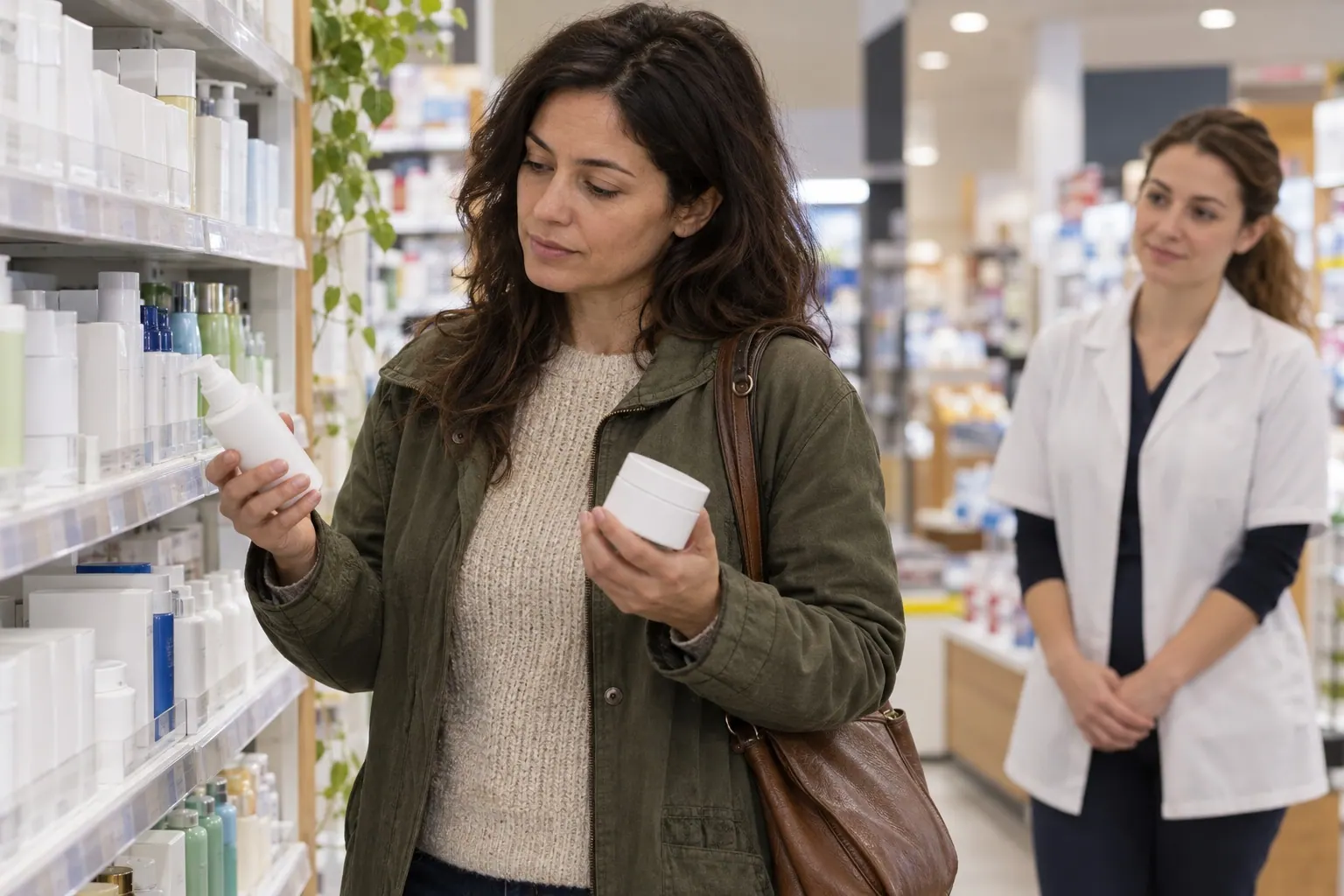
Collagen products are often promoted through beauty language, but an affiliate article does not have to repeat the same broad frame. It might answer a reader’s question about ingredient labels, compare product formats, or explain what to check before adding a supplement to an established routine. These are editorial directions to investigate, not proof that a collagen product improves skin, joints, training, or health.
Changing from beauty readers to runners or people organizing routines changes the editorial question, not the evidence required to support a product claim. The product, its label, its evidence, and the market rules set the boundary for every version of the story.
Verify the offer and claims first
Use NutriProfits’ current offers page and FAQ to locate program information, then confirm the exact offer, product page, label, market list, and terms in the current affiliate account. Its Terms of Use say partners may create original content but may not copy manufacturers’ website text. A network-provided promotional phrase is a claim to investigate, not a substitute for evidence.
In the United States, FDA says dietary supplements are not approved by FDA for safety and effectiveness before sale. FDA also describes specific requirements for certain structure/function statements on supplement labels in its dietary supplement guidance and structure/function claims guidance. These points describe U.S. rules; other markets have their own requirements.
Advertising has a separate evidentiary standard. The FTC’s Health Products Compliance Guidance explains that objective health claims must be truthful, not misleading, and supported by adequate evidence before they are made. The evidence has to support the message about the marketed product, not merely a loosely related ingredient or a claim copied from a seller’s page. If you cannot identify what evidence supports the exact claim for the exact product, leave the claim out and request qualified review.
This article does not evaluate whether collagen supplements produce a particular health or beauty outcome. It shows how to create useful editorial contexts without treating an audience segment as evidence of efficacy.
Five audience hypotheses for one product type
Treat each row as a question to research. None of the audiences below is proven to buy a specific offer, and the examples do not describe a live NutriProfits product. Confirm the exact formula, format, label, permitted claims, and country eligibility before including an offer.
| Audience hypothesis | Reader question | Useful article direction | Evidence and boundary |
|---|---|---|---|
| Readers comparing beauty routines | What does the product label say, and how should readers compare supplement claims with topical products? | A label-reading guide that distinguishes ingredients, serving directions, and marketing language | Do not promise changes to wrinkles, skin structure, or appearance unless the exact claim is substantiated and permitted |
| Active adults | What information should a reader check before adding a supplement to a routine? | A checklist for comparing format, ingredients, directions, and cautions | Do not imply better strength, less pain, faster recovery, or injury prevention without product-specific evidence and market review |
| Recreational sport participants | How can a reader compare labels and convenience when choosing what to pack for a club or training day? | A practical packing and label-comparison guide | The sport setting is context; it is not evidence that the product affects joints or performance |
| Runners and endurance hobbyists | What should a reader verify before considering a product alongside training? | A guide to questions about ingredients, directions, costs, and professional advice | Do not connect the product to recovery speed, injury prevention, or athletic results without adequate substantiation |
| People organizing a weekly routine | What details help someone compare the format and instructions of two supplements? | A routine-planning comparison using current labels and clear limits | Avoid assuming that a routine leads to better adherence, health outcomes, or repeat purchases |
A market is more than a demographic label. Verify that the specific offer is available in the intended country, that the sales page and customer journey fit the reader, and that the article’s claims and language comply with local rules. Do not infer demand from age, sport, gender, or a presumed concern.

Write the context around the verified claim
Suppose a hypothetical collagen offer has a current label and a list of claims that have passed product and market review. A beauty-focused story might teach readers how to compare the wording on supplement labels. An active-lifestyle story might compare powder, capsule, and gummy formats using verified directions and ingredient information. A sport-focused guide might cover what to check before packing products for a training day.
The editorial question changes; the product evidence does not. Do not rewrite “supports” into “restores,” use an image to imply an outcome the text cannot claim, or borrow a testimonial as if it were scientific proof. The FTC notes that implied messages can matter as much as the literal wording, so review the headline, image, caption, and link placement as one communication.
For U.S. promotions, the FTC says affiliate relationships should be disclosed clearly and close to the recommendation. Its affiliate marketing guidance explains why a reader should understand when a link may generate a commission. Check the disclosure rules for other markets separately.

Separate editorial tests from economic assumptions
Five content angles do not automatically create five profitable campaigns. They create five hypotheses that can be assessed against the same clear definitions: what did it cost to produce and distribute the article, what reader activity can the platform report, which link activity is attributable, and which orders became finalized commissions under the network’s current terms?
Organic distribution is not randomized. If one article receives more reads or clicks than another, record the difference and investigate possible causes, but do not label it a causal effect of the audience angle. Reach, reading, link activity, finalized orders, and contribution answer different questions. Keep dates, markets, distribution channels, and tracking identifiers with the results.
For paid campaigns, set a test budget and a decision rule before launch. Include the full cost of traffic, content production, tools, and operations; use finalized commissions rather than headline payout rates; and write down what evidence would justify continuing, revising, or stopping a test. If the reporting does not reveal the outcome you need, mark it unknown. Do not assume a less visible audience has cheaper traffic or better repeat economics.
A practical sequence
- Verify the current offer, product label, evidence file, permitted claims, and market availability.
- Choose one reader question you can answer with reliable sources and original explanation.
- Draft a headline that accurately states that question. Google Search Central recommends helpful, people-first content and language readers use when searching; see its Search Essentials. This improves clarity, but no headline or keyword guarantees first-page placement.
- Review the full impression created by the headline, article, imagery, captions, and affiliate links.
- Publish only when the evidence, disclosure, and market checks are complete; then measure only the outcomes your platform and account actually report.
Five angles remain hypotheses: test reader value, keep claims evidence-based, and let the evidence set each article’s limits.