An affiliate sees clicks from a new country and assumes the next step is obvious: translate the page. Then orders remain low, and the campaign gets labeled a bad offer.
That conclusion skips several possible causes. The offer may not serve that destination. The affiliate link may route to a different language. The price, delivery terms, payment methods, product claims, or imagery may not fit the visitor’s context. A translated page cannot repair any of those mismatches by itself.
Localization is therefore a sequence of checks, not a promise of higher conversion. It gives an affiliate a way to form market-specific hypotheses, verify the parts that can be checked before launch, and measure the rest without confusing one failure for another.
Start with offer availability, not the headline
NutriProfits describes its GEO links as geo-targeted affiliate links that can route a visitor to a sales-page language suited to the visitor’s location. Its FAQ also says product availability, country links, and Cash on Delivery can vary. These are useful network-level descriptions, but they do not establish that every offer accepts every traffic source or delivers the same customer experience in every country. Check the offer’s current account details and terms before promoting it. (NutriProfits FAQ; Terms of Use)
NutriProfits’ current terms prohibit advertising and search-engine positioning of an affiliate’s own websites using keywords containing product names. They do not specify how this restriction applies to content hosted on third-party channels; get clarification from the program before planning search targeting there. (NutriProfits Terms of Use)
Before writing a localized page, record five facts for the specific offer and destination:
- Is the country supported for this offer and traffic source?
- Which affiliate link or GEO option does the account provide?
- What language and currency appear after the link is opened from that location?
- Are price, delivery, returns, and payment options clear and available?
- Do the product page and the affiliate’s own copy use claims that are permitted for this product and market?
Use a clean browser session and test the actual path on mobile and desktop where practical. Follow the link through to the beginning of checkout without submitting an order. Record the date, destination, link, displayed language, currency, and any issue. A platform feature can change, so keep the check tied to the day and offer rather than treating an old screenshot as permanent evidence.
Six parts of a funnel to review
Not every country needs a new version of every element. Review each one, then document whether it stays the same, changes, or needs more evidence.
| Element | What to check | A testable question |
|---|---|---|
| Offer and route | Country eligibility, redirect, language, price, fulfillment, and payment | Does the visitor reach the intended offer and understand the transaction? |
| Words and search intent | Local vocabulary, spelling, units, and the question behind the query | Would a local reader use this phrase to describe the problem or goal? |
| Images and context | Product format, setting, season, age representation, and cultural fit | Does the scene clarify the use case without implying an unsupported result? |
| Offer presentation | Currency, bundle, shipping, returns, and any applicable conditions | Are the terms visible before a reader decides to click or buy? |
| Claims and proof | Product-specific evidence and the rules that apply to the market | Does the evidence support the exact wording and intended audience? |
| Page experience | Mobile layout, load, reading length, navigation, and language choice | Can the reader understand the page and find the next step without friction? |
These are audit prompts, not assumptions about national character. Climate, holiday calendars, household patterns, and digital habits can matter to a particular product or audience, but they should be researched for the actual market. “People in this country prefer short copy” is not a finding until a credible source or a well-designed test supports it.
Treat market ideas as hypotheses
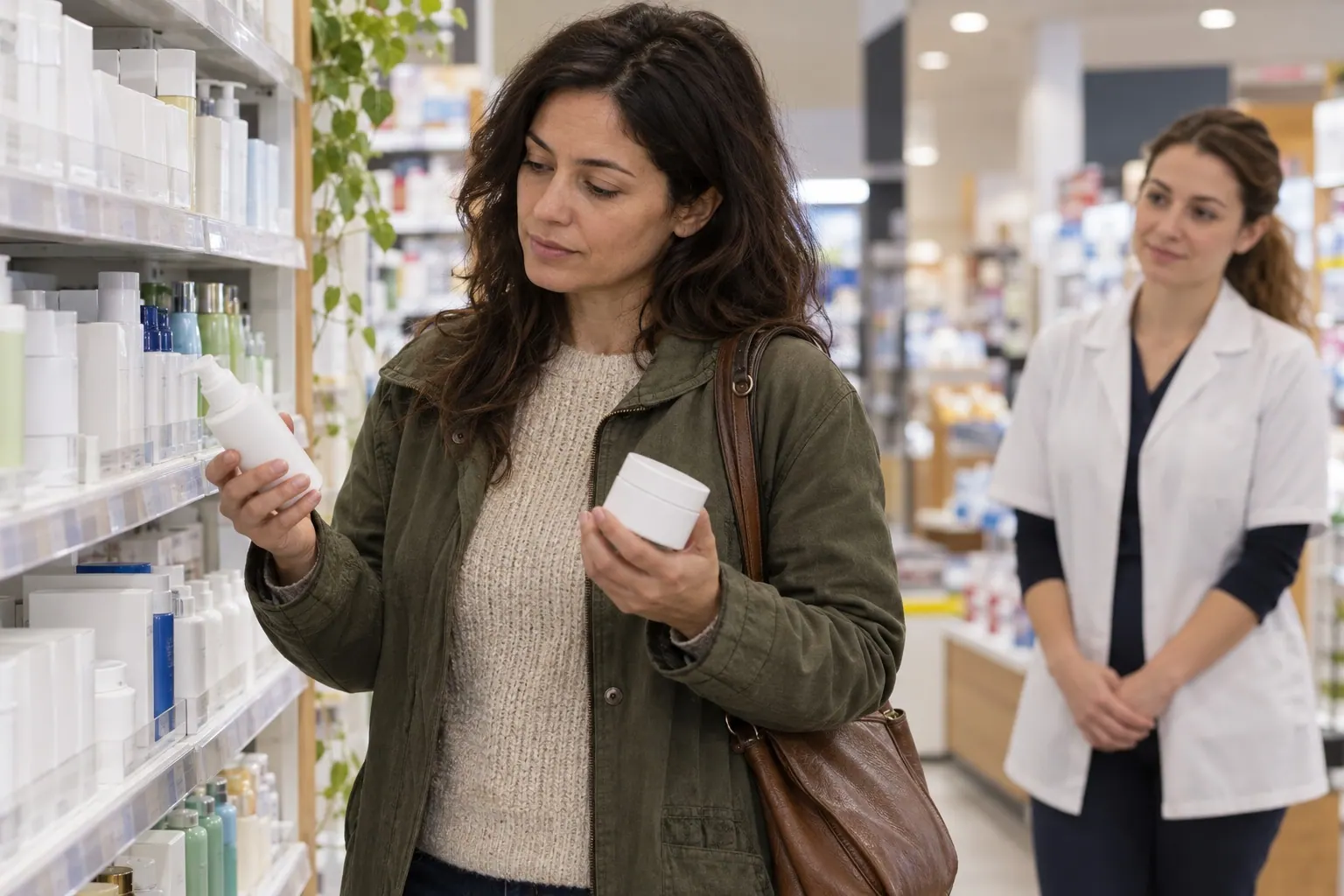
Suppose an affiliate is considering a cosmetic vitamin C serum in two destinations. The first draft might hypothesize that readers in one market search for “dark spots,” while another group uses a phrase closer to “uneven tone.” That distinction should be checked in native-language search results and with a fluent reviewer. It should not be turned into a claim that the product treats a skin condition.
The same discipline applies to visuals. A winter routine, a humid-weather texture, or a particular age group may be relevant if research shows that the context matters to the audience and the product page supports it. Otherwise, changing the backdrop is cosmetic localization: it makes the page look local without making its information more useful.
An illustrative test can compare two properly localized pages while keeping the offer, traffic source, attribution window, and measurement period as comparable as possible. Define the outcome before launch: for example, qualified outbound clicks per visit, checkout starts per landing-page session, or completed orders per eligible click. Keep the denominator consistent and note changes in traffic mix. If several elements change at once, the result can tell you which version performed differently, but may not tell you which change caused it.

A practical localization workflow
Verify the destination
Check availability and link behavior in the affiliate account. Open the link in a clean session, inspect the destination page, and note any redirect. Do not infer that a link works for a country because another offer from the same network does.
Research the reader’s actual language
Collect terms from relevant local search results, customer questions, product documentation, and fluent reviewers. Distinguish a literal translation from a phrase people naturally use. For language versions on a website you control, Google recommends distinct URLs and hreflang annotations to help Search connect localized pages. Apply those recommendations only where your publishing setup exposes the required controls; they do not guarantee rankings. (Google Search Central: managing multilingual and multi-regional sites)
Check claims at the product and market level
For health and beauty offers, do not treat an ingredient study, a seller’s headline, or a translated claim as evidence for the exact product statement. For U.S. dietary supplements, FDA describes labeling requirements for structure/function claims; FTC guidance addresses substantiation for advertising claims. The FTC says health-related advertising claims need competent and reliable scientific evidence appropriate to the claim. For the European Union, consult the applicable rules and the European Commission’s register for health claims on foods; that register does not replace review of other product categories or local requirements. These examples are jurisdiction-specific, not a global compliance checklist. (FDA: Structure/Function Claims; FTC Health Products Compliance Guidance; European Commission: Nutrition and Health Claims; EU Register of Health Claims)
If you cannot verify a claim for the product and market, remove it or describe only what reliable product documentation supports. For local legal interpretation, use the relevant regulator or qualified counsel.
Adapt the page around reader decisions
Use the right language for the headline, explain what the product is, make price and delivery information easy to locate, and describe limitations fairly. Keep the same core facts consistent across the article, affiliate link, and destination page. If the product or checkout is available only in another language, say so before the reader follows the link.
Disclose the commercial relationship near the recommendation
When a link can earn a commission, explain that plainly close to the recommendation or link. The FTC’s guidance for the United States says disclosures should be clear and conspicuous and that readers may miss the connection when the disclosure is separated from the review or link. Rules differ across jurisdictions, so check the requirements where the content and audience are governed. (FTC: Endorsement Guides — What People Are Asking)

Run a small, interpretable test
Before spending more, confirm that the link and page behave as intended. Then change a small number of elements, use a stated metric, and record the dates and traffic sources. Treat results as directional when the sample is small or the audiences differ. A better click-through rate alone does not establish better customer outcomes, and an affiliate should not report a causal lift unless the design can support that conclusion.
Keep a per-market decision record
A compact record makes a localization decision reproducible:
- Offer and destination: offer name, country, traffic source, account link, and last check date.
- Reader evidence: search language, questions, reviewer feedback, and the sources used.
- Changes: what changed in the page, images, claims, price presentation, or route, and why.
- Guardrails: permitted product wording, disclosure placement, and unresolved questions.
- Measurement: metric, denominator, test dates, traffic mix, and result limitations.
- Decision: keep, revise, or stop, with the next check date.
This record helps separate a weak angle from a broken route, an unavailable offer, or a poorly measured test. It also prevents an old market assumption from silently becoming a permanent editorial rule.
When localization is not worth doing yet
Do not build multiple versions just because a platform has international reach. Wait until you can verify the offer, serve the reader in a useful language, explain the product accurately, and measure a meaningful outcome. If the expected traffic cannot support a fair comparison, prioritize a clear single-market page and collect better evidence before adding variants.
The practical standard is simple: localize the decision the reader needs to make. Translate the words, verify the route, adapt only what evidence supports, and measure what happens with enough context to learn from it.