
A service business may have a detailed menu, a booking page, and a loyal clientele without showing products on its website. That pattern can be useful to notice. It does not tell you why products are absent or whether the owner wants to sell them.
For a freelancer, the distinction matters. Search can help locate public pages and frame a question. It cannot establish that customers want merchandise, that the business has room or margin for inventory, or that a product line would improve its service. A search result is a lead for research, not a diagnosis to deliver to the owner.
This guide shows how to identify a possible service-to-product gap, check for obvious false negatives, and validate the idea before developing a proposal. The examples use a hypothetical salon; the process also applies to studios, educators, and other service businesses.
Begin with an observation, not a claim
Suppose a salon’s public website describes appointments, services, and its team. A search of the indexed domain does not surface a shop page. The accurate note is: “I did not find a product page in this search on this date.” It is not: “The salon sells no products.”
The distinction leaves room for what you cannot see: a store on another domain, products sold in person, a retail arrangement handled by another company, or a deliberate decision not to sell products. A business can have good reasons to avoid retail, including staffing, storage, supplier, or customer-experience constraints.
Use a small set of documented search features
Google Search Help documents several ways to refine a query: quotation marks for an exact phrase, site: to narrow results to a domain, a minus sign to exclude a word, date filters, and filetype: to find a type of document. These features help you ask a more focused question; they do not return a complete or verified inventory. Google also notes in its site: operator documentation that results are not exhaustive and depend on indexing and retrieval.
For a hypothetical salon with a public website at example.com, you might manually try:
site:example.com services
site:example.com “book online”
site:example.com products
site:example.com retail
site:example.com “shop online”
If you are looking for a menu or product brochure, you could try:
site:example.com filetype:pdf
Read the pages themselves and confirm that they belong to the business and are current. Do not interpret an empty result as proof that the page or offer does not exist. The business may use different wording, an external booking or commerce provider, or a page that the search index has not surfaced.
The minus operator can remove a recurring kind of noise from a query, but it does not guarantee that every result is relevant. Use it to refine a manual search, not as a substitute for checking each result.
Check the business’s own routes before deciding what is missing
A useful second pass follows the links the business presents publicly. Review its current website navigation, service pages, booking route, and any official social or store links. If the business links to an outside storefront, confirm whether that storefront is theirs and whether the products are current. Search can surface other possibilities, but do not treat mentions on directories, reviews, or unrelated sites as confirmation.
A simple research record can distinguish what you know from what remains open:
- Verified: the company’s current site lists these services and an appointment route.
- Search observation: no product page surfaced in a site-restricted query on the recorded date.
- Still unknown: whether the company sells products in person or through a different platform.
- Question: does the owner want to explore products, or is the current model intentional?
Keep the record proportionate. There is no need to copy reviews, customer photographs, or personal details into a prospecting file. Use only business information needed for the conversation, and avoid automated queries or bulk collection. Google’s Search Essentials describes automated queries to Google Search without express permission as machine-generated traffic that violates its spam policies and Terms of Service.
A public menu can help you ask better questions
A service menu or public brochure may help you understand how a business presents its work. It can show the language the business uses, which services are grouped together, and whether the document includes a publication date. It cannot establish customer demand for a related product or prove that the document is still used.
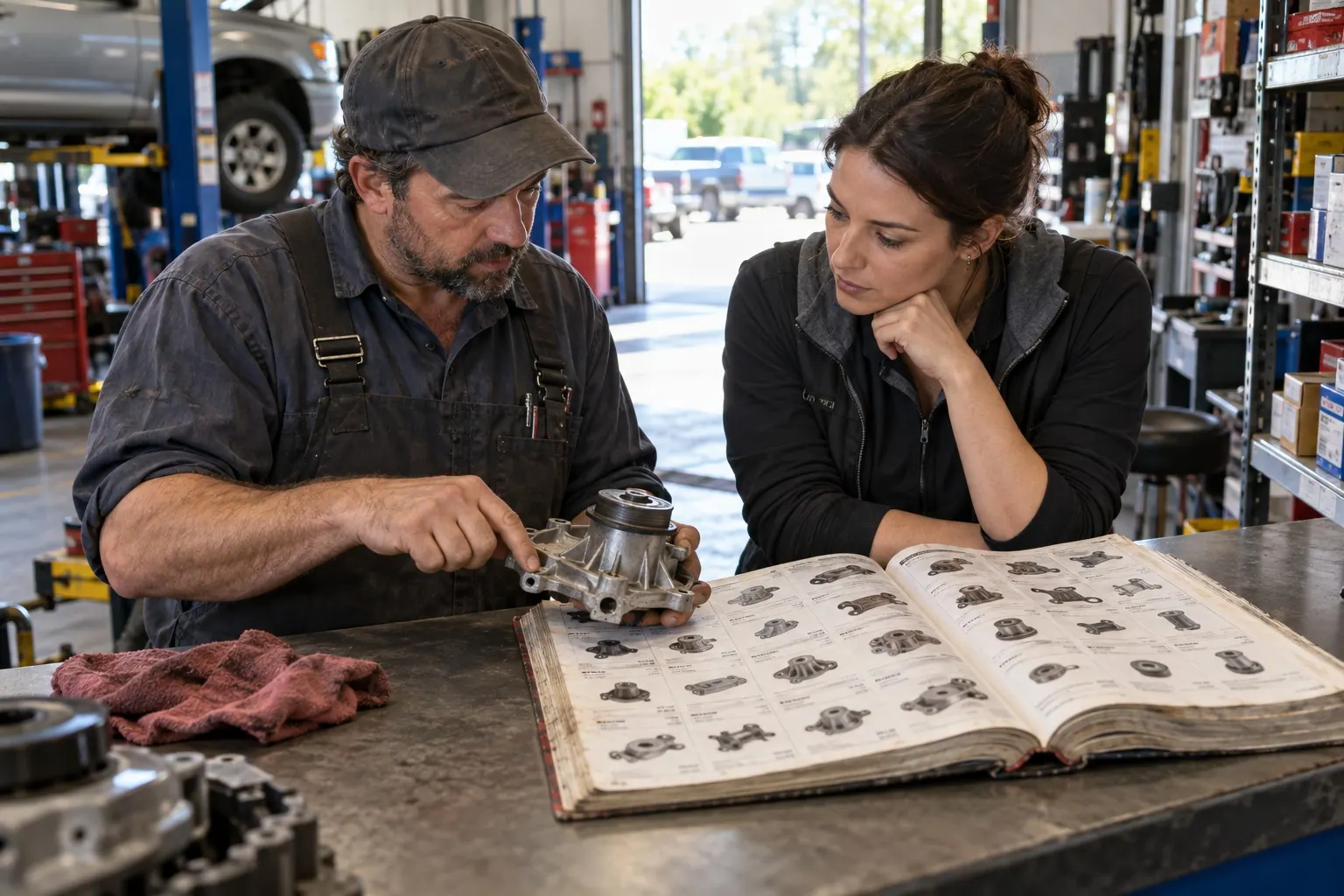
If a publicly linked menu appears relevant, use it to frame a neutral question: “Is this still the service structure you use?” Do not copy the text or images into a sales deck or claim that the business needs a redesign without permission and direct evidence. Public availability is not the same as permission to reproduce someone else’s work.
A dated PDF can be old, incomplete, or superseded. If the file has no date, note that uncertainty. When the details would affect a proposal, ask the business to confirm them rather than treating the document as current.
Consider why the product line may be absent
A gap can be operational, commercial, or intentional. Before proposing products, learn which possibility applies:
- The business has not considered it. The owner may be open to exploring, but interest and economics still need validation.
- Products are sold elsewhere. An external shop, marketplace, or service provider may handle transactions.
- The economics do not work. Supplier minimums, storage, shipping, returns, and staff time can outweigh expected revenue.
- The product would not fit the service. Not every service naturally supports a physical item or digital product.
- The choice is deliberate. The owner may prefer to focus on appointments, avoid inventory, or preserve a particular customer experience.
- The business has a product but little public visibility. Staff may make recommendations or sell items in person without a web page.
These are possibilities to investigate, not assumptions to assign from a search result. A respectful proposal begins by asking whether the business has a relevant goal and what it has already tried.
Validate the idea with the person responsible
If the search and website review reveal a plausible question, contact the business through a channel it presents for business inquiries. Keep the message specific and easy to decline. Do not say that you found a “gap,” “lost sales,” or “untapped demand” unless the business has supplied evidence for that conclusion.
For example:
Hello [Name], I work on product and packaging design for service businesses. While reviewing your public website, I found your service and booking pages but did not find a product page. I may be missing an outside store or an intentional choice. Are you exploring products for clients, or is retail outside your plans?
This message describes what you looked at, acknowledges the limits, and invites correction. Do not send a mockup using the business’s logo or photographs before receiving permission. Follow direct-marketing and privacy rules that apply to your location and the recipient’s.

If the owner is interested, continue discovery before designing. Ask who would buy, what job the product should do, how the business would sell it, who would handle inventory or fulfillment, what evidence supports the idea, and who approves the investment. The answer may point to a small test, a supplier conversation, further research, or no project.
Scope the work only after a need is confirmed
When the owner confirms a goal, define a limited next step. Depending on the freelancer’s expertise, that could be product concept development, packaging design, a visual system, supplier-ready artwork, or coordination with qualified production partners. Avoid presenting a complete product launch as an automatic consequence of an empty search result.
A proposal should separate work the freelancer controls from work that depends on other people. Name the decisions the client must approve, what information or rights they must supply, which costs are estimates, and which work is outside scope. Product safety, ingredient or performance claims, labeling, manufacturing, shipping, and customer support may require expertise beyond design. The person responsible for the product and qualified specialists should confirm the requirements that apply.
A concept is not proof of manufacturability or demand. An attractive package mockup does not establish supplier capacity, compliant labeling, a viable price, or a customer base. The client should validate those parts before committing to production or inventory.
Learn from outcomes without inventing a market benchmark
Record whether the owner confirmed a need, who controls the decision, what constraints emerged, and what next step was agreed. If the business declines, note the reason only as the owner described it. Do not convert a few conversations into a claim that salons or studios generally want products.
Over time, these records can help you refine your offer. You might learn that a particular service segment already has an outside retailer, that clients prefer digital materials, or that the business would consider branded goods only after another operational issue is resolved. Such findings can guide your next question. They do not, by themselves, prove how an entire market behaves.
Payment follows completed work and agreed terms
If a validated project moves forward, document the scope and payment terms. Ruul is one possible service for payment requests after completed work. Its current support guide says a client can pay through a Payment Request link without creating a Ruul account; eligibility, methods, verification, fees, and payout timing depend on the current service and account conditions. Check the official guide before promising a payment workflow.
A payment platform does not establish product-market fit, guarantee sales, or create recurring work. Additional launches or ongoing design should be scoped only when the business confirms a continuing need and both sides agree on responsibilities and terms.
The result is a question worth asking
Search can help you notice a possible mismatch between the services a business presents and the products you can imagine it offering. That mismatch is a starting hypothesis. The business’s owner—not the search result—can explain whether it is intentional, already addressed elsewhere, or worth exploring.
The professional advantage is not finding an empty result and naming it an opportunity. It is showing the owner what you actually checked, being clear about what you could not establish, and asking a question that helps both sides decide whether there is a project.