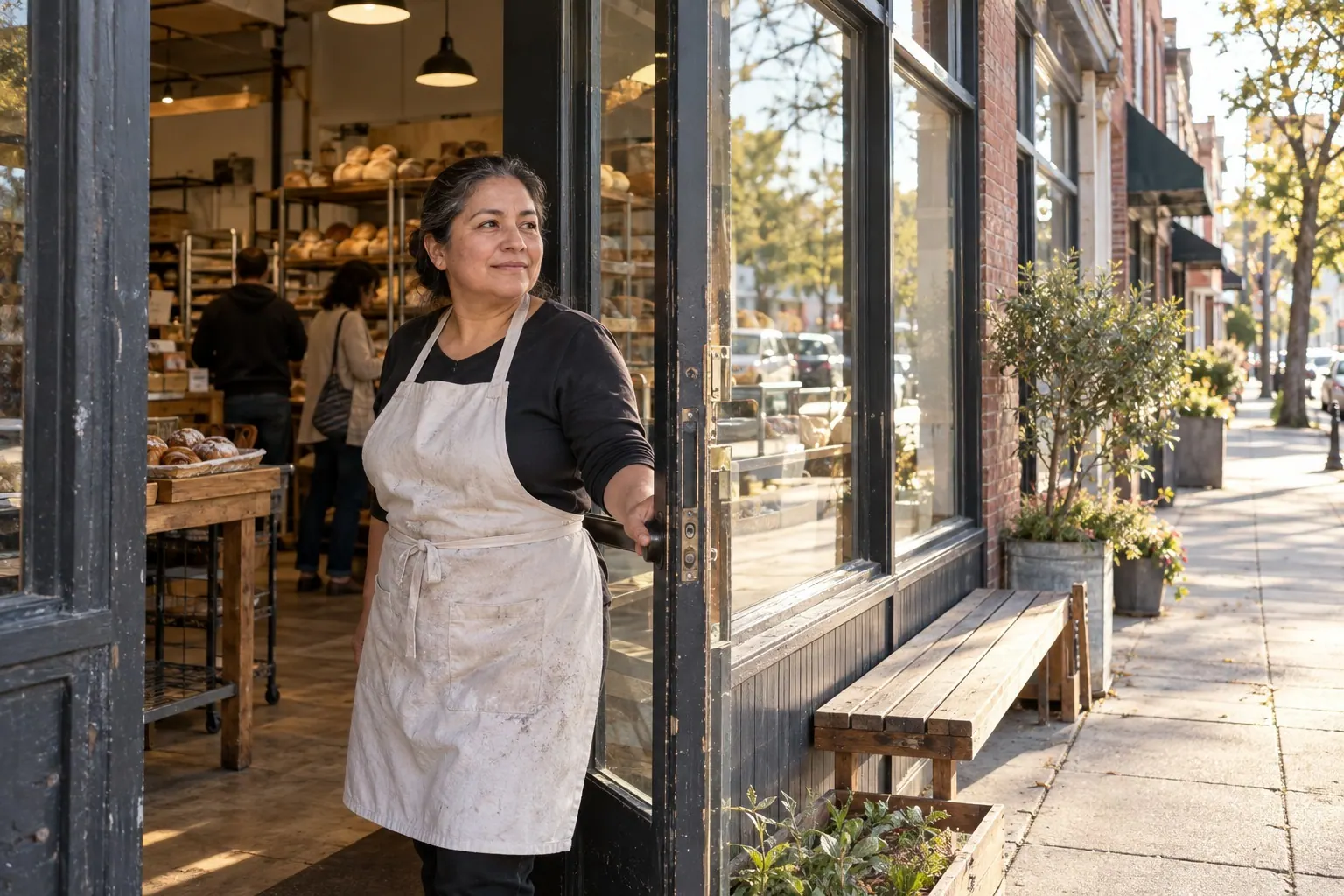
Picture a neighborhood bakery with a familiar name but several versions of it: a painted sign, a different typeface on the menu, and a website that uses another color palette. The place may be thriving, struggling, or simply content with the way it looks. From the sidewalk and a public profile alone, you cannot know which.
That uncertainty is where thoughtful freelance research begins. Differences across a business’s public-facing materials can be a reason to ask about its visual system. They do not prove that customers are confused, sales are being lost, or the owner wants a rebrand.
This guide offers a respectful way to notice possible brand-consistency projects, confirm whether an owner sees a problem, and scope design work without criticizing the identity that helped build the business.
Reputation and presentation answer different questions
Reviews can show that customers have chosen to share feedback on a platform. They do not measure revenue, repeat purchase, profitability, or willingness to fund a brand project. Likewise, photos show selected views of a business; they may be old, incomplete, uploaded by customers, or taken before a recent update. Google allows customers to post photo updates to a Business Profile, as described in its customer photo-update guide. Google’s own Business Profile guidelines require accurate representation, and its photo guidance says business imagery should represent reality. These sources help you understand the profile as a public presentation—not as an independent audit of the company.
Keep what you can see separate from what you are guessing:
| Observable detail | Reasonable question | Unsupported conclusion |
|---|---|---|
| The official website and storefront use different versions of a name or mark | Are both versions intentional, and is one due for an update? | “Customers cannot recognize the business.” |
| Menus and packaging vary in layout or type | Does that create work or confusion for staff or customers? | “The business is losing sales.” |
| Staff garments vary across photos | Is there a uniform or ordering problem the owner wants to solve? | “The team needs branded clothing.” |
| A profile has few recent photos | Is the business interested in updating its own imagery? | “The business is neglected or inactive.” |
These observations are starting points for a conversation. A business may have multiple logos for separate services, may be in the middle of a refresh, or may have chosen a deliberately simple presentation. Do not turn a visual preference into a diagnosis.
Use a consistency review, not a score
A short review can help you prepare, provided you do not present it as a measured brand audit. Look across materials the business publishes itself: its website, menu or service list, official social account, and storefront if you have seen it in person. Ask whether a customer can reasonably connect the name, mark, colors, and tone across those touchpoints.
Use four prompts:
- Recognition: Does the name or mark remain identifiable across the main customer touchpoints?
- Continuity: Do color, typography, and tone feel intentionally related, even if each item is not identical?
- Usefulness: Can a customer read the menu, find key information, or understand what the business offers?
- Intent: Does the presentation appear deliberately minimal, or do the materials simply differ? What would the owner say?
The last question matters most. A single-color sign, plain kraft packaging, or handwritten note can be a considered choice. Coherence is not the same as decoration, and “more design” is not automatically better. If the owner prefers the current simplicity and it serves the business, respect that decision.
Avoid rating the business on a five-point scale or calling it “badly branded.” A number can make taste look like evidence, while the wording can make a potential client defensive before you have learned what matters to them. Record a specific observation and one open question instead.
Treat Google Maps as one public surface
Google Maps can help you find a business and see the public profile it has chosen to maintain. The listing is not a full picture of every service, supplier, or recent change. Photos may come from owners or customers; do not assume every image was uploaded or approved by the business. Google’s Maps terms govern the use of Maps content, including restrictions on copying and bulk downloading. Do not download profile photos or copy customer reviews into a pitch deck or design mockup.
If you later offer hands-on Business Profile management, that becomes a separate service with specific rules. Google’s third-party policies require explicit consent to claim or manage a business profile, transparency about changes and fees, and truthful descriptions of expected results; they prohibit guarantees of top placement. A brand identity project does not require access to the client’s Google account. Keep access out of scope unless the client asks for it and the terms are clear.
Ask what the business wants to preserve
The first useful conversation is not a presentation of everything you think should change. It is a brief discovery call that lets the owner explain the context:
- Which parts of the current identity are important to keep?
- Where do inconsistent materials create extra work or make updates difficult?
- Which customer touchpoints matter most this year?
- Who will review and approve the work?
- Are there upcoming changes—new location, packaging, menu, or team apparel—that create a real deadline?
These questions often reveal that a refresh is not the right scope. The business may only need a template, an updated menu, or a small set of production files. It may have no current project at all. Both answers are useful; they help you avoid selling a broad rebrand where a focused service would fit better.

Propose a first engagement the owner can evaluate
If the conversation confirms a problem, define a bounded first phase. Possible deliverables include:
- A short visual-consistency review of the specific customer touchpoints the client selects.
- A refresh of an existing mark, with the client’s requirements and approval documented.
- A small set of practical applications, such as a menu template, packaging label, or staff garment artwork.
- Production-ready files, usage guidance, and a handoff that explains what the business or supplier needs next.
Do not assume that every client needs a full identity system, new signage, and branded merchandise. Sign replacement, inventory, photography, printing, and profile management can involve different vendors, permissions, budgets, and schedules. List what your fee covers, what requires a separate quote, how many review rounds are included, and who approves final files.
Ask the owner to identify the authorized person for names, logos, trademarks, photographs, and any partner marks. Confirm in writing what materials they can provide and approve. If the business wants to keep a legacy mark or handmade quality, translate that requirement into the brief before designing. The goal is continuity the owner recognizes, not a makeover that erases the reason customers care.

Pitch growth without criticizing the existing brand
Words such as “ugly,” “amateur,” or “outdated” turn a business decision into a personal judgment. The mark may have been designed by a family member, developed over years, or recognized by loyal customers. You do not need to know that history to show respect for it.
Describe the deliverable and the question it can answer: “I noticed the menu and website use different versions of the business name. Is keeping those consistent something you are planning to address?” That gives the owner room to clarify. If the difference is intentional, accept the answer. If it creates a problem, ask which item they want to solve first.
Your outreach can be brief:
Hi [name] — I found [business] while looking for [type of business] in [area]. I noticed [specific, verified detail from the business’s own materials]. I help local businesses make practical updates to the visual materials customers use, while keeping the parts of their identity they want to preserve. Is this something you are reviewing now, or is there a better person to contact?
Use only observations you have actually verified. Do not invent review counts, customer outcomes, consultations, or a concept sketch that does not exist. Do not claim that a brand refresh will increase revenue, search visibility, or customer loyalty unless you have evidence and a well-defined basis for that claim. For Google Business Profile work in particular, Google explicitly prohibits false, misleading, or unrealistic claims about results.
Set expectations for the commercial work
Before beginning, agree on the decision-maker, scope, schedule, deliverables, fees, and payment milestones. Separate design fees from printing, signage, garments, photography, or other third-party costs. If the client asks you to coordinate production, name the vendor decisions and responsibilities you are accepting.
Ruul is one possible tool for sending payment requests after the client agrees to the work. Its current support documentation describes a client payment link and verification steps; available payment methods, eligibility, fees, and payout timing depend on current terms and account conditions. Review Ruul’s payment-request guide before relying on a feature. A billing platform cannot validate a design opportunity or guarantee immediate funds.
The better prospect is the one who confirms the need
A public profile can help you find a business and prepare an informed question. It cannot tell you that the company is thriving, that the owner dislikes the identity, or that a redesign will pay for itself. Look for a real inconsistency, then ask what the business wants to preserve, what it wants to change, and whether there is an approved project.
That is how you find a useful brand-consistency engagement without turning a freelancer’s visual opinion into a sales diagnosis. The business’s history remains part of the brief; the owner decides whether the next chapter needs a new system.