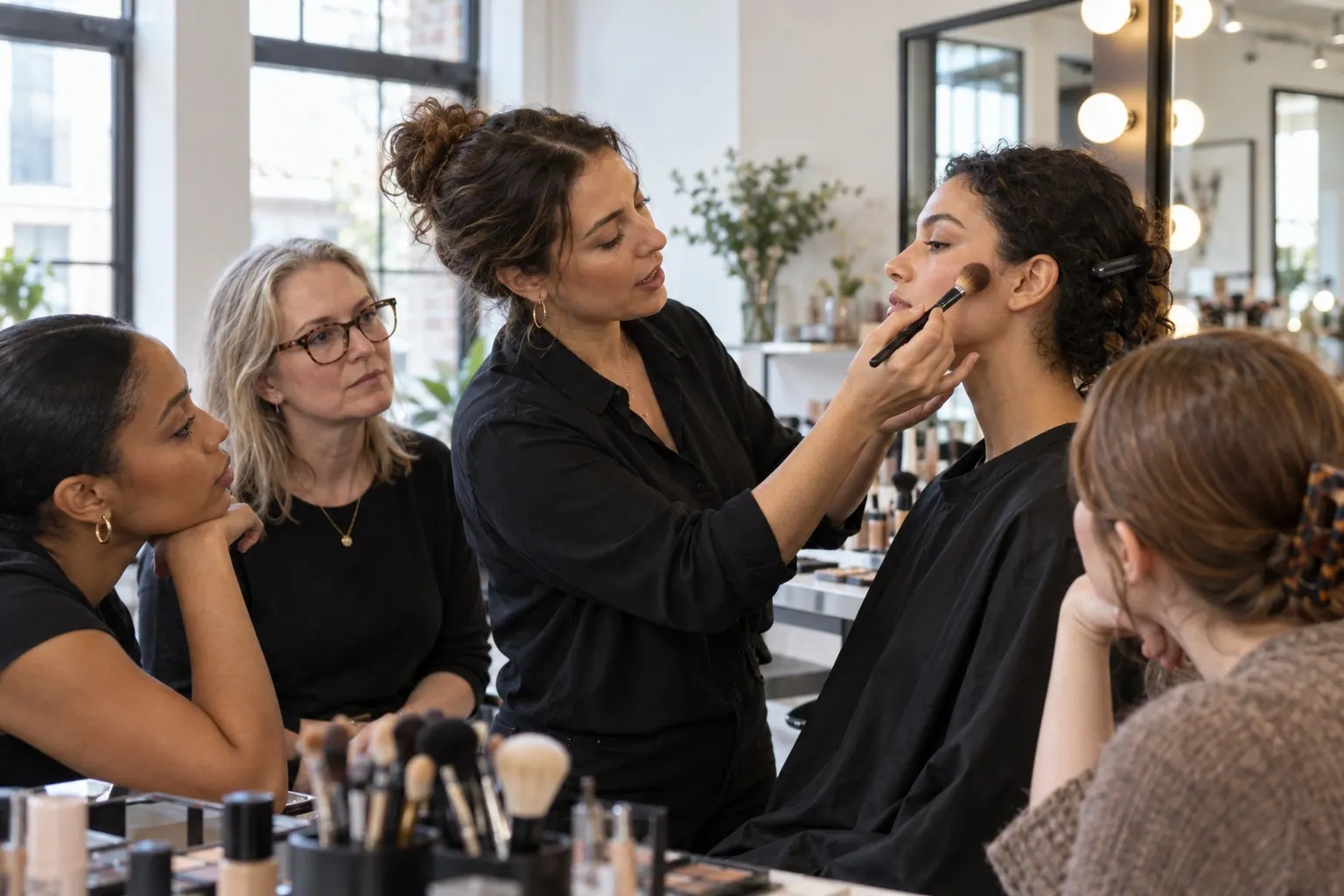
A makeup artist shows a brush technique to a small class. Students ask which tools she used, how she chose them, and what they should practice with at home. Those questions may be useful starting points for a product conversation. They do not prove that the students want to buy a kit, or that the artist wants to sell one.
For a freelancer, a makeup artist or beauty studio may be a potential client for brand identity, packaging, educational materials, or launch creative. The work becomes a product project only after the business confirms a need, identifies a buyer, and decides who will take responsibility for manufacturing, labeling, sales, and customer service.
Google Maps can help you discover studios and public class offerings. It cannot tell you whether an artist has product plans, what her students purchase, or whether a new line would be commercially viable. The useful task is to turn a public clue into a respectful question, then scope the design work around the answer.
What a class listing can—and cannot—tell you
Search for phrases such as “makeup artist [city],” “makeup classes [city],” or “beauty studio [neighborhood].” Confirm each business through its own website or the contact route it publishes. Categories and listing features can change, so use them for discovery rather than building a method around a fixed category list.
A public class listing tells you that the business presents education as an offering. It does not tell you class size, enrollment, repeat attendance, student satisfaction, or whether attendees want to purchase cosmetics. A profile photo showing products is not evidence of a brand partnership or a product the artist sells. Treat such details as prompts for questions, not as lead scores.
Google’s Business Profile guidelines require accurate representation, and its Maps terms limit copying and bulk downloading of Maps content. Do not use customer photos or reviews as your portfolio material, scrape listing details into a bulk database, or present public imagery as a client’s actual products. Use the profile to find the business; use the business’s own channels and a direct conversation to verify its offer.
Ask whether there is a product problem worth solving
Before preparing packaging concepts, ask the artist what students or clients already request and how the business currently responds. A short discovery call can cover:
- What do students bring, borrow, or repeatedly ask about?
- Are they asking for a recommended kit, a course supply list, or guidance choosing among products?
- Does the artist want to sell something, license an existing idea, or simply offer better educational materials?
- Who would choose and pay for a product? Who handles supplier contact, storage, fulfillment, returns, and customer questions?
- Is there a budget, target launch date, or manufacturing partner already in view?
These questions separate an educational need from a retail ambition. The artist may decide that a printable practice guide or updated course materials are more useful than cosmetics. A beginner kit might contain tools students can use across brands. A branded product may require supplier research, manufacturing decisions, compliance review, and a more substantial investment. Do not turn the first conversation into a promise that a class automatically leads to a product line.
Choose a first scope that matches the confirmed need
If the artist wants to explore a product, scope one decision at a time. The freelancer might provide a positioning brief, naming concepts, visual identity, packaging design, product-page assets, or launch creative. Each deliverable should have its own approval and should be priced according to the work involved.
| Project component | Possible design work | Questions to resolve before quoting |
|---|---|---|
| Education tool | Course supply sheet, practice guide, or branded organizer | Is this for learning, sale, or both? Who writes and verifies instructions? |
| Product concept | Audience brief, naming directions, visual route, concept mockup | Has the artist confirmed the need and identified the intended buyer? |
| Packaging design | Artwork adapted to an identified supplier’s specifications | Who supplies final product information and approves the legal copy? |
| Launch assets | Product-page imagery, email or social templates, in-studio display | Who handles inventory, fulfillment, customer care, and disclosures? |

The table is a menu of possible work, not a recommendation that every artist launch cosmetics. Start with a paid discovery or concept phase if the business is still weighing options. Define what that phase will answer, what source information the client must provide, how many revisions are included, and what is outside scope. A mockup is a design proposal; it is not a sample, a safety evaluation, or proof that the product can be manufactured as shown.
Cosmetics have a regulatory layer that design cannot replace
If a project includes cosmetics for the U.S. market, confirm product and label responsibilities before final artwork. The FDA explains that intended use and claims help distinguish cosmetics from drugs. Claims to treat or prevent disease or affect the body’s structure or function can bring a product under drug requirements, even when it is also used to beautify. Claims must also be truthful and not misleading. See the FDA’s cosmetics labeling claims guidance and cosmetics labeling resources.
Under the U.S. Modernization of Cosmetics Regulation Act, FDA defines the “responsible person” as the manufacturer, packer, or distributor whose name appears on the cosmetic label. Responsible persons generally have product-listing responsibilities, subject to statutory exemptions. FDA also states that registration or listing is not an approval program or proof that a product is FDA-approved. Review the agency’s current facility-registration and product-listing information.
The freelancer should not invent ingredient lists, usage directions, warnings, safety statements, or claims. Ask the client to identify the manufacturer and the person who will verify the label information. Set artwork approval around the exact product, package size, and supplier specifications. If the client asks you to assess legal classification, safety, or compliance, refer that question to qualified regulatory counsel or the appropriate professional; packaging design is not that review.
This section describes U.S. sources only. Requirements differ by product and market, and some products—such as items with sun-protection or therapeutic claims—may be regulated differently. Confirm local requirements before a product is offered for sale.
Test interest before funding a full line
If the artist wants to know whether a concept resonates, begin with direct, clearly framed feedback from the intended audience. Ask what students currently use, what they find difficult, and what they would expect from a class-related product. A small discussion can improve the brief, but it is not a representative survey and does not establish sales.
Before taking payment or promising delivery, the artist needs a real supplier quote, product specifications, production and shipping estimates, and clear terms for delays, returns, and customer support. A waitlist or interest form should not be presented as a confirmed order. If the business runs a preorder or pilot sale, it should first understand its consumer, payment, fulfillment, and cancellation obligations in the markets where it sells.
The design freelancer can make the experiment easier to understand: a labeled concept board, a neutral product comparison, or an approved prototype with transparent limitations. Do not use a finished-looking mockup to imply that a product exists or has been tested. Do not claim that students requested an item unless the artist has actually collected and can substantiate that feedback.
Treat product seeding as advertising when the connection matters
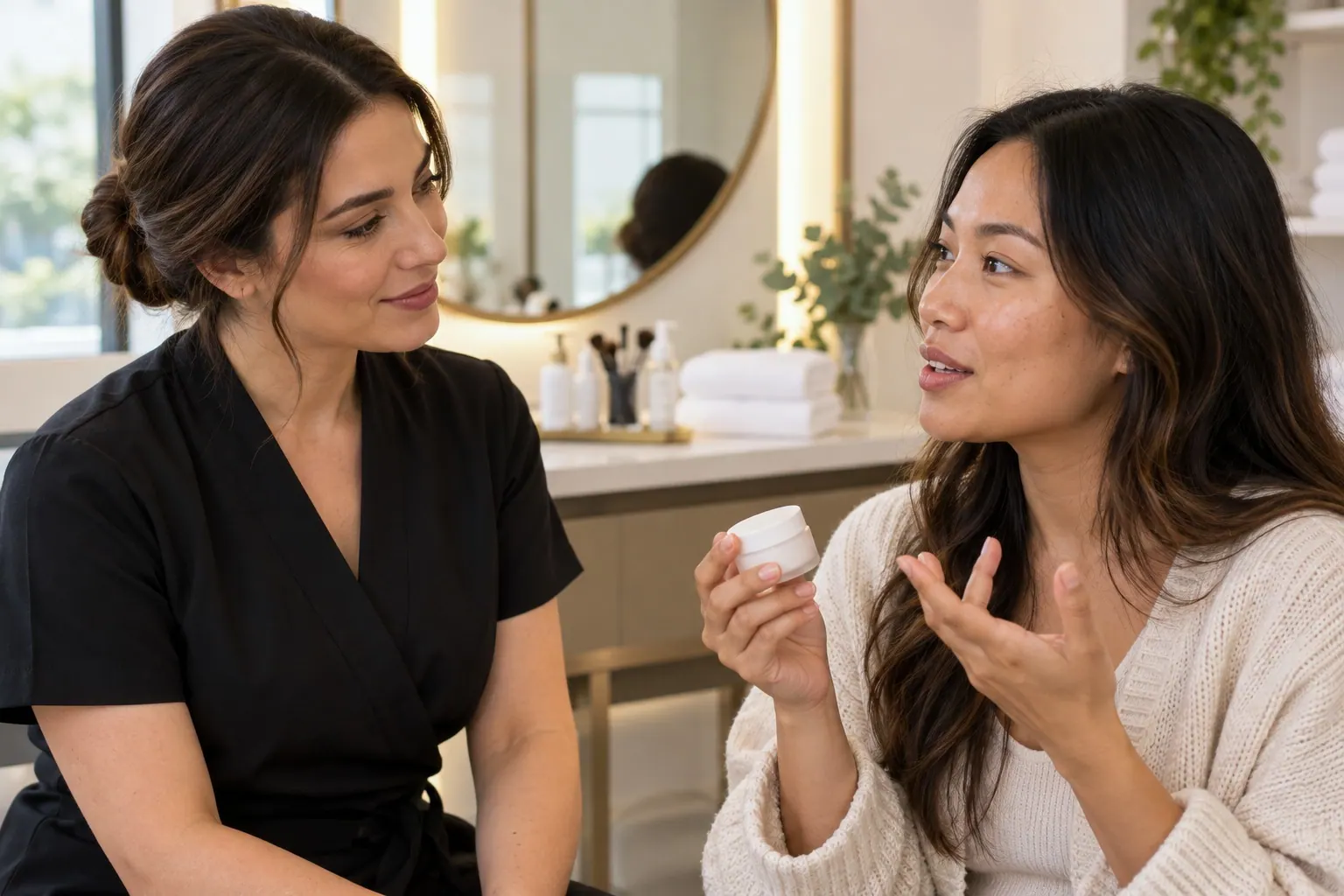
If a product eventually exists, sending free samples to creators can be one launch tactic. It does not guarantee coverage, positive feedback, or sales. Anyone who endorses a product should speak honestly about a product they actually tried and disclose a material connection when required. The FTC says a free or discounted product or another benefit can create a connection that should be disclosed in social endorsements. See its guidance for social media influencers and Endorsement Guides FAQ.
Keep the brand’s PR or seeding kit separate from the freelancer’s design deliverable. Define whether the engagement includes a box, inserts, shipping, creator list, outreach, and reporting—or only the creative files. The client should approve claims, recipients, disclosures, and fulfillment. If those pieces become separate requests, scope them separately.
Find the right client, not a hypothetical founder
An educator or artist is a promising contact when they have confirmed a product-related goal, can identify who approves the project, and are willing to discuss budget, supplier, and responsibility. Publicly listed classes or a recognizable style may help you decide whom to contact; they do not satisfy those conditions on their own.
An honest first note might say:
Hi [name] — I found your studio while looking for makeup classes in [area]. I help beauty professionals develop practical visual systems for educational materials and product concepts. If you are exploring a kit or cosmetic product, I’d be glad to ask how students currently choose and source their supplies, then see whether a defined design phase would help. If this is not on your roadmap, no problem.
Personalize it with one real detail from the business’s own site, not a guessed class calendar, review total, or product opportunity. Offer a conversation before producing a custom concept. Respect the business’s reply and do not treat a non-response as permission for repeated pressure.
Keep payment and repeat work in proportion
If the business approves a project, document the scope, milestones, supplier dependencies, and payment schedule. Ruul is one possible way to issue payment requests after an agreement exists. Its current support documentation describes a payment link that the client can use without creating a Ruul account, alongside verification and account conditions. Payment methods, fees, country eligibility, and payout timing can change; review Ruul’s current guide before relying on a feature.
Further packaging, seasonal concepts, or creator kits may become future projects if the client requests them. They are not automatic recurring revenue. Ask whether the first delivery solved the client’s problem, record the actual work and feedback, and discuss another scope only when there is a clear need.
From class questions to a responsible design brief
A makeup class can reveal the language students use and the tools they ask about. That is a useful beginning for discovery, not proof of a product-market fit. Confirm the audience’s need with the artist, let the client decide whether to test a product, identify the people responsible for manufacturing and regulatory review, and design only from verified specifications.
This approach gives a freelancer a credible way to serve makeup educators and studios. It protects the artist’s reputation, leaves product decisions with the people who own them, and keeps creative work connected to a real brief.