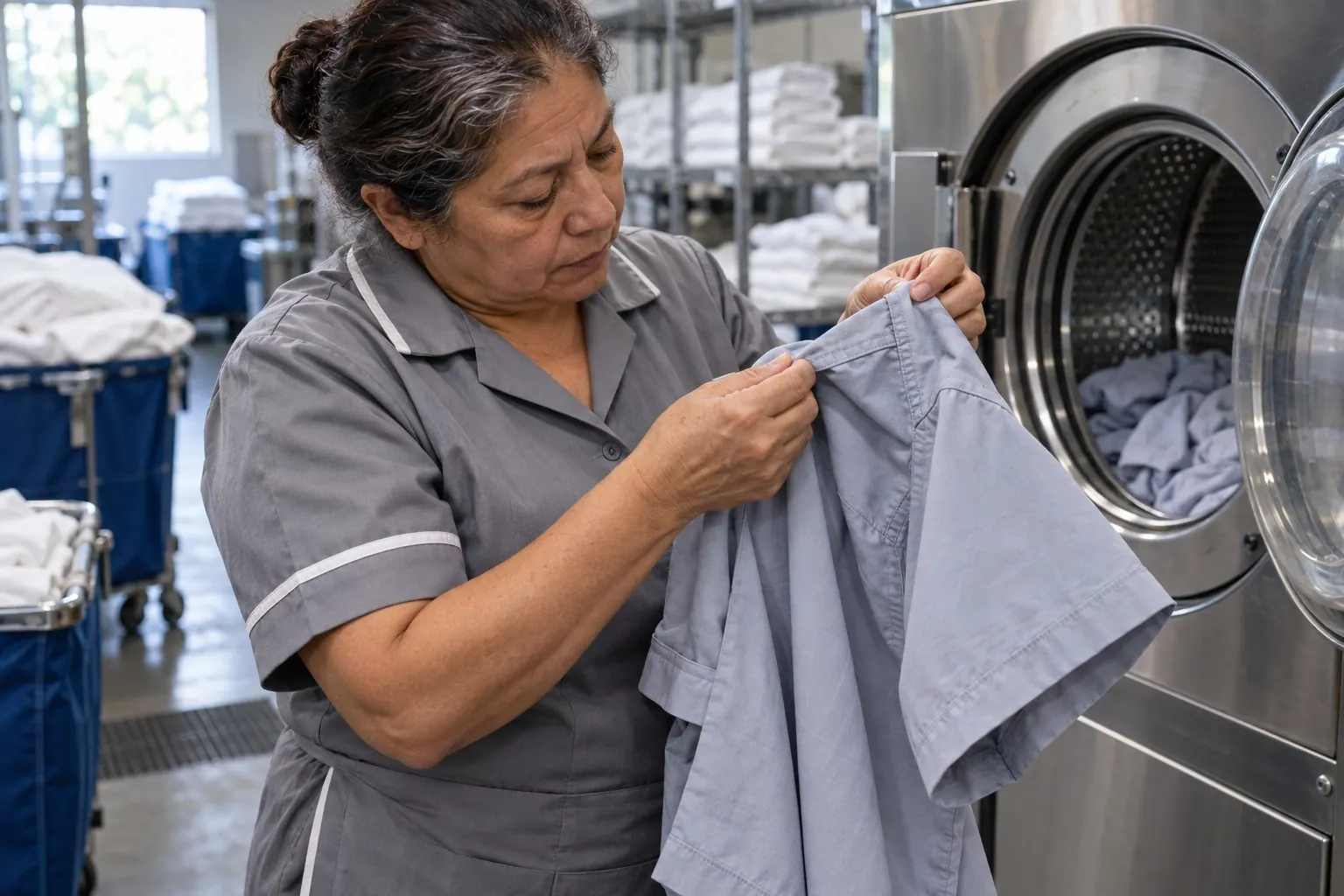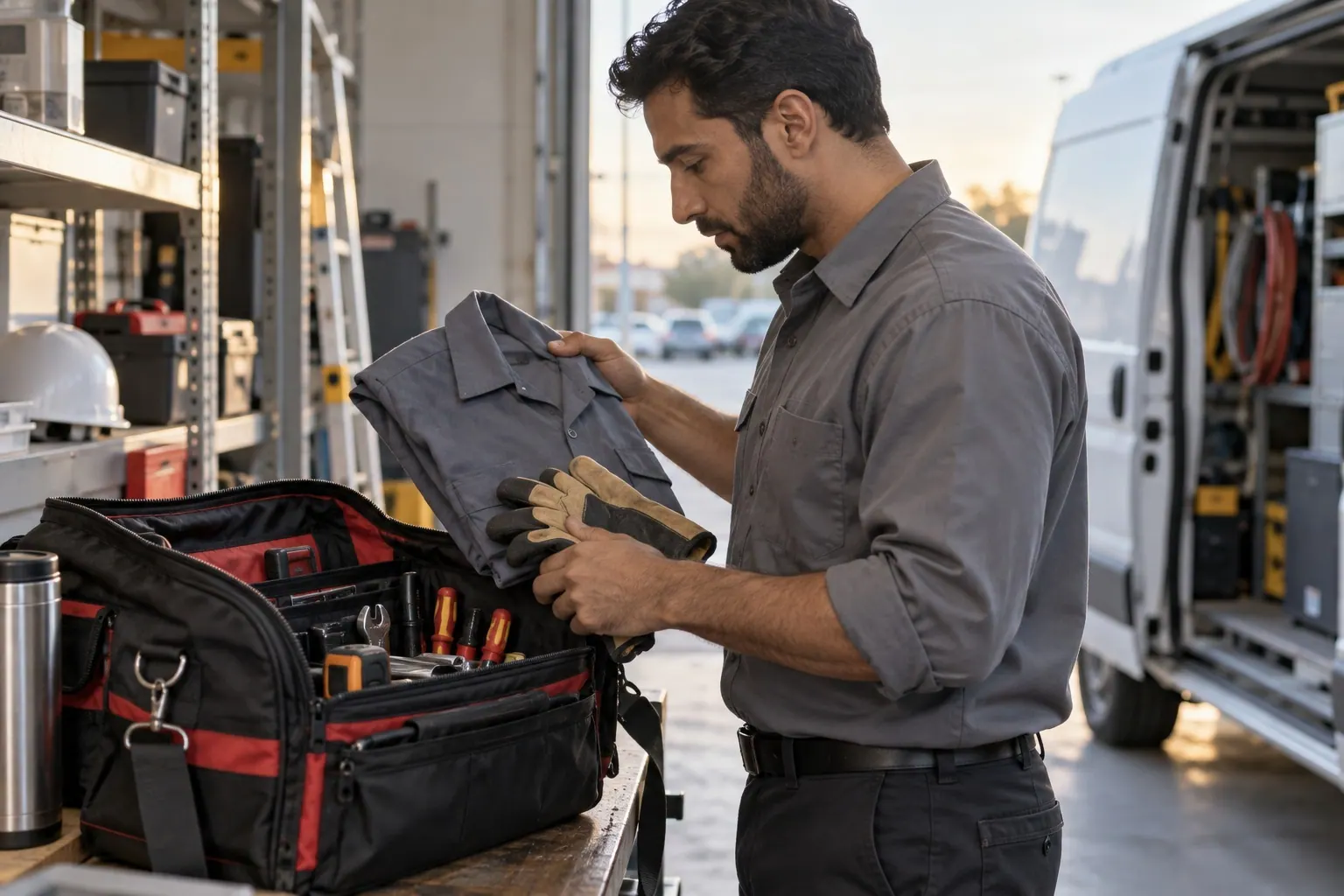
Before choosing colors or prints, separate brand apparel from protective equipment. HVAC, solar, electrical, and installation jobs involve different tasks and hazards. A standard catalog polo does not become arc-rated, flame-resistant, high-visibility, chemical-protective, or UV-rated because it is printed in a company color. In the United States, OSHA’s electric power generation, transmission, and distribution standard includes arc-rated clothing requirements under specified exposure conditions; other tasks and jurisdictions have their own rules. Use the employer’s hazard assessment and applicable requirements to select protective gear, then source it with the evidence those requirements call for.
That boundary still leaves a useful role for branded clothing. A field-service uniform can help customers identify a technician and can be evaluated for fit, comfort, and appearance. Yoycol’s product details describe individual garments; they do not establish that a particular product is suitable for a specific hazard or work process. The job is to verify the SKU, test the garment in the work, and keep required protection as a separate purchasing decision.
Outdoor work: Treat sun protection as a separate requirement
Solar installers, rooftop HVAC teams, and exterior-maintenance crews may spend long periods outdoors. NIOSH’s outdoor-worker sun guidance advises sun-protection measures, including appropriate clothing; it notes that dark, tightly woven clothing is more protective than light, loosely woven clothing. That general guidance does not give a specific Yoycol SKU a measured UPF rating.
The Yoycol men’s polo collar jersey is listed as an all-over-print garment with 88% polyester, 12% spandex, and fabric weight of 210 g/m². Its product page does not state a UPF rating. Do not promise quantified UV protection from that listing. If a company’s program needs rated sun-protective clothing, choose a product with relevant test documentation. A branded layer can complement the program, but it cannot replace a specified protective garment.
For ordinary brand apparel, check how the cut and coverage work during the task: reach overhead, bend, climb, and confirm sleeves and hems remain where expected. A dark color or long sleeve can be part of a design choice; neither is a substitute for documented protection where a rating is required.
Heat: Judge the whole work system, not GSM alone
Technicians may work in attics, mechanical rooms, or under direct sun. Fabric weight is one product detail, not a complete measure of comfort or heat risk. Fit, fabric construction, airflow, task intensity, humidity, sun exposure, and any protective layer affect the conditions a worker experiences. NIOSH’s PPE heat-burden guidance also warns that some clothing and PPE can hold heat and moisture and raise heat-related illness risk.
Yoycol’s men’s polo collar jersey listing provides a concrete specification to evaluate: 88% polyester / 12% spandex, 210 g/m² fabric weight, 0.285 kg listed garment weight, and care instructions to machine-wash cold with similar colors, avoid bleach, tumble-dry low, and not iron or dry-clean. Those are the listing’s details, not evidence that it will keep a technician cool or tolerate a company’s laundry process.
If heat exposure matters, ask the safety lead to evaluate the work conditions and any required PPE. Order a sample of the exact SKU, check the care label, and have workers assess fit and comfort in a representative task. Do not use fabric weight or fiber percentages as a proxy for a heat-safety assessment.

Mobility: Test the movements, not just the size chart
Field work can involve overhead fastening, kneeling, crawling, ladder transitions, or reaching into a service panel. A size chart cannot show whether a particular garment rides up, pulls across the shoulders, or restricts a technician’s movement.
Order samples in relevant sizes and test the movements the job requires. Check shoulder and sleeve placement at full extension, hem coverage while kneeling, and comfort when layering over or under required equipment. Record the product identifier, size, date, and observations. If the fit or movement fails, reject the SKU before outfitting the team.
The polo listing includes 12% spandex, but that percentage alone does not prove a specific range of motion or durability. Cut, fit, construction, and the worker’s task all matter. Product details help form a shortlist; a wearer trial answers whether the garment works for the role.
Branding at the customer’s door
For a service company, the uniform may be one of the first things a customer sees when a technician arrives. A consistent color and a legible brand mark can support recognition, but no design guarantees trust or a commercial result. Match the garment to the company’s existing vehicles, signage, and service identity, then review a physical sample before ordering.
Yoycol’s product listing offers an all-over-print polo, while its mockup identifies the printable areas for a particular design. Check the exact placement and any branding services displayed for that SKU; do not assume a logo position, neck label, package, or hangtag is included across the catalog. A bright color is also not certified high-visibility apparel. When a job’s risk assessment or local rules require specialized visibility gear, procure the required item separately.

Build a field kit from verified products
Treat each row as a sourcing question, not a claim that Yoycol has a suitable product in stock. Availability, material, and specifications must be confirmed on the live listing before a proposal.
| Kit component | Possible role | What to verify |
|---|---|---|
| Short-sleeve polo | General service or customer-facing work, if suitable for the task | Exact SKU, size range, care label, print zones, sample fit, and any required protection |
| Long-sleeve top | Coverage for an outdoor role | Specific listing and any documented rating required by the employer |
| Mid-layer | Seasonal or indoor comfort | Exact material, garment weight, care requirements, and fit with other gear |
| Hoodie or jacket | Cold-weather or outdoor use | Current product, weather suitability, layering fit, size chart, production time, and price |
| Cap or headwear | Optional branding or shade | Live product and whether it is suitable for the intended task |
| Protective equipment | Protection for identified hazards | Applicable regulation or risk assessment, rating, certification, and approved supplier |
Yoycol’s product page lists the polo collar jersey at $9.79, with quantity pricing shown in the live listing. Confirm the exact unit price for the order size in the cart. Add shipping, branding options, taxes, samples, and handling to calculate the delivered cost; a displayed single-item price is not the full program cost.
Shipping rates vary by product, destination, and service. Yoycol’s shipping help page illustrates the method with a US standard-shipping example for a hoodie: $10.79 for the first item and $7.64 for an additional hoodie, or $18.43 for two. This example is not a quote for the polo or for a different market. Check current SKU rates and checkout total for the actual order.
Lead times also vary by SKU. The product listing currently shows production within 5.8 days for 90% of orders; it does not establish a delivery date. Yoycol’s fulfillment policy separately lists an average production time of 2–4 days and a 7-day production commitment for men’s clothing. The policy is conditional: for example, it applies to paid online orders with completed design files, and excludes some special requests, advance sample approvals, and orders over 30 pieces of the same product. Production is not delivery. Allow time for shipping, sample approval, design completion, and order-specific exceptions. Confirm the live estimate and eligibility before promising a start date or seasonal rollout.
No-minimum ordering can help with an individual sample or replacement. For a full team, compare the cost of an initial rotation, storage, size distribution, and later replacement orders. Keep a small stock only if the company’s hiring, replacement, and storage data support it; do not assume consolidation always saves money without checking the current quote.
A qualification sequence for field-service teams
- Separate everyday brand apparel from required PPE and safety clothing.
- Document each role’s environment, movements, client contact, and task hazards.
- Identify applicable regulations and employer requirements with the safety lead.
- Compare a live product’s composition, weight, care instructions, size chart, and print areas.
- Order samples in roster-relevant sizes and test representative movements.
- Evaluate heat, weather, and laundering through the appropriate safety and operations process.
- Build the delivered-cost estimate from the actual cart, including shipping and required extras.
- Recheck specifications and lead times before each order; listings can change.
The decision
For HVAC, solar, and installation companies, print-on-demand can be considered for the identity layer of a uniform program. The cited Yoycol polo has a defined composition, fabric weight, garment weight, and care label, but its listing does not qualify it as PPE or provide a measured UPF rating. The buyer must match the exact garment to a real role, test a sample, check live ordering costs, and source required protective products through suppliers that document the applicable standards.
That division makes the proposal more useful: branded apparel supports recognition and team presentation, while documented protective gear addresses identified hazards. The final choice should rest on the job, the product evidence, and the company’s own sample and operating results.