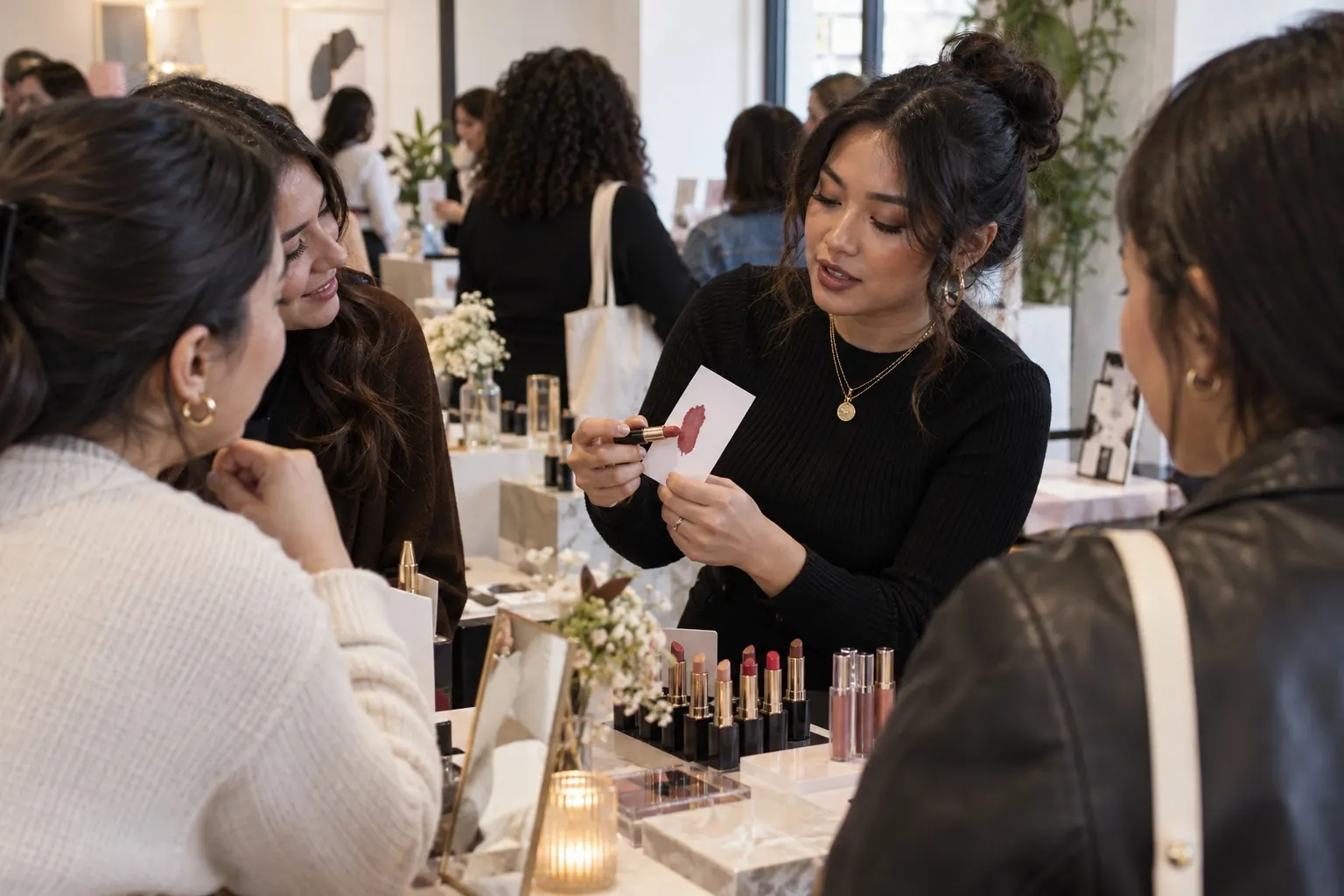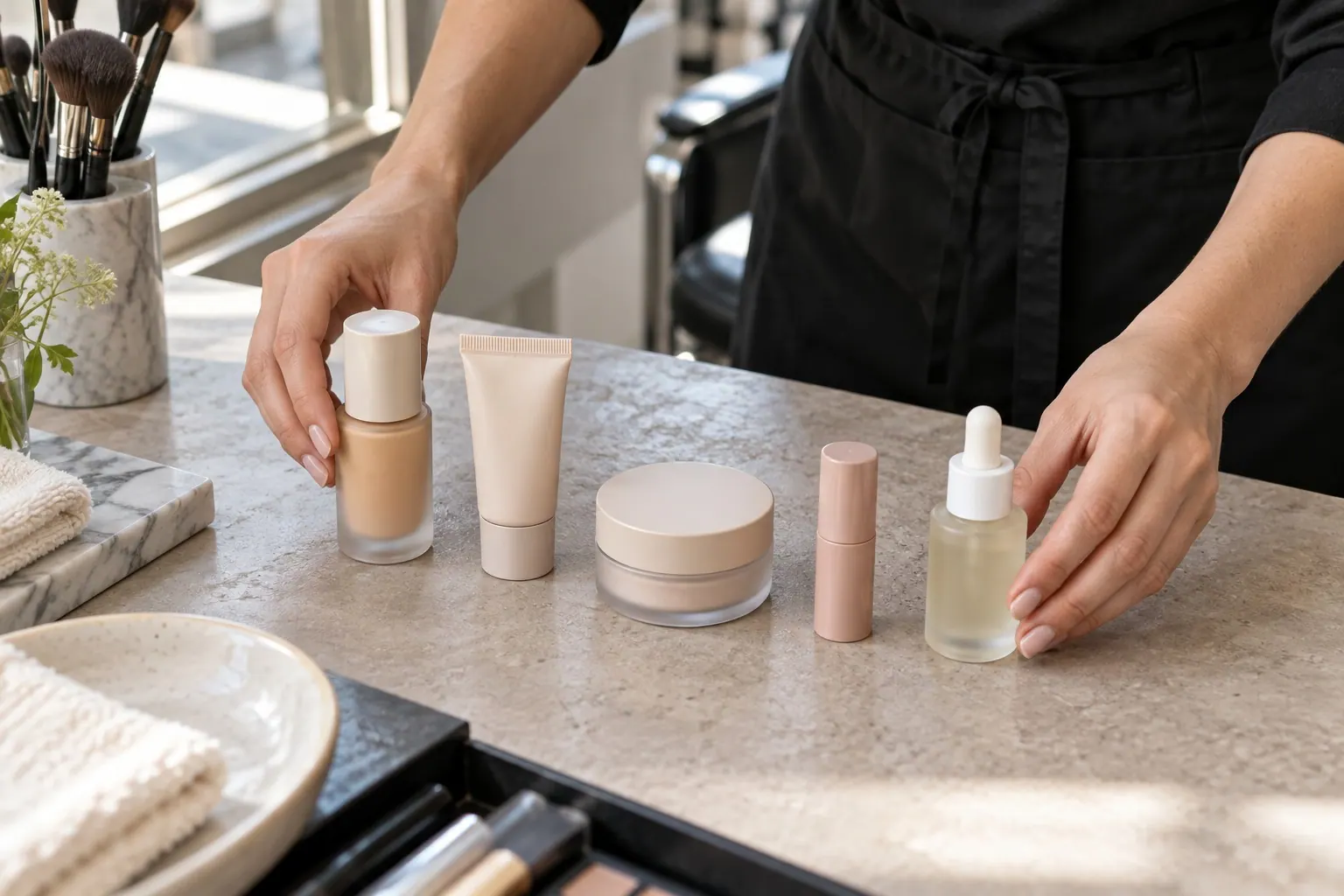
A makeup sample can look promising under studio lights and still fail the work a product must do: suit the intended customer, perform consistently, arrive in sound packaging, and make financial sense at the planned price. A creator who samples without a written method can mistake novelty for demand or repeat a supplier claim as a personal finding.
A stronger process begins with the customer and the job the product should do. It then compares samples under recorded conditions, separates observation from claims that need separate evidence, and ends with a documented decision. Sampling cannot prove that a market exists, but it can help a creator reject poor candidates before investing in a launch.
viaGlamour describes ordering branded samples through its app and account workflow. The public help page does not settle every account’s eligibility, sample price, shipping charge, production timing, or whether a sample matches a later customer order. Confirm those terms for the specific product and destination before setting a budget. (viaGlamour: branded samples).
Start with a product brief, not a shopping cart
Write a one-paragraph brief before ordering. State who the product is for, the situation in which it will be used, the problem it should address, and the price range you are testing. Keep the claim modest: “a comfortable lipstick for long workdays” is a testable positioning hypothesis; “a lipstick everyone will love” is not.
List only the product categories and variants needed to answer the most important questions. If shade range is central, sample shades that reflect the audience you actually intend to serve. If the question is formula feel, compare a small number of formulas rather than ordering every attractive item in the catalog. Record why each candidate is in the test. That reason will help distinguish a useful sample from an impulse purchase later.
Before ordering, check the current supplier terms for the exact SKU, label options, sample versus production-unit differences, destination, and shipping. Save the product page and written answers with the date. A catalog description is a lead for investigation; it does not establish performance, compliance, or customer demand.
Use the same review sheet for every sample
A useful scorecard captures observations rather than creating a false impression of laboratory precision. Give every sample the same fields:
| Review area | What to record |
|---|---|
| Product identity | Supplier, SKU, shade or variant, lot or batch information if provided, order date, and arrival condition |
| Intended use | The customer and occasion from the brief; what the product must do in that context |
| Application | Amount used, tools, preparation, number of layers, and any difficulty applying or blending |
| Appearance | Shade under stated lighting, finish, visible texture, and how the result appears in ordinary photos or video |
| Wear and removal | The time and conditions of each observation, transfer or fading noticed, comfort, and removal experience |
| Packaging | Closure, dispensing, leakage, label quality, damage, and ease of use |
| Repeatability | Whether a second use or another unit gives a similar result, if a second unit is available |
| Business fit | Confirmed product and shipping costs, expected selling price, margin assumptions, and unresolved supplier questions |
Use plain descriptions such as “the shade looked warmer beside the window than under the room light” instead of a score that hides the conditions. If numerical ratings help compare a large set, define the scale in advance and keep the written observation beside each number. A rating is a sorting aid, not proof that one formula is objectively superior.
Make the test repeatable enough to learn from
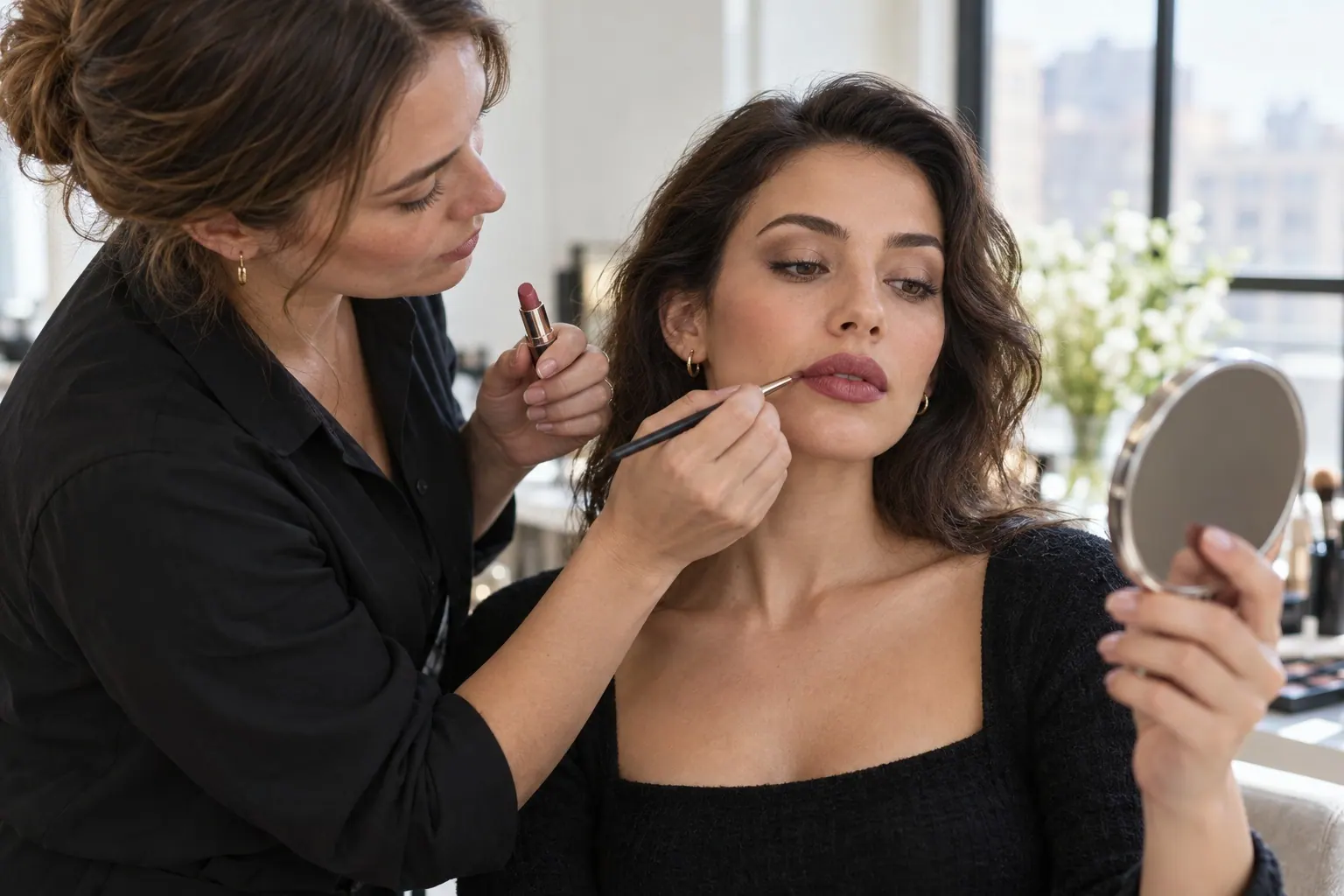
For each candidate, record the product, shade, amount, skin preparation, tools, date, and lighting. Photograph the result in the same location and at a consistent distance when possible. Avoid filters and automatic edits that change color. A daylight photo and an indoor photo can reveal how presentation changes, but neither captures every buyer’s skin, device, or environment.
If wear matters to the intended use, choose checkpoints that make sense for that use and write down when each observation was made. A product intended for a short event does not need the same schedule as one positioned for a full workday. Note what you actually see—such as fading, transfer, creasing, or discomfort—without turning a single test into a universal promise. Repeat the test on another day when the result could materially affect the decision.
Keep one variable stable when comparing candidates. For example, use the same preparation and application method while comparing two shades. If several things change at once, you will not know whether the difference came from the product, the lighting, or the application. If another person participates, record that person’s consent and avoid presenting one person’s reaction as representative of all customers.
Separate what you observed from what the supplier claims
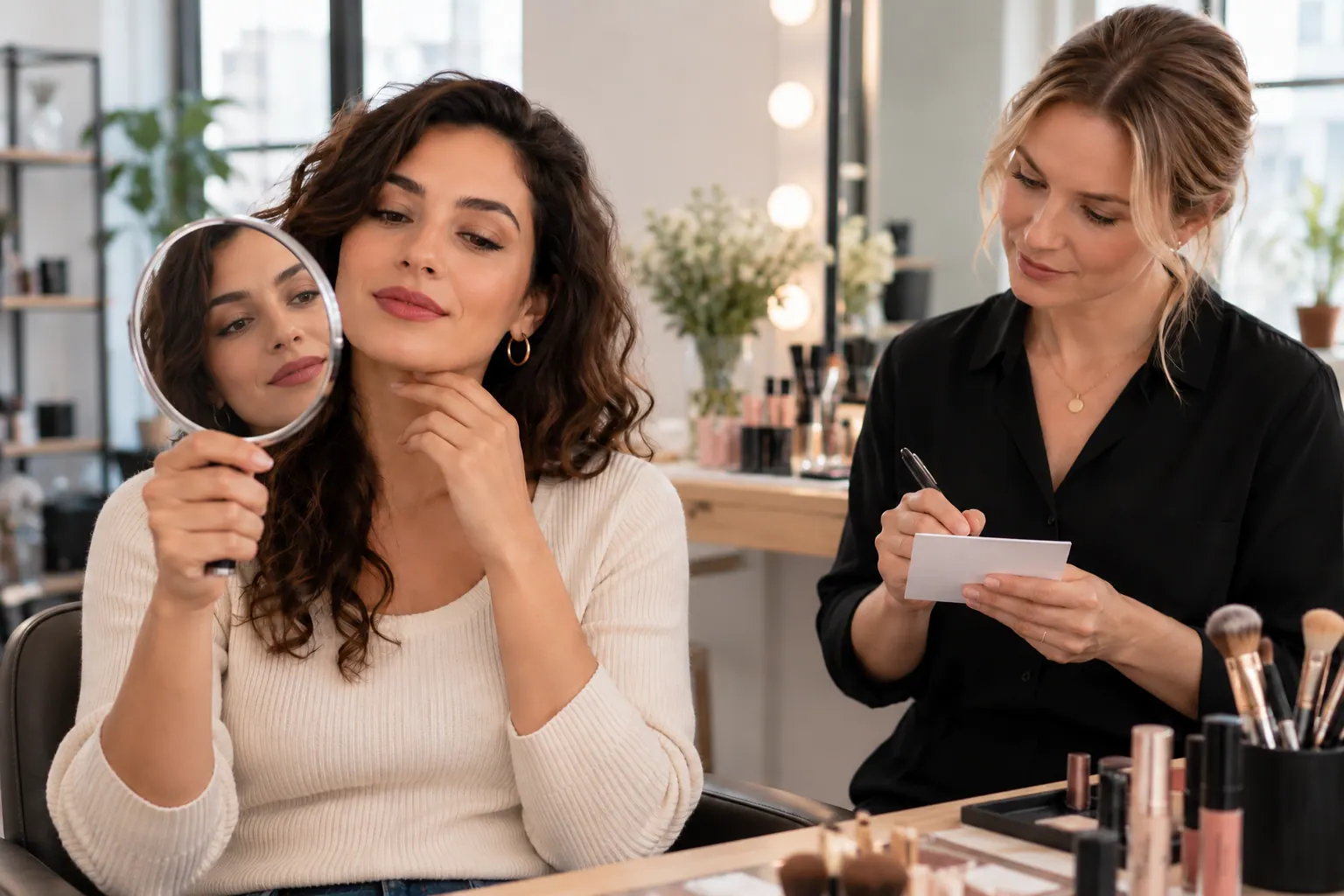
A short sample review cannot establish every performance or safety claim. Treat statements such as “waterproof,” “transfer-proof,” “hypoallergenic,” or a specific wear duration as unverified until appropriate evidence supports the exact product and wording. Ask the supplier what substantiation exists and whether it applies to the formula and product version being considered.
In the United States, FDA explains that cosmetics claims must be truthful and not misleading, and that intended use can cause some products to be regulated as drugs. FDA does not pre-approve cosmetic claims. A creator should not convert a supplier description, a single wear test, or a participant’s comment into a treatment claim. Check the wording intended for the label, product page, and promotional content against the applicable evidence and rules. (FDA: Cosmetics Labeling Claims). Requirements differ by market, so confirm local rules before selling elsewhere.
If the sample was free, discounted, or provided with an expectation that you discuss or promote it, say so clearly when you publish an endorsement. The FTC’s guidance treats expected promotion in exchange for free products as a material connection; its examples distinguish that from an ordinary sample handed to any customer without a promotional expectation. Disclose the actual relationship near the recommendation and in the format where readers encounter it. (FTC: Endorsement Guides FAQ).
Set decision rules before the result feels personal
Decide in advance what would make a candidate unsuitable. A leaking package, a shade range that misses the intended customer, a formula that repeatedly performs poorly under the stated use, or an unverified claim central to the product’s appeal may be a reason to stop or ask for more evidence. The appropriate threshold depends on the product and the brand brief; one universal score or wear-hour cutoff would give false precision.
Keep three possible outcomes: advance to a more complete review, request clarification or another sample, or reject. Record the reason and the evidence behind it. A sample can pass the product review while the business case remains unresolved because costs, production consistency, labeling, or fulfillment are unclear. Those are separate gates.
Do not assume the sample is identical to the unit a customer will receive. Ask whether the sample uses the same formula, packaging, label process, and production controls as regular orders. If the answer is unclear, mark consistency as unknown and request documentation or a production-unit check before promising a result to customers.

Turn the review into a launch decision
After testing, compare performance, customer fit, confirmed costs, supplier responses, and open risks with the original brief. Model contribution using product cost, shipping, fulfillment, payment fees, discounts, and a returns allowance; label assumptions until real orders test them.
If a candidate still looks promising, take the smallest next step that answers a real question: request a second unit, confirm the label and production process, ask target customers about the concept without leading them, or test a limited launch with clear service terms. Do not order a broad product line simply because the samples photograph well. The aim is to learn whether a specific offer merits more work while the cost of learning is still manageable.
A good sample process records what was tested, the conditions and observations, what remains unverified, and why the product advanced or stopped. A few samples inform a decision; they do not prove broad demand or guarantee repeat purchases.