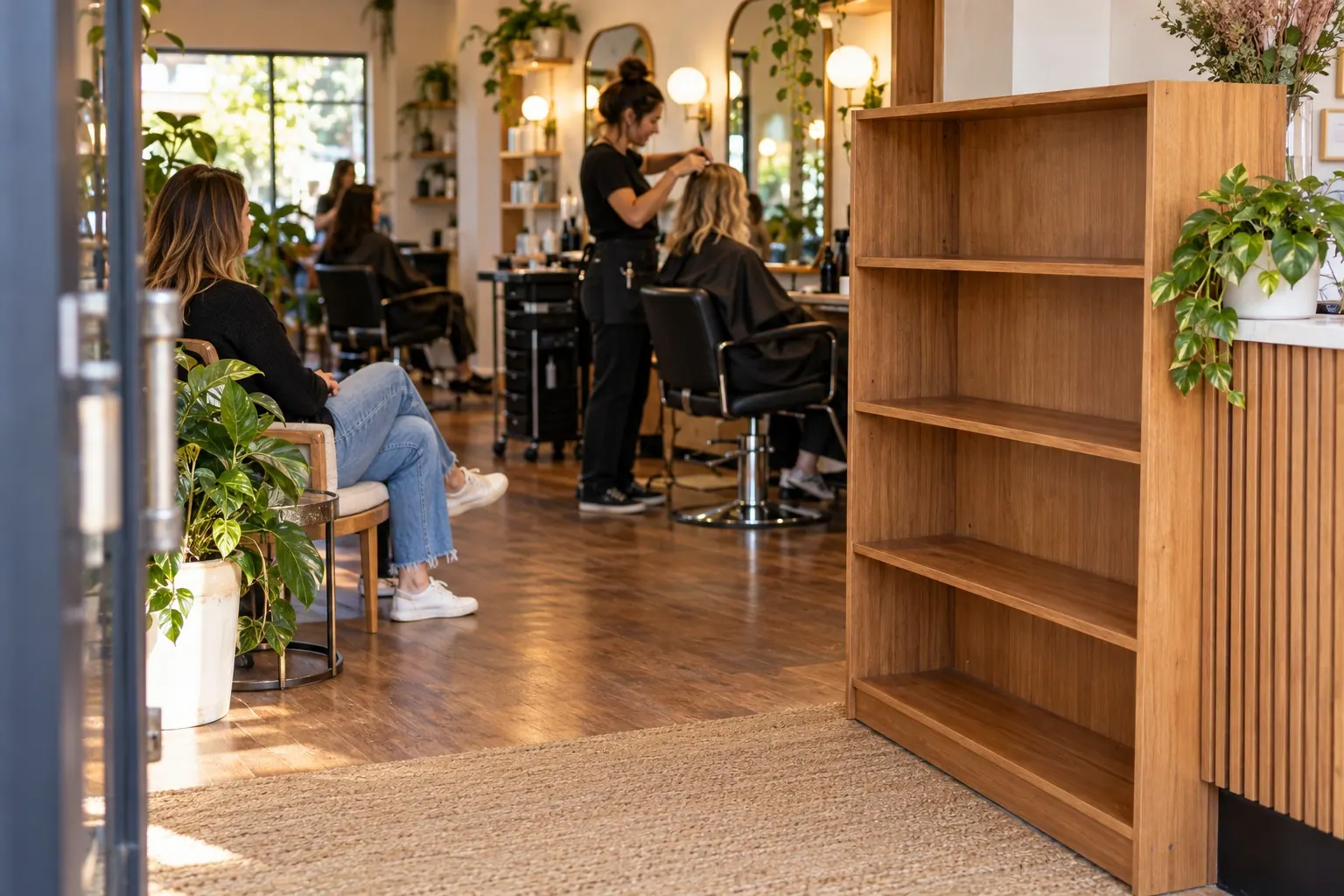
A shelf without products can mean that a salon has not explored retail. It can also mean that the owner prefers to focus on services, works with an outside supplier, has no display space, or sees little value in selling products. A Google Business Profile may help a freelancer find a salon and notice what it presents publicly, but it cannot reveal the owner’s retail strategy, customer demand, purchasing budget, or regulatory readiness.
That is the starting point for a responsible private-label beauty offer: use public information to form a question, confirm the answer with the business, and scope design only after the commercial and product responsibilities are clear. The freelancer’s opportunity may be a product line, a packaging refresh, a retail display, or no product project at all.
What an online profile can—and cannot—tell you
Search a small set of relevant categories and locations, such as hair salon + city, day spa + neighborhood, or esthetician + city. A profile may show categories, service information, a booking link, photos, products, and reviews; available fields differ by profile and business type. An active booking link confirms that a route to booking is presented. It does not prove that the calendar is full or that the business has retail demand. A recent review is a customer account, not a revenue report.
Look at photos as context, not a full inventory. A shelf visible in an owner photo might show brands the salon retails; a visitor photo may capture a different date or angle; no shelf in the profile means only that you did not see one in the images you reviewed. Google supports owner and customer photo updates, so confirm timing and details on the salon’s own current website, shop, booking page, or social profile before drawing a conclusion. (Google: About photo updates from customers)
A first-pass note should use restrained language: “I did not find an own-label product on the current profile or linked shop” is a research observation. “The salon has an untapped product business” is an unverified conclusion. If the salon already sells national brands, that fact may point to an established retail operation, a supplier relationship, or simply a service recommendation; the owner must explain which.
Verify the opportunity with the owner
Before recommending private label, learn how the salon currently thinks about retail. A short discovery conversation can establish whether the owner wants to sell products at all and whether that goal fits the business. Ask questions such as:
- Do clients regularly ask to buy or repurchase a product used during an appointment?
- Which products, if any, are already sold, and what role do they play beside the services?
- What has the salon tried before? What did the owner learn from the result?
- Would an own-label product solve a specific problem, or is the current third-party assortment working well?
- Who would choose the formula, supplier, price, claims, packaging, and fulfillment plan?
- What resources and timeline are available for samples, minimum orders, label review, storage, and customer questions?
Customer questions are useful qualitative signals. They become stronger evidence when they recur and connect to a concrete use, but they still do not guarantee purchases. Ask the owner how they know the interest exists and what a small, low-risk test would look like. If there is no clear reason to sell a product, a freelancer can propose a different service or leave the lead alone.
A salon’s service type may help frame discovery, not dictate a product. A color specialist might investigate how clients maintain a chosen style at home. A spa may already have a curated supplier assortment. An esthetician may have a product idea that requires qualified safety, ingredient, or claims review. The same prompt will not suit all three businesses.
Map the work before offering a “starter line”
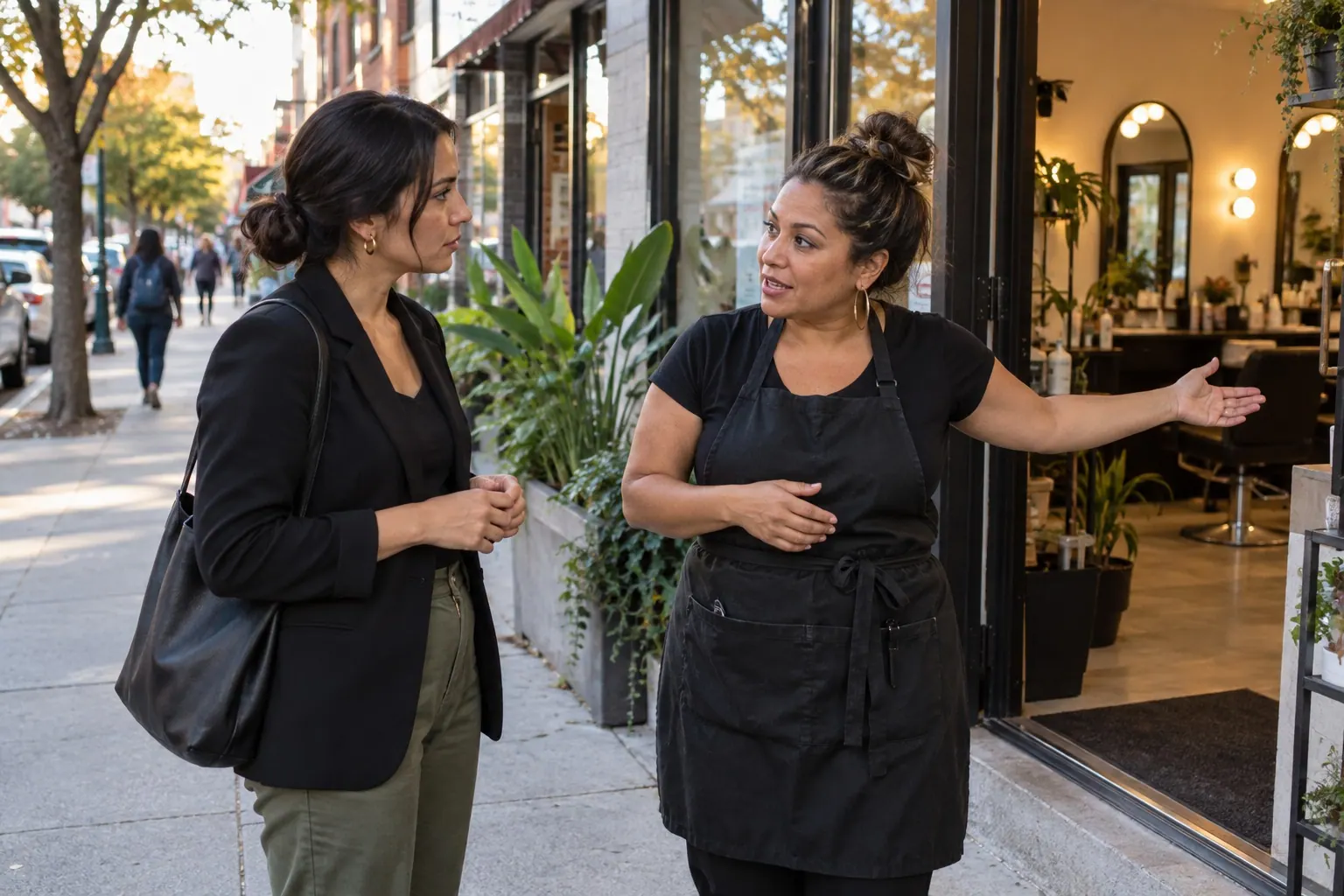
A private-label project is larger than a logo and a label. It may include product selection, supplier evaluation, packaging design, claims review, manufacturing, inventory, fulfillment, product photography, and customer support. A freelancer should define which tasks they are equipped to perform, which belong to the salon, and which require a manufacturer, qualified regulatory professional, or other specialist.
A scoped first engagement could be a paid feasibility and design brief. Depending on the salon’s needs, it might cover:
- Customer use case: the service, take-home routine, or customer question the product is meant to address.
- Commercial check: target customer price, supplier cost, order quantities, shipping, payment fees, display cost, and the salon’s expected contribution.
- Supplier comparison: product specifications, sample availability, minimum order, lead time, geographic coverage, returns, and who manufactures and fulfills orders.
- Brand fit: whether a product sub-line should use the salon’s identity or establish a separate visual system.
- Packaging scope: the number and types of labels, containers, sizes, display materials, product page, and launch assets required.
- Responsibilities and approvals: who confirms ingredients, legal label copy, safety information, product claims, final artwork, production, and customer-facing instructions.
Set the product count from the customer use case and the supplier’s constraints. A single item with a clear routine may make a better pilot than a three-product set that requires extra inventory, formulas, and explanations. Conversely, a supplier’s minimum order or product format may make a single item impractical. The proposal should show those constraints before the client approves the design.
Confirm cosmetic claims and labels before launch
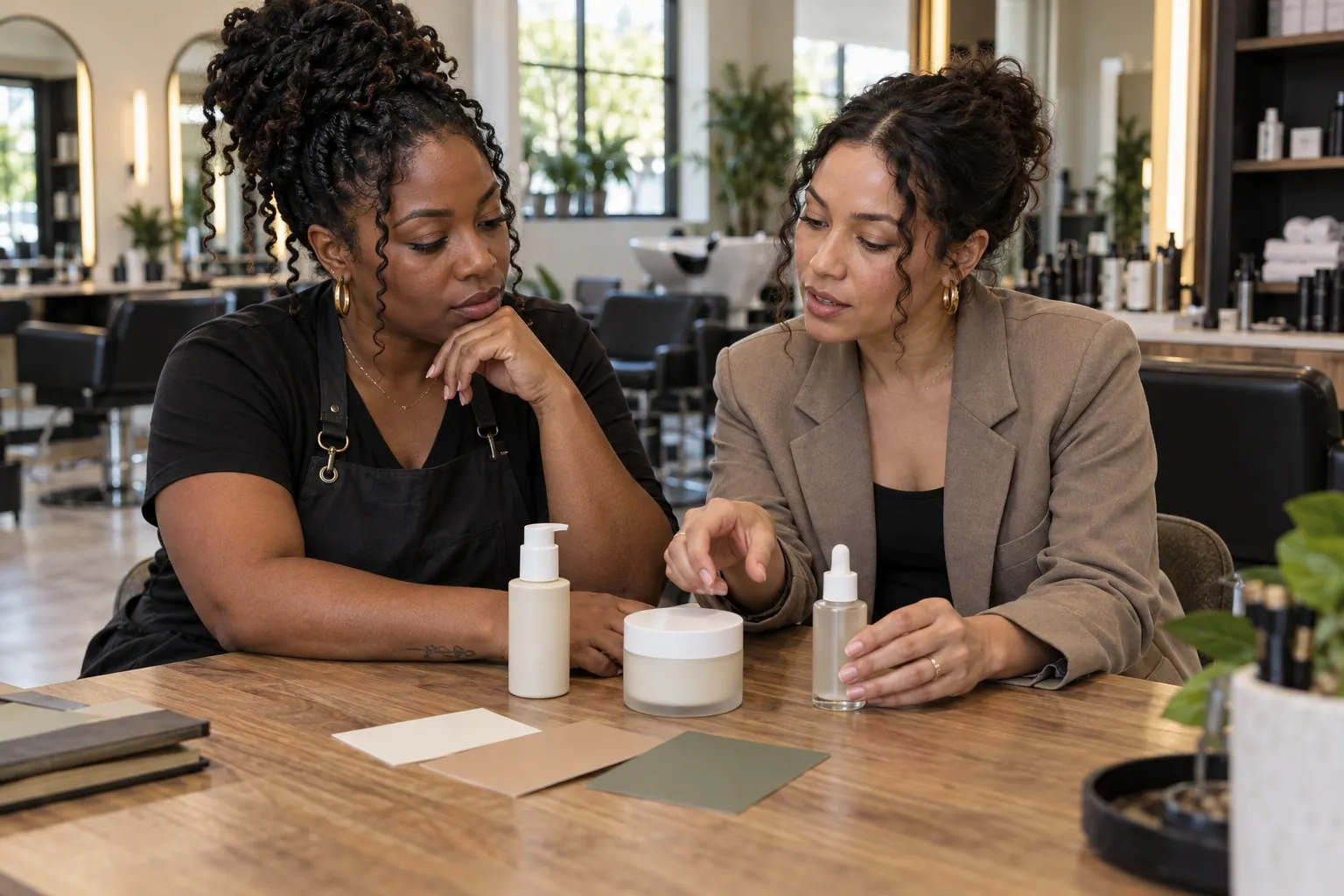
Beauty packaging makes product claims visible. In the United States, the FDA says cosmetics generally do not require premarket approval, with an exception for certain color additives, and the companies or individuals marketing cosmetics have legal responsibility for product safety. Retail cosmetics also have ingredient-labeling requirements. Verify the current obligations for the product, responsible parties, and market before sending final artwork to production. (FDA: Cosmetic products; FDA: Summary of cosmetic labeling requirements)
Claims can affect how a product is regulated. FDA explains that claims to treat or prevent disease, or to affect the structure or function of the body, can make a product a drug or both a drug and a cosmetic. A massage oil described as lubricating skin and adding fragrance differs from one promoted as relieving muscle pain. Cosmetic label claims must also be truthful and not misleading; advertising claims may involve Federal Trade Commission rules. These are U.S. examples, not global requirements. Other countries and regions have their own frameworks. (FDA: Cosmetics labeling claims; FDA: Is it a cosmetic, a drug, or both?)
The designer should not invent ingredients, benefits, warnings, country-of-origin statements, or required label copy. Get final product specifications and label language from the supplier and the party responsible for the product. Make clear in the agreement whether the freelancer is providing visual design only or also coordinating approved copy. Do not accept responsibility for product safety or legal compliance unless the freelancer is qualified and contracted to perform that work.
This gate may change the project economics. A product category that involves drug claims, additional testing, safety substantiation, special labeling, or a different regulatory path may need more time and qualified review than a standard cosmetic label design. Do not promise a launch date before those responsibilities and dependencies are understood.
Ask what would make the project viable
A checklist can help organize a conversation, but a weighted score based on profile impressions can make weak evidence look rigorous. Do not assign points for a high rating, booking link, or beautiful interior. Before proposing product design, confirm these conditions:
- Owner interest: the salon wants to investigate retail and has identified a customer or service reason.
- Product fit: the product and claims are appropriate to that use and can be sourced for the salon’s target market.
- Commercial viability: cost, minimum orders, shipping, pricing, storage, and likely support needs have been considered.
- Responsible-party clarity: the salon and supplier have agreed who handles product safety, ingredient data, required label copy, claims, production, and customer issues.
- Design scope: deliverables, approvals, revision rounds, production files, and excluded work are stated in writing.
If a condition is unresolved, the next step is research or a paid feasibility engagement—not a confident promise that an own-label line will sell. If the salon is happy with its existing product assortment, an opportunity may instead be a packaging refresh, a more useful display, or no retail work at all.
Show the physical idea without implying a result
Once there is a verified use case and the supplier has shared accurate specifications, the designer can develop packaging directions and a display concept. A mockup helps the owner evaluate a visual system; it does not show the finished product or validate a formula. Keep concept images distinct from product photography, and do not use staged scenes as customer testimonials or evidence that a product has sold.
A display should be designed from measurements and the salon’s actual workflow. Google Maps photos may suggest a counter or shelf, but they do not reliably reveal dimensions, foot traffic, inventory space, or permission to place retail fixtures. Measure the area in person or obtain current measurements from the salon before preparing production files.
Outreach should invite correction
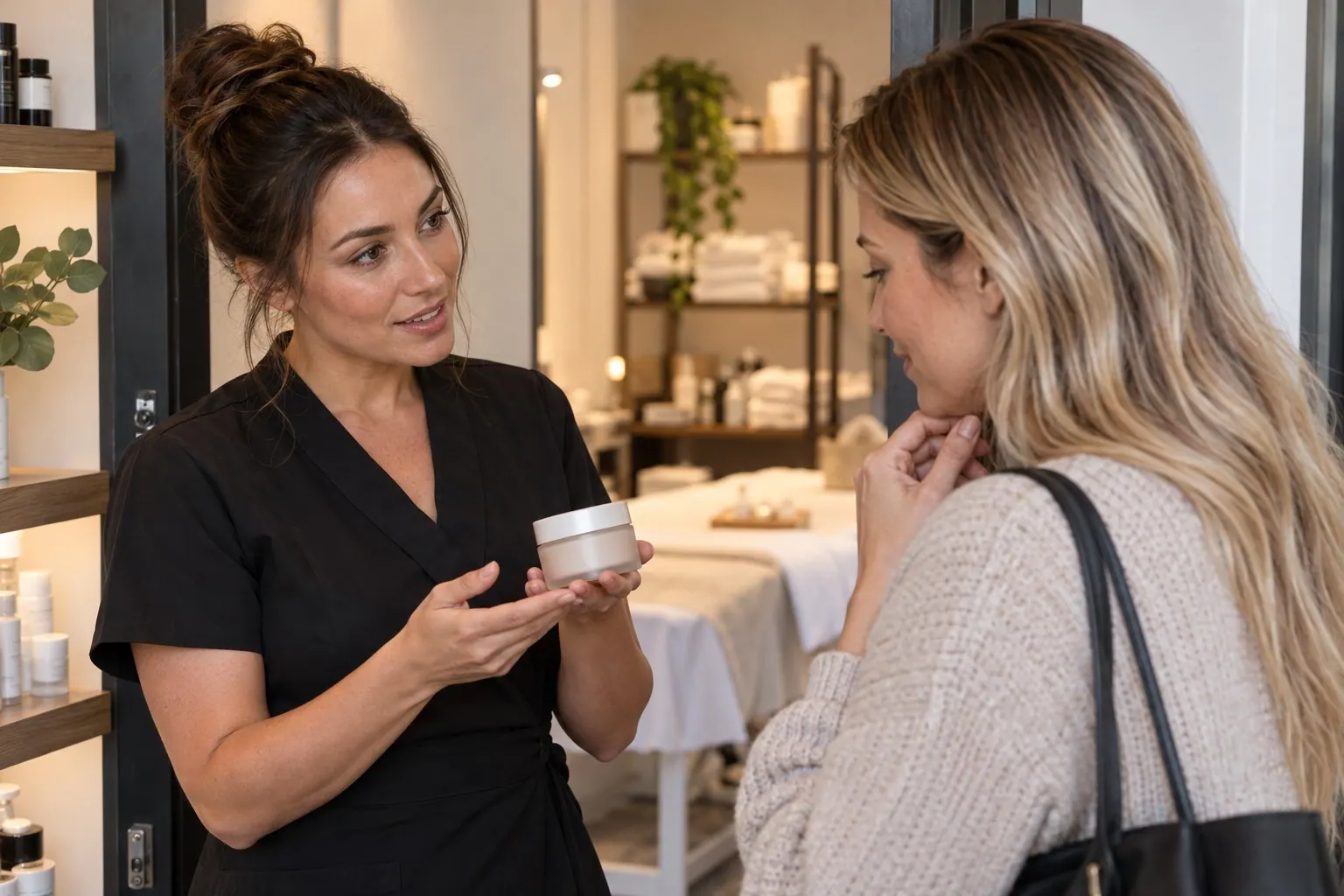
Public research is an opening for a relevant question, not proof that the owner has overlooked a profitable opportunity. A respectful message can mention one verified detail and ask whether the topic is a priority. For example:
I found your studio while researching salons in [city] and saw that your services include [verified service]. I work on packaging and visual systems for beauty products. Are you considering any retail or own-label products for clients, or is your current supplier assortment already the right fit?
The note gives the owner room to correct the researcher’s assumption. Avoid claims that the salon has “no retail” or is “leaving money on the table” unless the owner confirms it. Use appropriate business contact methods, keep outreach individual and relevant, and follow the marketing and privacy rules that apply to the sender and recipient.
Ruul belongs after a client relationship exists
Ruul is not a source of salon leads. If the freelancer and salon agree to a project, it may be considered as one option for payment requests and commercial invoicing. Ruul’s current support documentation says clients can pay through a link without opening a Ruul account; payment methods vary, and transfers are subject to verification and platform procedures. The freelancer should confirm current fees, service availability, invoice treatment, and payout timing before including Ruul in the project’s cash plan. (Ruul Support: How payment requests work; Ruul Support: Overview)
A product opportunity must be confirmed, not inferred
Private label may be a useful new revenue line for a salon, but an empty shelf, a full-looking calendar, or positive reviews cannot establish that it will be. A freelancer can add value by asking better questions, qualifying the product and supplier, defining responsibilities, and designing a package that reflects real specifications. The first deliverable may be an evidence-based plan; the packaging comes later, once the business has decided that a product is worth bringing to clients.