
A photograph of a crew in different clothes may raise a question about branded workwear. It cannot tell a freelancer whether the company has a uniform policy, what employees are required to wear, who pays for garments, or whether the owner wants a redesign. The same caution applies to vehicles, reviews, and business size: public presentation is a lead for discovery, not proof of an unmet need or a budget.
A useful workwear project begins when the owner or operations lead confirms a practical problem and explains what the garments must do. The freelancer can then connect the company’s identity to approved garments and decoration, coordinate production-ready files, and support a rollout the business has agreed to. For some clients, the right result may be a new system; for others, current uniforms work well, or safety requirements take priority over appearance.
Use Maps to find a question, not to diagnose a company
A search such as commercial cleaning + city or HVAC contractor + neighborhood can help locate businesses to investigate. A Business Profile may show company information, reviews, services, and owner or customer photos, but fields vary and the image history is incomplete. A crew may appear in street clothes because the photo predates a uniform, shows a non-work moment, or omits protective equipment required on site. Google allows owners and visitors to contribute photos and updates, so verify any observation against current material from the company itself. (Google: About photo updates from customers)
Do not infer that an owner has no uniform program from a handful of photos. Do not infer demand from review count or a polished fleet. Record only a restrained question—“Does the company want to make workwear more consistent?”—and look for an appropriate business channel to ask it.
Google’s consumer Maps terms prohibit mass downloading and bulk feeds, restrict copying content, and limit using Maps to create or augment certain mapping-related datasets—including business listings, mailing lists, or telemarketing lists—for services that substitute for or are substantially similar to Maps. Maps Platform API terms have their own rules for exporting and storing API content. These clauses should be read in their stated scope; they do not automatically make every independently verified freelancer prospect list a Maps substitute. Keep discovery proportionate, confirm company details through the company’s own channels, and do not copy profile text, reviews, or photos into a sales database or automate bulk extraction. Review the terms for the specific tool and method you use. (Google Maps End User Additional Terms; Google Maps Platform Terms)
Ask what the garment must do
The needs of a restaurant host, cleaning technician, landscaper, and electrical worker can differ sharply. Before recommending a garment, ask the client about role, environment, climate, laundering, replacement, sizes, branding, and purchasing process. Confirm who selects the supplier, who approves spending, whether employees receive the items, and how later orders will work.
A brief discovery checklist can cover:
- Which roles need garments, and what tasks do employees perform?
- Are garments required, optional, or supplied by the employee?
- What fabrics, fits, colors, or decoration have worked or failed before?
- How are sizes collected and substitutions handled?
- Does the client need a one-time order, new-hire replenishment, or a full ordering process?
- Who approves the logo, garment, supplier, budget, and production schedule?
This conversation determines whether the freelancer is providing identity design, garment selection support, decoration files, or coordination with a workwear supplier. Do not sell apparel as a guaranteed marketing channel. A logo on a shirt may make a company recognizable in some customer interactions; any effect on leads, trust, or sales would need evidence from that business.
Keep branding separate from protective equipment
Workwear and personal protective equipment are not interchangeable. If a job requires high-visibility apparel, flame-resistant or arc-rated clothing, chemical protection, or another safety specification, the employer must determine requirements for the work and the applicable jurisdiction. In the United States, OSHA materials describe employer hazard assessment and requirements for specific contexts; construction PPE must also fit the worker. A designer should not select a garment as protective equipment based on color, fabric appearance, or a supplier mockup. Get the client’s documented requirements and confirm the exact product and certification with the qualified safety lead and supplier before applying branding. (OSHA: PPE assessment; OSHA: PPE in construction; OSHA: High-visibility garments in highway work zones)
That boundary also affects logo placement, decoration method, fit, and fabric. Some protective garments have restrictions on alterations or require compatible reflective trim and certifications. If a decoration could obscure, change, or compromise a safety feature, do not proceed until the client and qualified supplier have confirmed a compliant method. The freelancer’s scope should state that the client’s safety representative selects and approves PPE.
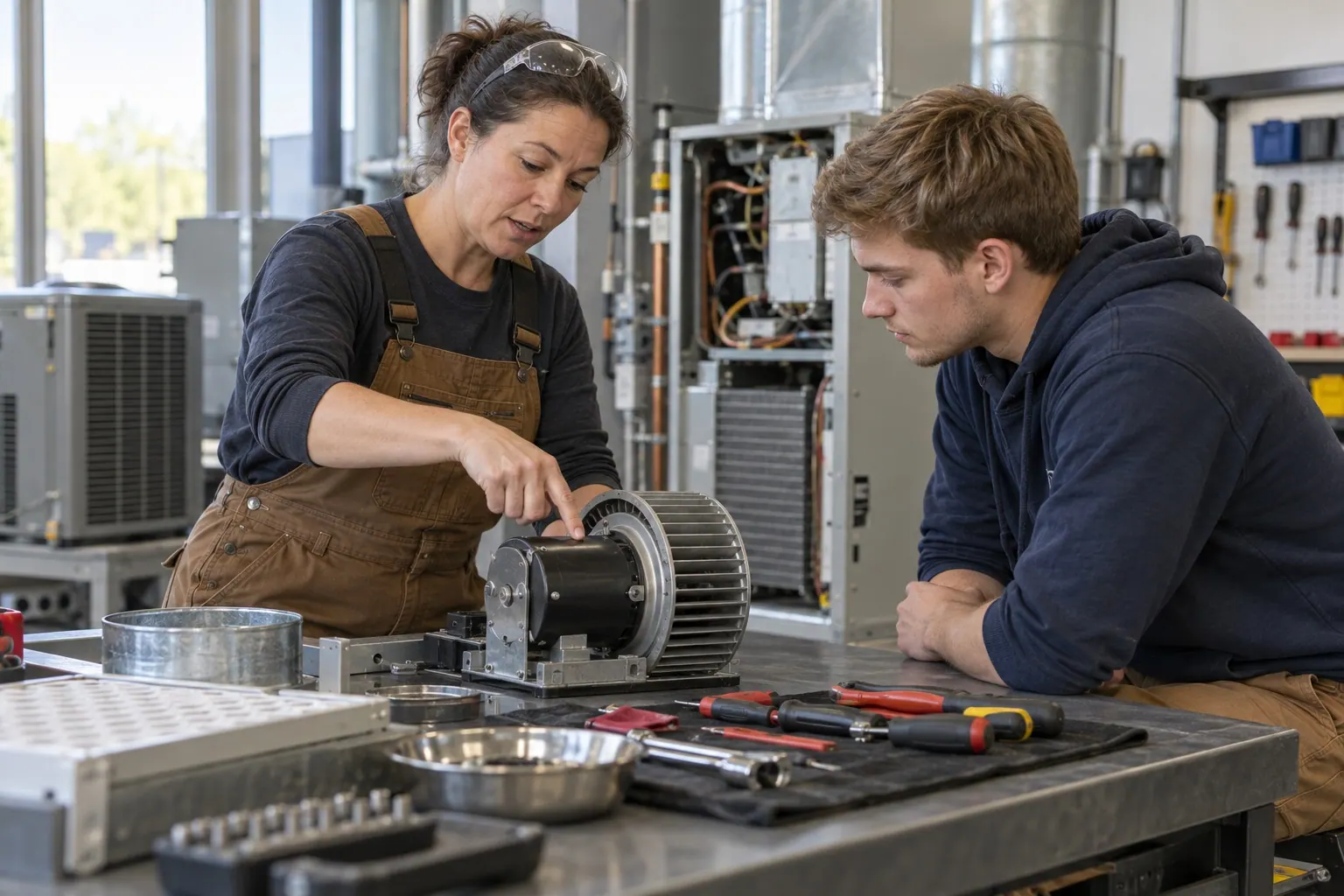
Package the design work around decisions the client controls
A “uniform system” can be a useful project name, but it should describe actual deliverables rather than promise an operational result. A practical engagement might include:
- Current-state review: interview the client and inspect garments, logos, approved suppliers, and ordering process.
- Garment brief: document roles, environment, fit, sizes, laundering, target cost, and any client-provided safety specifications.
- Identity application: confirm the approved logo version, colors, placements, and decoration method for each selected garment.
- Production files: prepare print or embroidery artwork in the format requested by the chosen decorator; confirm digitization and other vendor work separately.
- Sample approval: arrange a sample or proof where appropriate and collect client approval for materials, fit, color, placement, and cost before a larger order.
- Rollout materials: supply a size-collection form, garment guide, care notes from the manufacturer, and reorder information if these are in scope.
A role hierarchy—such as a distinct garment for a supervisor—is optional. It should reflect how the client wants teams identified, not a designer’s assumption that visible rank improves management. Similarly, “new-hire kits” make sense only if the client wants a repeatable process and has confirmed who will order and pay for replacements.
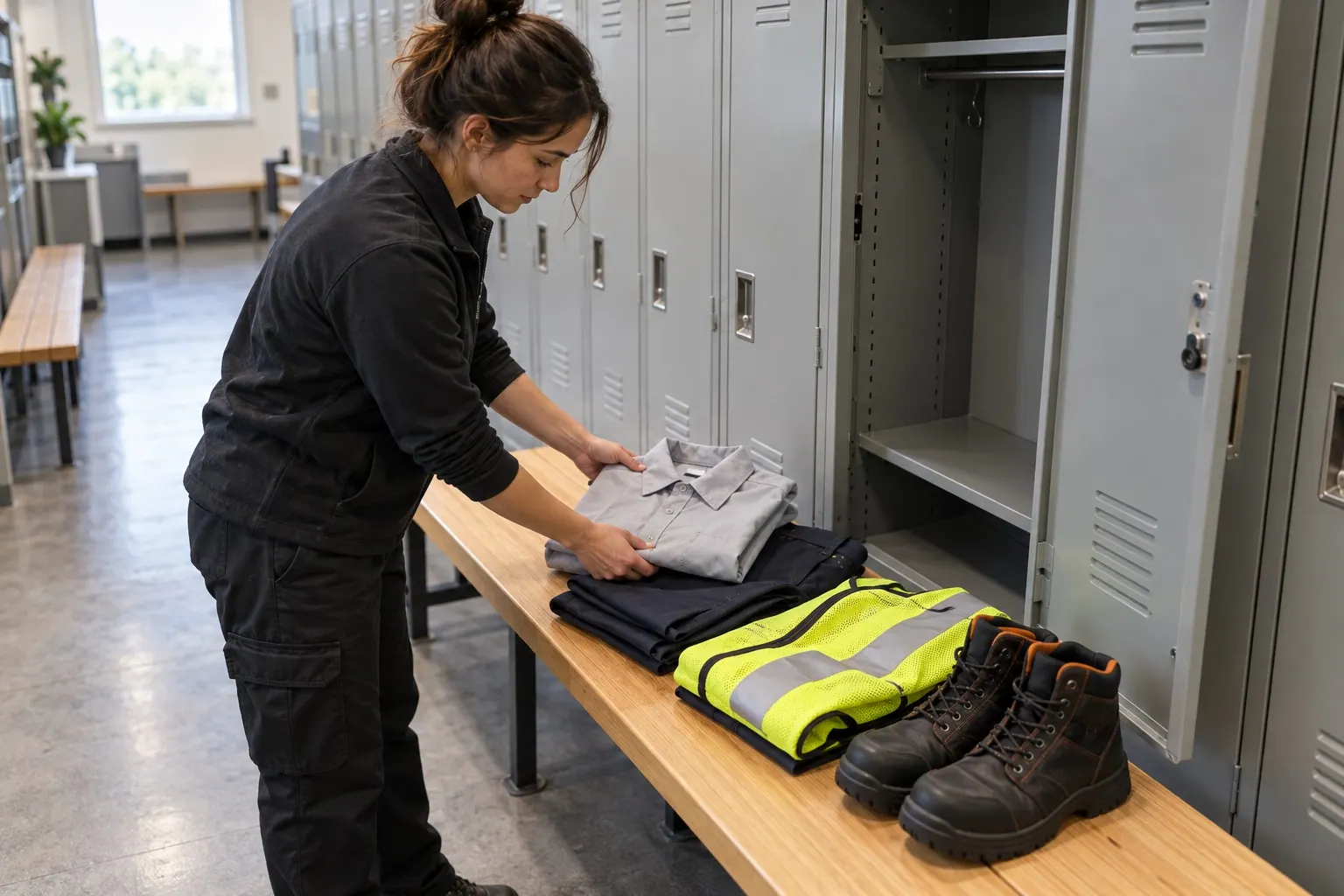
Price the scope and production coordination honestly
Separate the one-time design work from costs the client pays to garment suppliers, embroiderers, printers, or distributors. Quote artwork development, revisions, sampling, digitization, coordination, and location rollout explicitly. The price of a shirt is not the total project cost, and an online listing cannot verify shipping, decoration, and size availability for every order.
If a company has multiple locations, confirm whether purchasing is centralized and whether each location follows the same brand and safety requirements. Do not use uneven photos as evidence that there is no central standard. A multi-location project may require a central approval process, regional inventory, local vendor coordination, and separate delivery fees; scope these only after discussion.

Offer replenishment only when the client wants it
Replacing garments for new staff, seasonal needs, wear, or expansion can create future work, but no cadence is automatic. Ask how the client currently manages replacements, how often orders occur, which sizes are stocked, and whether the supplier supports the needed variants. If the business wants help, offer a reorder sheet, approved artwork library, or a quoted replenishment coordination service. Make each order and production dependency visible.
Avoid promising a fixed number of refreshes per year. Turnover, wear, climate, supplier availability, and customer-facing roles vary. Reorder frequency is a client-specific outcome to observe after the first order, not an assumption to embed in the freelancer’s forecast.
Outreach that leaves room for correction
A relevant introduction connects one current, verified observation to a question the business can answer. For example:
I found your company while researching field-service providers in [city]. I’m developing workwear and branding systems for teams that need consistent garment artwork and repeatable ordering. Is workwear something your operations team is reviewing, or does your current program already meet the need?
Do not tell the company its staff “look unprofessional” or claim to have audited its uniform program from public photos. Contact the appropriate business representative through an appropriate published channel, make one relevant inquiry, respect an opt-out, and follow the marketing rules applicable to the sender and recipient.
Ruul is a post-sale payment option
Ruul does not find uniform clients. If a freelancer and a company agree to a project, Ruul may be considered for invoicing and payment requests. Ruul’s support documentation says a client can pay through a payment link without creating a Ruul account; payment methods and timing depend on eligibility and verification. Confirm the current service terms, fee, invoice structure, and payout process before relying on it for cash planning. (Ruul Support: How payment requests work; Ruul Support: Overview)
The opportunity is a confirmed operating need
A company may benefit from consistent branding on garments, but a photo does not reveal its uniform policy, purchasing authority, safety requirements, or interest in redesign. The freelancer’s job is to clarify those conditions, define a suitable scope, and prepare production files that match specifications the client and supplier have approved.
That work is more specific than placing a logo on a polo—and more honest than promising that branded clothing will generate leads. When a client confirms the need and owns the operational decisions, a design system can help make the order, approval, and reordering process easier to repeat.