A supplier’s website can make a cosmetics partnership look simple: choose a formula, add a logo, and begin selling. The real decision is whether the supplier can show what happens to the exact product you plan to sell, where it is made, what evidence supports its safety and claims, and who handles problems after launch.
This is a practical due-diligence process for founders evaluating a private-label cosmetics manufacturer. It uses U.S. requirements as a reference point because the U.S. is a common target market for online brands. Requirements differ by country and by product. The goal is not to certify a supplier from its website; it is to build a record of product-specific evidence and unanswered questions before you commit.
Start with the exact product and facility
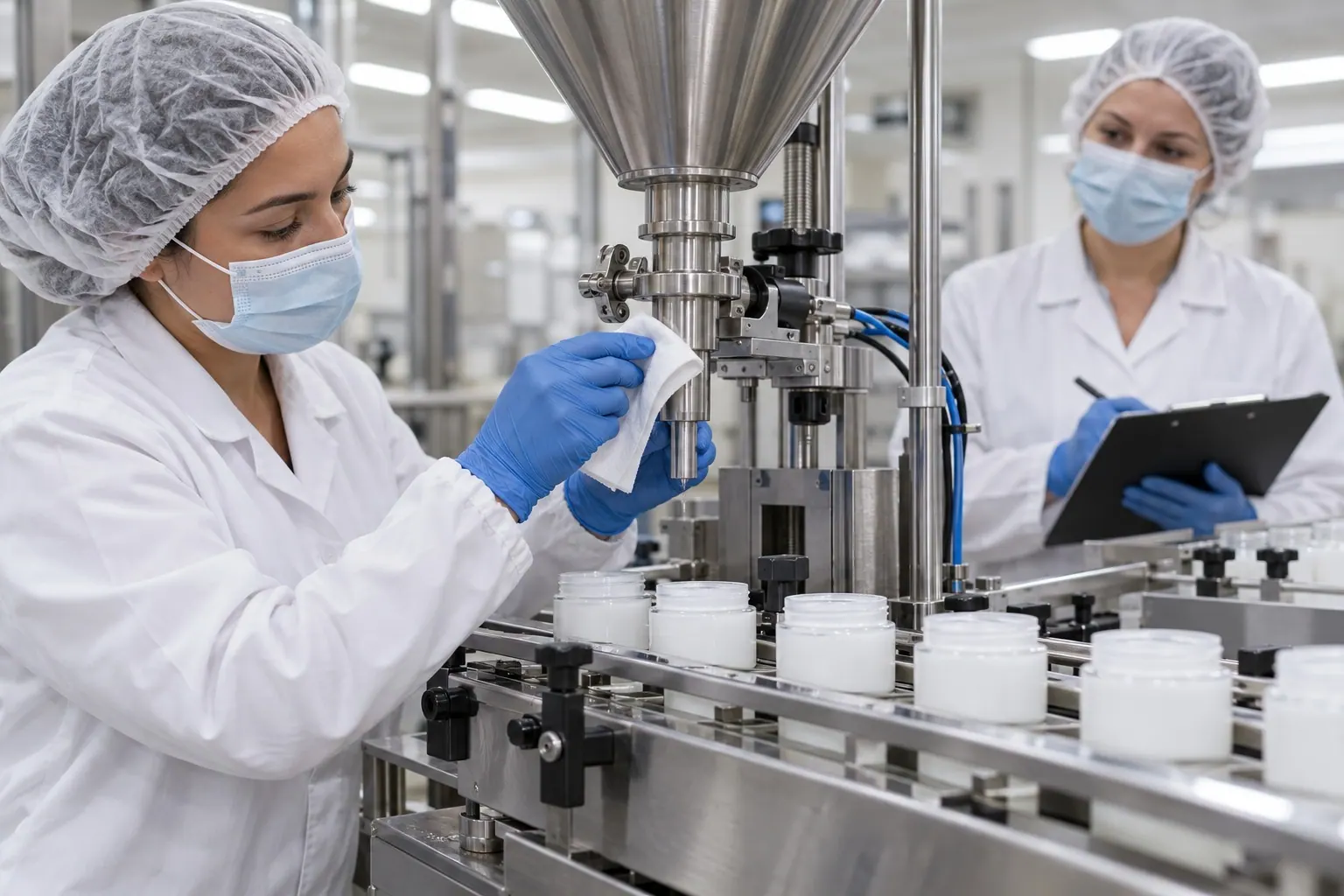
Ask which facility will manufacture or process each product under consideration. Request the facility’s legal name and address, the product identifier or formula reference, and a written description of which steps happen there: compounding, filling, packaging, labeling, or shipping. A company may use different facilities or outside partners for different steps, so a general statement about the supplier’s headquarters does not answer where the product is made.
Keep a product-specific file. It should connect the sample you evaluate, the product listing, the label artwork, the formula or specification, the batch or lot, and any testing records the supplier shares. If the sample, final product, or label changes, record the new version and ask which earlier documents still apply.
viaGlamour’s public pages, for example, describe a Canadian cosmetics operation and a broad range of private-label products. Those statements provide context for asking questions; they do not by themselves verify a particular formula, facility, claim, or batch. The same standard applies to any supplier. (viaGlamour homepage).
Treat certifications as scoped evidence
A certification is useful when you know who issued it, what facility and activities it covers, which standard it uses, and whether it is current. Ask for the certificate itself and check the issuer’s scope and validity dates. Confirm that the named site and operations match the product you are evaluating. A certificate for a company or another location may not cover the production line used for your item.
For U.S. cosmetics, MoCRA requires FDA to establish good manufacturing practice regulations. FDA’s MoCRA materials describe this requirement and ongoing guidance work. Ask the supplier what manufacturing controls it currently follows, what independent assessment or audit exists, and whether the documents cover the facility and product process in question. A certificate or a GMP statement does not mean FDA approved the facility or product. (FDA: MoCRA).
Request evidence for product safety and consistency
Do not ask only, “Is it tested?” Ask what testing or safety evidence exists for the specific product and who performed it. Depending on the formula and packaging, relevant records may include stability work, packaging compatibility, microbiological or preservative testing, and specifications for incoming ingredients and finished batches. The appropriate evidence depends on the product. FDA does not prescribe one universal set of tests for every cosmetic, but companies and individuals marketing cosmetics have responsibilities to ensure safety, and MoCRA requires the responsible person to maintain adequate safety substantiation records. (FDA: MoCRA).
For each record, note the product or formula identifier, date, method or standard, laboratory or reviewer, result, and any limitations. If a supplier shares a certificate of analysis or batch record, ask what specifications were tested and whether the document corresponds to the sample or batch you will receive. A generic document with no product identifier may be useful background but cannot establish the result for your exact product.
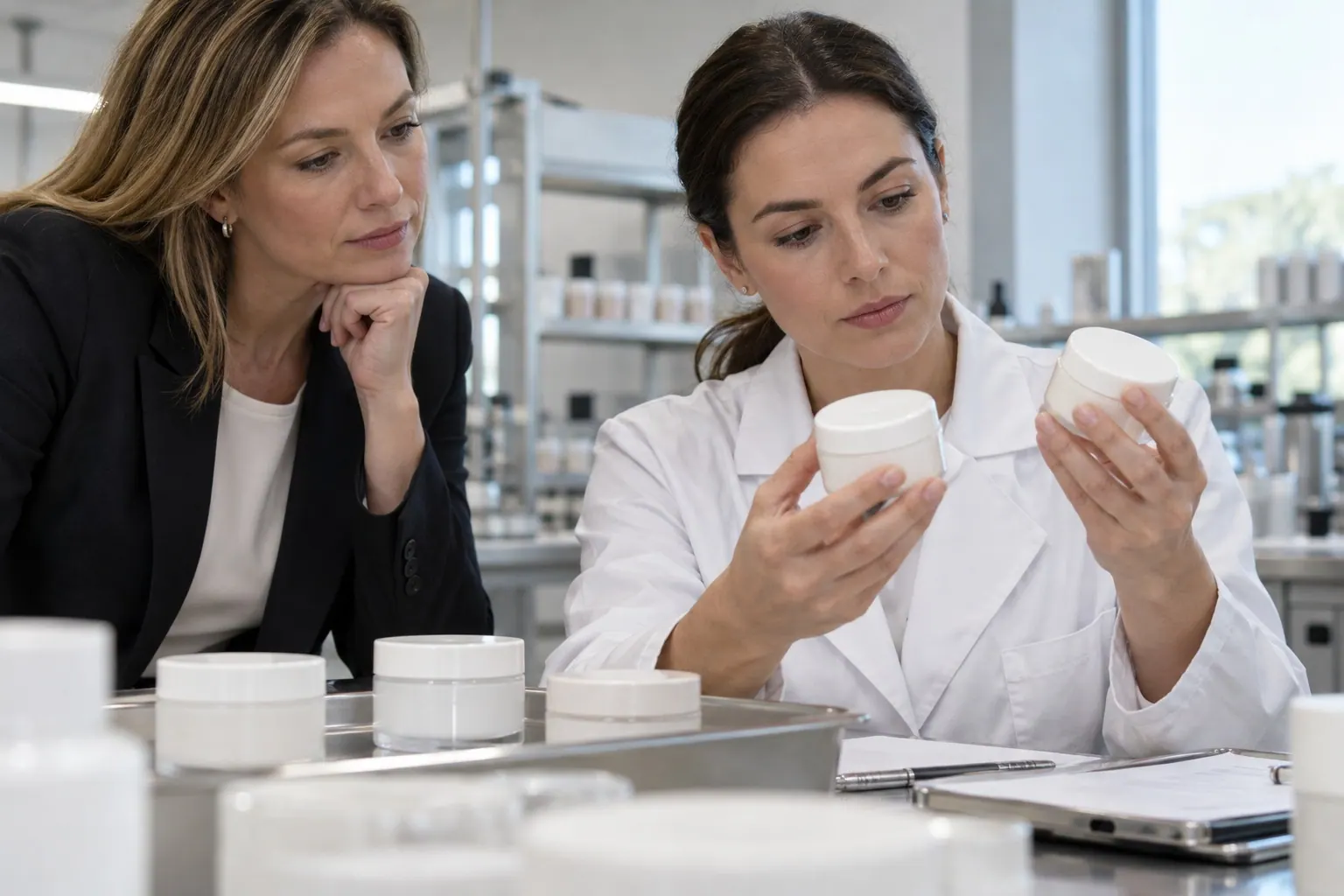
The sample also deserves its own evaluation. Record shade, texture, odor, packaging, application, and any difference from the product description. Request an explanation if the sample formula or packaging is not the production version. Your own review can reveal a mismatch, but it does not replace safety substantiation or support a broad claim about performance for every customer.

Check each marketing claim separately
Words such as “natural,” “vegan,” “cruelty-free,” “made in Canada,” or “hypoallergenic” need different evidence. Do not treat a group of badges as one general quality certification. For every claim you plan to use, write down the exact wording, the product it applies to, the supplier document that supports it, and who is responsible for keeping that support current.
- Origin: Ask which production steps and ingredients come from the stated country. In Canada, “Made in Canada” and “Product of Canada” have distinct criteria, and origin claims must accurately reflect the production and marketing context. (Competition Bureau Canada: Made in Canada claims).
- Ingredient or formula claims: Request the current ingredient declaration for each SKU and the scope of any vegan, organic, or other third-party certification. Do not assume that a claim for one formula applies to the entire catalog.
- Animal-testing claims: Ask what the supplier means by “cruelty-free,” whether it covers ingredients, finished products, suppliers, and relevant markets, and whether an independent program verifies the claim. Record any limits rather than repeating a broad term without context.
- Performance or safety claims: Request the evidence that supports the exact wording. FDA says cosmetic labeling claims must be truthful and not misleading; a claim to treat disease or affect the body’s structure or function can make a product a drug under U.S. law. FDA does not pre-approve cosmetic claims. (FDA: Cosmetics Labeling Claims).
A supplier’s claim can inform your review, but the brand still needs to understand what it tells customers and what documents support it. If the evidence does not cover the exact formula or wording, revise the claim or pause it until the gap is resolved.
Write down the compliance responsibilities
In the United States, MoCRA defines the “responsible person” as the manufacturer, packer, or distributor whose name appears on the cosmetic label. That role is not determined just by who owns the brand or the online store. The responsible person has specific duties, including product listing, safety-substantiation records, and serious adverse-event reporting. Manufacturers and processors generally have facility-registration duties, with exemptions for certain small businesses and products. Eligibility and exceptions are fact-specific. FDA registration or product listing is not an approval or endorsement by FDA. (FDA: MoCRA).
Before launch, put these questions to the supplier in writing:
- Which legal entity and facility manufacture, process, fill, label, and ship this product?
- Who is named on the retail label, and who will act as the responsible person under the target market’s rules?
- Who maintains the product’s safety substantiation and supporting records?
- Who handles facility registration, product listing, or equivalent filings where required?
- Who receives complaints, routes adverse events, keeps records, and submits required reports?
- How are formula, ingredient, packaging, or facility changes communicated and approved?
- What batch or lot information appears on the product, and how can a shipment be traced to the production record?
- Which product claims and certifications may the brand use, and what evidence supports each one?
- How are recalls, quality complaints, replacements, and customer notifications handled?
- Which costs, fulfillment promises, shipping regions, and account terms apply to the specific products?
Do not rely on a verbal assurance when the answer affects the label, regulatory role, testing, or recall process. Ask for the contract clause, current document, or written confirmation that identifies the relevant product and party. If the answer is unclear, get qualified regulatory or legal advice for the market before selling.

Read the response, then decide
A complete response should identify documents, dates, facilities, product identifiers, and responsible parties. A partial response can still be useful if it names what is missing, who will obtain it, and by when. “Fully compliant,” “fully tested,” and “certified” are conclusions; ask for the underlying record and its scope.
Use a simple status for every question: verified for this product, partly supported, unanswered, or not applicable with an explanation. A supplier can be a good fit while a document is pending, but the unresolved item should have an owner and a deadline before you make a claim or commit to launch. If a supplier will not identify the facility, tie a test to a product, or explain who handles complaints, treat the gap as a decision risk and compare alternatives.
Verification is a repeatable process, not a one-time homepage review. Keep the evidence with the product version, check it again when a formula, facility, label, rule, or marketing claim changes, and preserve the decisions that led to the final product page. That record makes it easier to answer questions from customers, retail partners, and regulators with specifics instead of adjectives.