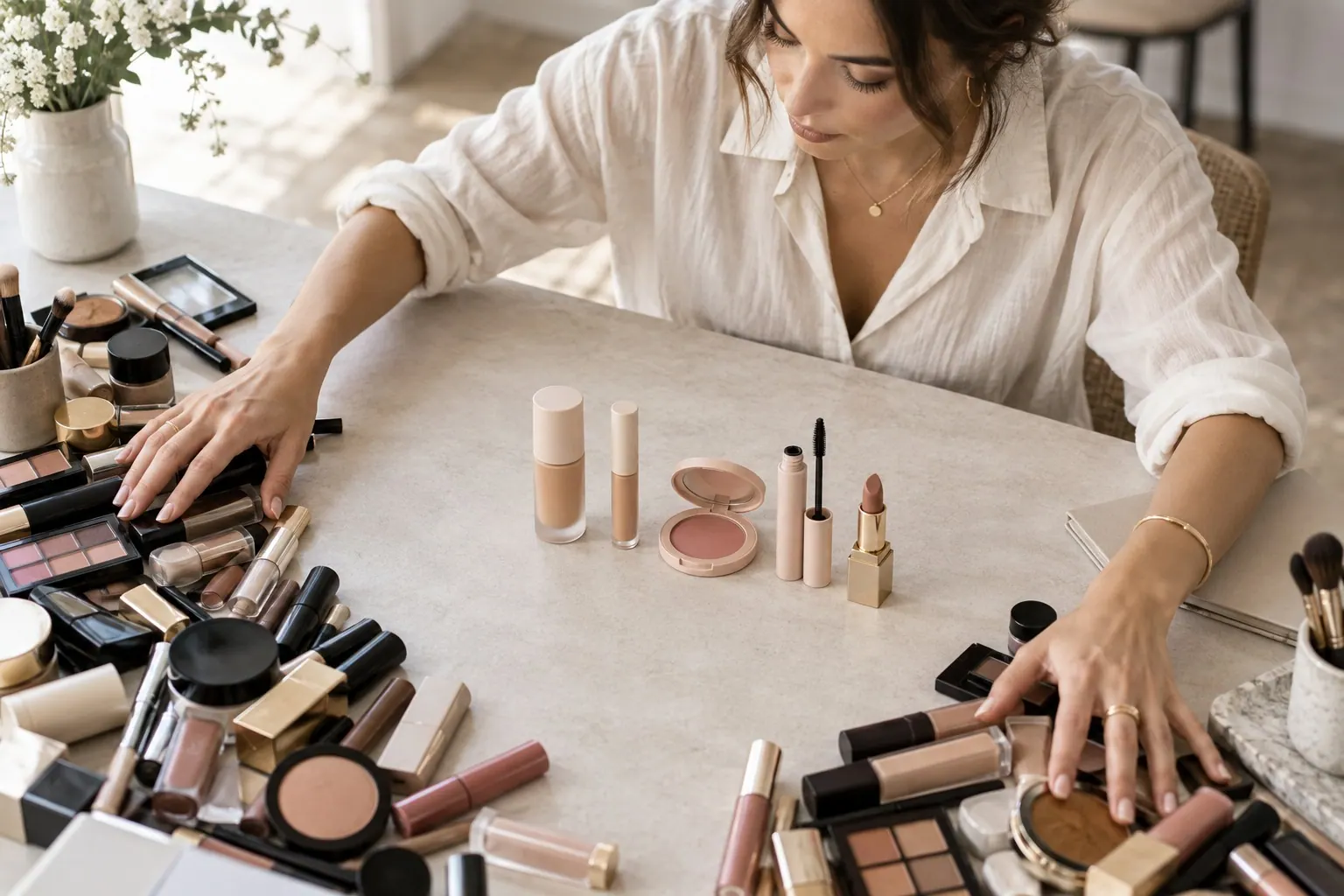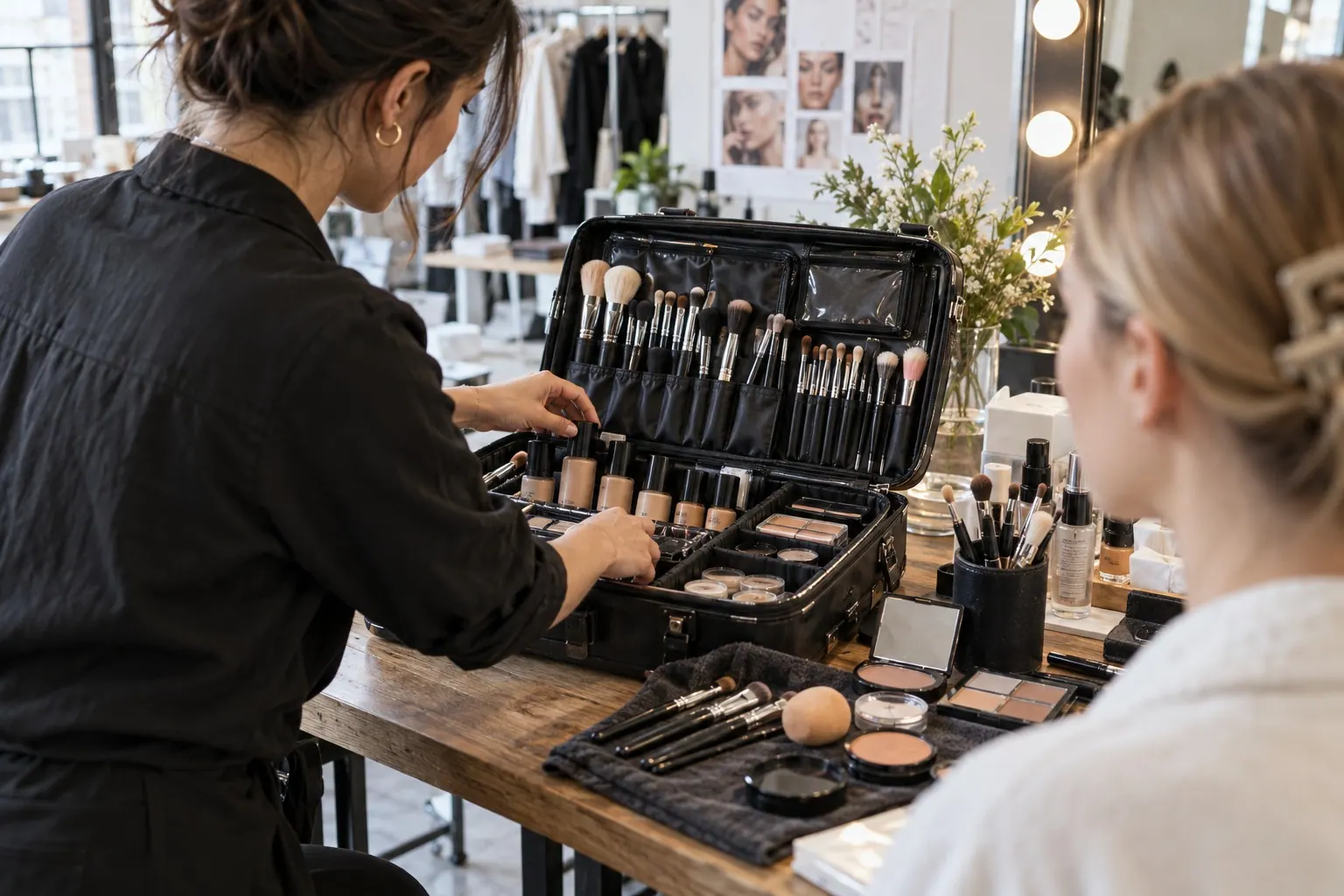
A working makeup artist has a useful starting point for a cosmetics brand: repeated experience with products, application, shade selection, and the questions clients ask. That experience can reveal promising product ideas. It does not, by itself, prove that clients will buy a retail version or that a supplier’s formula will perform the same way in another person’s hands.
The strongest path from kit to collection is therefore a sequence of checks. Start with what you know from the work, turn that into a customer hypothesis, evaluate the actual product and its variants, and make the commercial relationship clear. The kit can inform the collection; the customer still decides whether the collection deserves a place in their routine.
Your kit and your collection have different jobs
A professional kit is organized around the artist’s work: clients, services, tools, hygiene practices, portability, and products that can be combined or adapted. A retail assortment is organized around a buyer who may have different skills, needs, and expectations. A product that works well in a professional service may require explanation, technique, or tools a customer does not have. A product that photographs attractively may not perform as expected in repeated use.
Make two inventories before choosing products:
- Kit inventory: Which products do you reach for, and for which situations? What do you notice about application, shade adjustment, texture, finish, removal, and packaging during your work?
- Customer evidence: What do clients ask to buy, what do they ask about after appointments, and what do they already use? Which statements are direct observations, and which are your interpretation?
Keep the distinction visible in your notes. “Several clients asked what lip color I used” is a record of observed questions. “My clients will buy this lip color” is a hypothesis that needs a test. This discipline protects the artist’s experience from being stretched into a market claim it cannot support.
A service appointment can also create a power imbalance: the client may trust the professional and feel pressure to agree. The retail offer should preserve the client’s freedom to decline. Explain what you used and why during the service if it is relevant, then make product information available afterward. Ask permission before photographing or filming a client, and use a clear release that covers the intended channels and duration. A client’s participation in a service is not permission to use their image in marketing.
Choose a product because it solves a clear problem
Start with a narrow customer and occasion. “Anyone who likes makeup” does not provide enough direction. A more useful starting point might be someone who wants a simple everyday lip, a complexion product that is easier to match online, or a compact kit for a particular event. Treat these as hypotheses until customers, product tests, and sales give you evidence.
Then write a product brief:
- Customer and use: Who is the product for, and when would they use it?
- Job: What does it help the customer do? Describe the cosmetic result without promising a medical or therapeutic effect.
- Format and variants: What product type, shade range, size, or packaging does the brief require? Count the variants separately because they multiply photography, product-page, and support work.
- Experience: What must be tested in the sample before you describe the shade, texture, application, finish, wear, or packaging?
- Evidence: What have customers actually asked for or tried? What remains an assumption?
- Commercial fit: What do the current product, shipping, platform, payment, and service costs mean for the price you can realistically charge?
A first collection does not need to mirror every category in an artist’s kit. Complexion may be a distinctive opportunity if shade matching is central to the artist’s expertise, but shade breadth creates more variant and education work. A lip product can be easier to demonstrate, but visibility on video is not proof of demand. Tools may be familiar and straightforward to use, but may need a strong reason for a customer to choose this brand. Choose the product that best fits a documented customer need and the founder’s ability to support it.
Test the product before making the promise
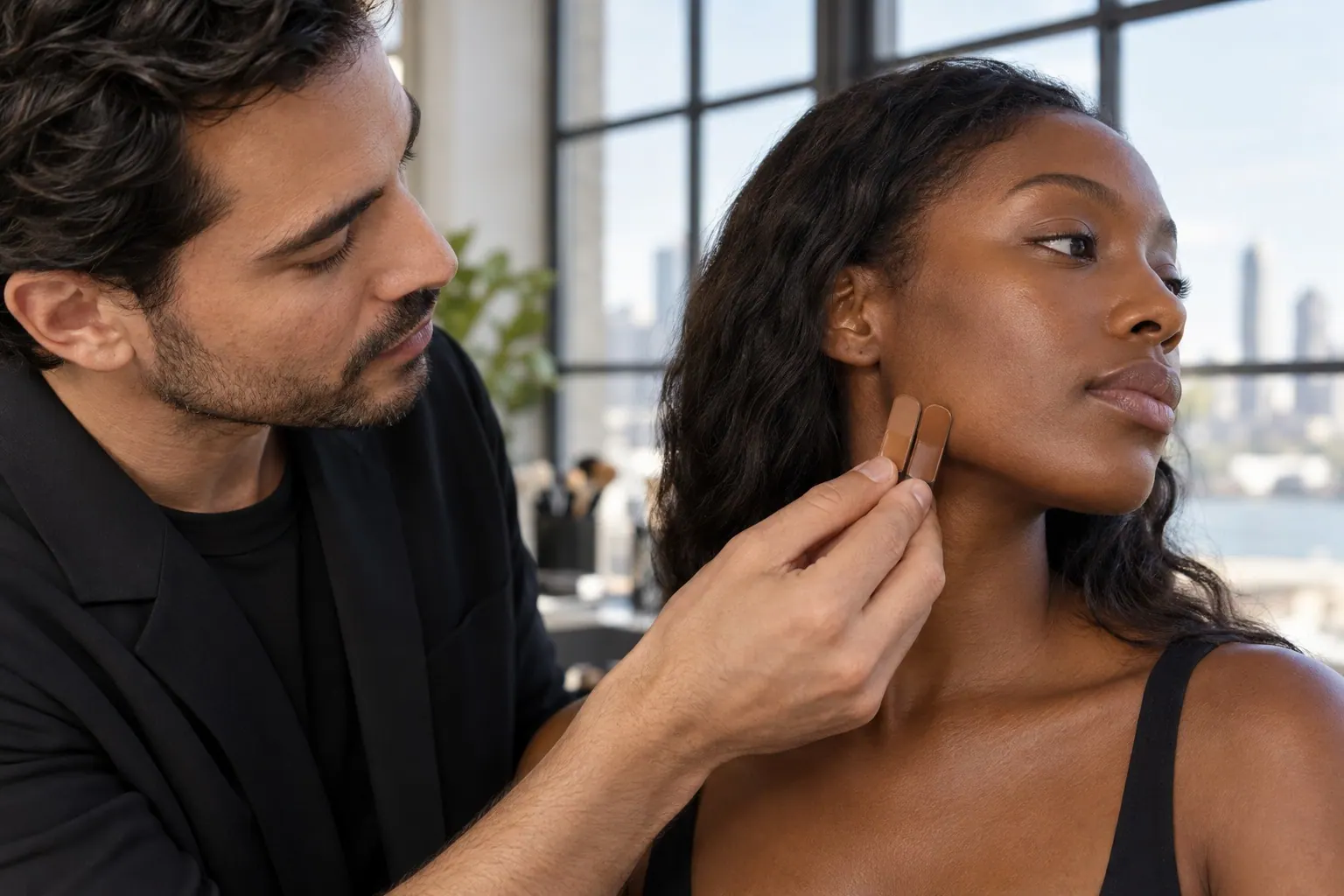
Order or obtain the sample that corresponds to the exact product and variant you plan to sell. Record the product identifier, shade, date, packaging, instructions, testing conditions, observations, and any issue. For complexion products, assess shade representation under consistent lighting and consider how the available range serves the audience you intend to reach. For lip, eye, or tool products, test the format and application that a customer will receive, not only how the artist uses it in a professional setting. (viaGlamour branded-samples FAQ)
A product demonstration can make a useful short video, but it should show what it can honestly show. A visible application is not evidence for claims about all-day wear, suitability for sensitive skin, or a health outcome. Describe personal observations as personal observations and substantiate objective performance claims before using them in product pages or endorsements.
For the U.S. market, FDA explains that products intended to change appearance through makeup or moisturizing are generally cosmetics, while claims that a product treats disease or affects the body’s structure or function can make it a drug. The line depends on intended use and the claims around the product; wording and context matter. The FDA also states that cosmetic products are not generally approved by the agency before sale, while companies and individuals marketing cosmetics have responsibilities for safety. (FDA: Is It a Cosmetic, a Drug, or Both?; FDA: Cosmetics Labeling Claims).
Confirm who is responsible for the product
A private-label arrangement can make it easy to put a brand on a product, but the label does not answer every responsibility question. Before launch, read the supplier agreement and ask who controls the formula, product specifications, safety support, ingredient information, labeling, complaint handling, adverse-event escalation, fulfillment, and product changes. Get the answers in writing and keep the version that applies to each product.
The details depend on the market and the parties’ roles. In the United States, MoCRA identifies the “responsible person” by the manufacturer, packer, or distributor whose name appears on the label; the law includes safety-substantiation and serious-adverse-event duties for the responsible person. Do not assume the platform or the artist owns every duty—or that a supplier’s general compliance statement resolves the artist’s obligations. Confirm the specific product, label, and arrangement with qualified counsel or regulatory support where needed. (FDA: Modernization of Cosmetics Regulation Act of 2022).
Also review the product information that customers will see. Check the ingredient list, net quantity, directions, warnings, responsible-party details, claims, and any market-specific labeling. Do not copy claims from a supplier page without confirming that they apply to the exact product and that you can support them.
Keep the recommendation transparent
The artist’s recommendation carries the credibility of professional experience. When the artist owns or earns from the product, explain that relationship plainly near the recommendation. The Federal Trade Commission says an influencer’s ownership of a brand may not need a separate disclosure when it is obvious to the audience, but when that relationship is not clear, it should be disclosed. A simple statement such as “I own this brand” or “This is my product line” helps the audience understand the context. For affiliate links, say that the author may earn a commission when the reader buys through the link. (FTC: Endorsement Guides FAQ).
Do not imply that every client liked a product because one client agreed to appear in content. Keep reviews authentic, do not edit testimonials to change their meaning, and avoid using professional authority to make claims beyond the evidence. These are sound trust practices across markets; legal requirements vary by jurisdiction and platform.
Make the service-to-retail handoff comfortable
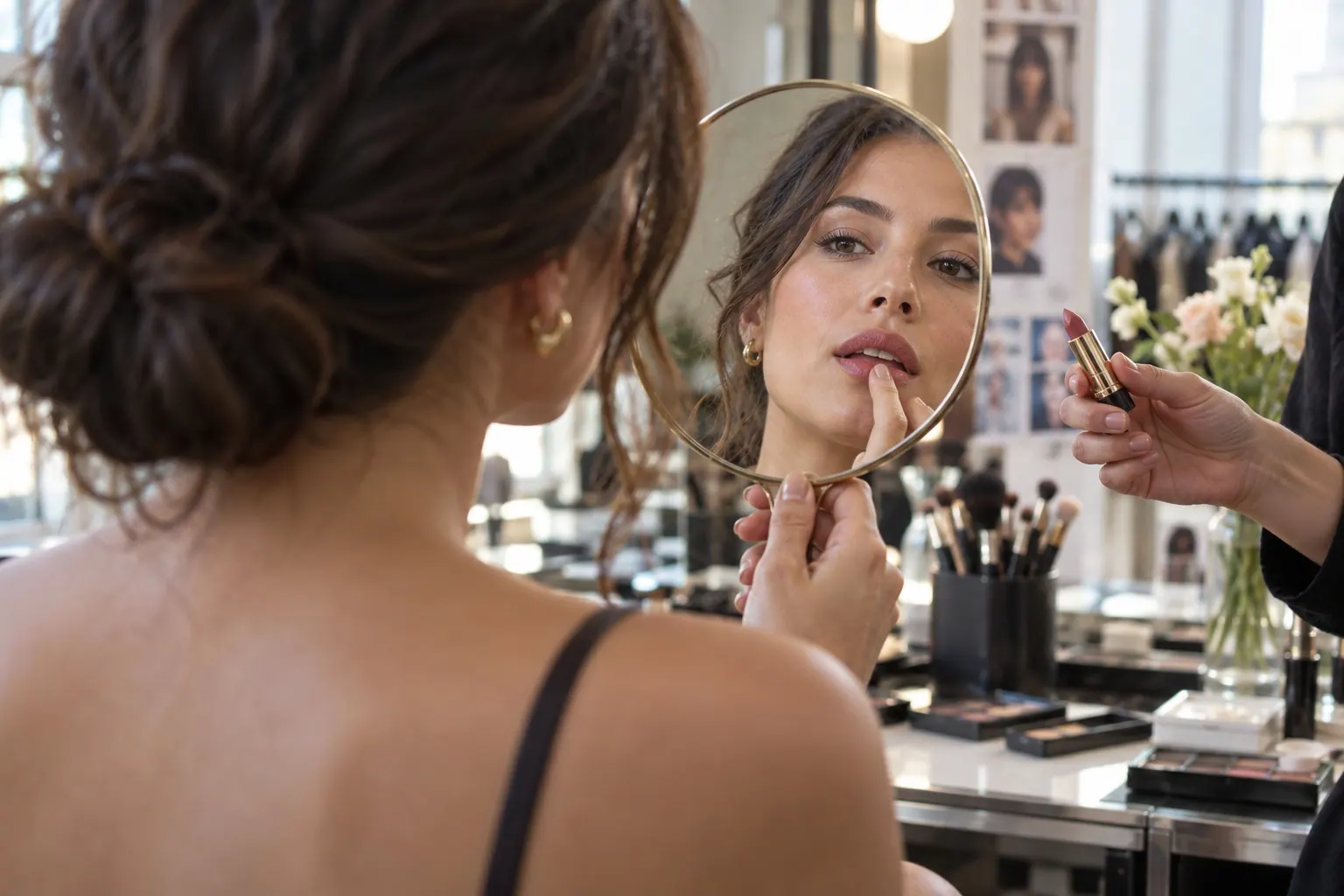
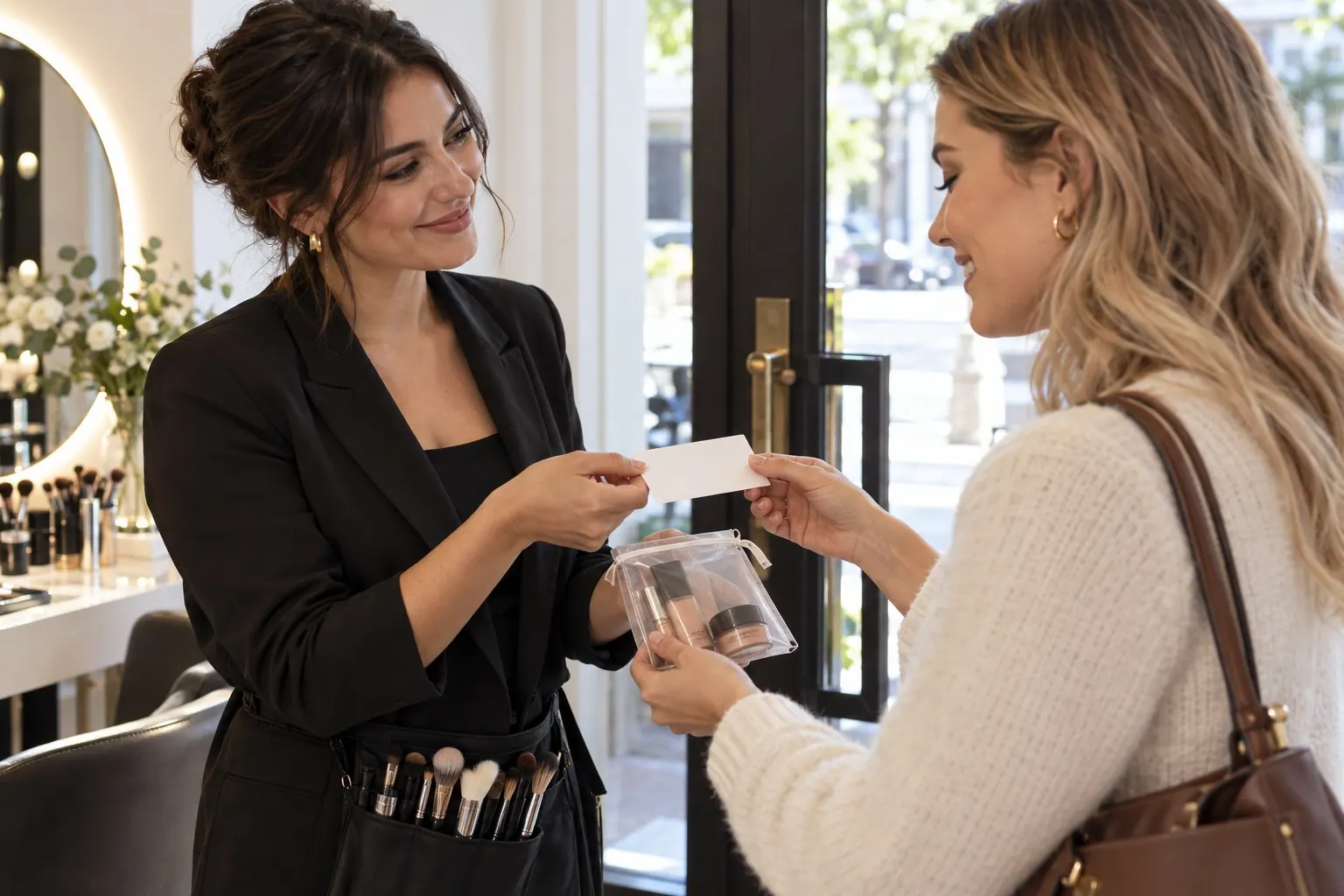
At the end of an appointment, offer a short list of products used, with shades or alternatives where useful. Let the client decide whether to take it. A follow-up can include application instructions and product links, with the ownership or affiliate relationship stated near the recommendation. This gives the client room to decide without pressure.
In educational content, separate the lesson from the pitch, state the product relationship clearly, and use only images or testimonials you have permission to share. Product pages should make shade information, returns, shipping, ingredients, and contact details easy to find.
A practical launch sequence
- Review your kit and write down recurring product observations without converting them into sales claims.
- Ask clients optional, non-leading questions about needs, formats, shade concerns, and current alternatives. Do not treat polite agreement as a purchase commitment.
- Select a small number of product hypotheses and document why each one fits the intended buyer.
- Evaluate exact samples and variants; record results and identify claims that need additional substantiation.
- Confirm supplier terms, product documents, labeling, fulfillment, returns, costs, and who handles product complaints.
- Publish with clear product information and a visible explanation of your commercial relationship.
- Review actual questions, returns, conversion by variant, and contribution after costs. Expand only when the evidence and operating capacity support the next product.
A working kit is a valuable source of judgment. The collection earns its place when that judgment becomes a product customers can use, understand, and choose freely. Test the assumptions, and make the commercial relationship visible.