A creator reaches a channel milestone and viewers start asking for a shirt. That can be a useful signal, but it is not yet proof that a particular design, garment, or price will sell. A comment shows that one person expressed interest in one context. The next step is to make a testable product decision and see whether viewers take the next action.
YouTube offers several ways for eligible creators to connect a store and feature products. A connected store may appear on a channel, under eligible videos, in descriptions, or as tagged products in content. Fourthwall documents its integration with YouTube Shopping, while YouTube controls eligibility and product review. The retailer and the creator remain responsible for accurate product details and the store experience. (Fourthwall YouTube Merch Shelf guide; YouTube Shopping setup; YouTube Shopping overview)
Treat viewer feedback as a starting point
A YouTube comment section can reveal language, recurring questions, and product requests. It does not establish the size of a market or predict sales. Collect specific signals, then look for patterns across videos and other ways viewers respond:
- Repeated phrases or references: note language viewers use on their own, but check that it remains understandable beyond a single video.
- Direct product questions: record what garment or item viewers ask about and the context in which they ask.
- Use-case requests: distinguish “I’d wear this in the workshop” from “I like the design.” They imply different product choices.
- Practical constraints: sizing, climate, shipping location, price, and intended use can matter as much as the artwork.
Turn a signal into a short hypothesis: “Viewers of the restoration series may want a workwear-style shirt that references the tools shown in the videos.” Then make the next step small: show a design mockup, ask a focused question, or order one sample. The hypothesis is supported only when later evidence—such as orders, sample feedback, or repeated audience response—supports it. Keep a comment or poll response distinct from a completed sale.
The goal is not to abandon channel identity. It is to give the viewer a product concept that can be understood without requiring the channel logo to do all the work. A recurring visual motif, a phrase associated with the content, or a tool used in the creator’s craft can provide a starting point. Test whether the reference feels clear and appropriate before putting it on a garment.
Match the product to what the video shows
Content format does not determine a buyer’s budget or preference. A tutorial channel cannot assume that its viewers will buy a premium hoodie; an entertainment channel cannot assume that bold all-over printing will suit them. Use the video to demonstrate what a product is, how it looks, and why it belongs to the channel’s subject.
For a craft creator, that might mean showing the garment in the studio and explaining its fit and material. A cooking channel could show a design connected to a recipe series, while making clear whether an apron is suitable for the intended task. For a host whose channel is about drawing, the video might show how an illustration was adapted to the print area. These are ways to make the product understandable, not evidence that a particular treatment will increase sales.
Before selecting from Fourthwall’s catalog, compare the exact listing: material, weight, fit, size range, decoration method, print area, fulfillment regions, and current cost. Then order a sample if fit, print feel, color, or construction matters to the product description. The catalog guide and print-method guide explain the available filters and the differences among methods; the exact listing determines what is available for that garment. (Fourthwall catalog availability and filters; Fourthwall print methods; Fourthwall order samples)
Keep the first collection easy to maintain
A channel can create many product ideas, but each listing needs a product choice, artwork, pricing, imagery, and support. A compact first offer makes those decisions easier to inspect. One practical starting point is a lead item that represents the idea and, only if there is a clear reason, one alternative in a different product type or price range. This is a test design, not a prescribed product count.
An ongoing collection and a time-specific item can serve different purposes. An evergreen product can remain available for viewers who discover the channel later. A product tied to a series, collaboration, or event can mark that moment. If you describe an item as limited, make sure the limitation is real and explain when it ends. Do not use an artificial deadline to imply demand or scarcity that does not exist.

Plan the launch around content and operations
There is no universal best time to launch apparel. A milestone, series finale, seasonal shift, or product-focused video may provide a relevant context, but none guarantees that viewers will buy. Choose a moment when you can explain the product and handle the practical follow-up: answer sizing questions, direct viewers to the correct listing, and monitor whether the item is available in the regions you serve.
A simple launch plan can include:
- Before the product goes live: explain the idea, share a design preview, and gather focused questions. Do not call positive reactions sales validation.
- At launch: show the actual sample when possible, describe the material and fit accurately, and link to the exact product page.
- After launch: review orders, questions, returns, and sample feedback. Use those observations to decide whether to keep, revise, or remove the item.
YouTube Shopping provides an eligible creator’s store, product shelf, and product tagging surfaces. YouTube says products tagged in content must be meaningfully related to that content; the feature set and eligibility can vary. Fourthwall’s setup guide also says products may go through Google review before they are approved. Check the current Shopping tab in YouTube Studio and the Fourthwall connection status before promising viewers that a product will appear in a particular place. (YouTube product-tagging guidance; YouTube connect/manage store guide; Fourthwall YouTube Merch Shelf guide)
A description link remains a useful route to the creator’s store, but it should point to the right product and disclose important terms where needed. YouTube’s viewer documentation notes that product information and purchases are handled by the retailer, and details such as availability and price may change. Verify the destination and product page from a viewer’s perspective before publishing a campaign. (Buying products on YouTube)
Check the sample under the conditions you can control
A product image or screen preview cannot tell you everything about the finished garment. Fourthwall’s sample guide recommends inspecting material, fit, color, print quality, and finish. Wear or use the sample as your product page describes it, compare it with the published size chart, and photograph the real item where that helps viewers understand what they will receive. A sample gives you evidence about that product and variant; it does not guarantee every size, color, or production run will be identical. (Fourthwall order-sample guide)
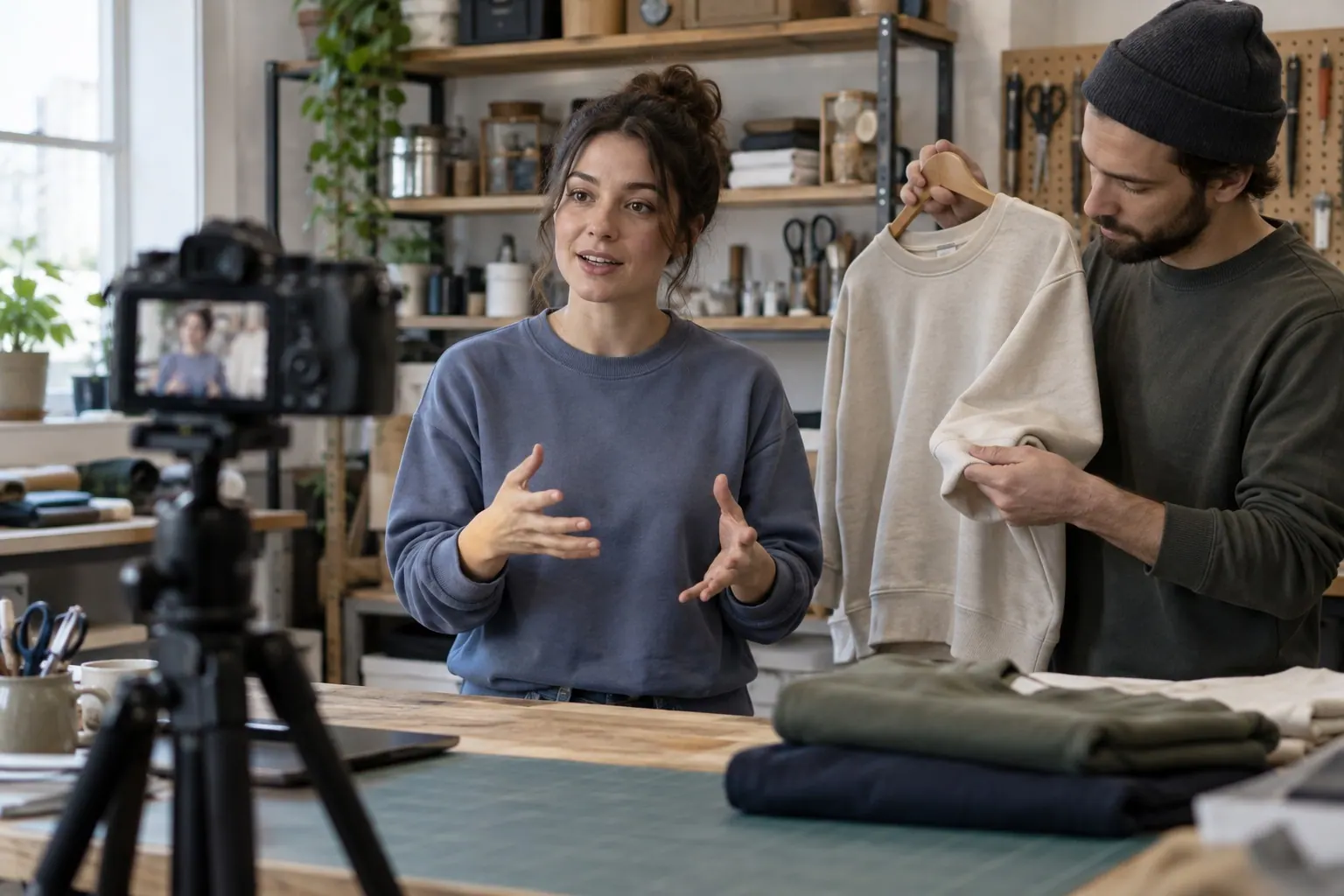
If you use a video to introduce the item, say what you checked and keep the claim within that evidence. “I tried the sample in my studio and this is how the medium fits me” is more precise than “perfect fit for everyone.” For a print, show the actual print and lighting. For a garment, explain the listed material and share the size chart. Avoid claims about durability, warmth, or performance unless you have evidence that supports them.
Measure the test that matters
Views, comments, product clicks, and orders are different measures. A video with many views may not attract viewers who want that item; a focused product may draw few clicks but still surface concrete questions about fit or price. Decide in advance what you want to learn. For example: do viewers understand the design, which size information do they need, or does the listed price cover product and processing costs?
YouTube Shopping analytics can help eligible creators review performance of tagged products in YouTube Analytics. Pair platform metrics with the actual order and support information available to you. Keep the time period, video, and product clear when comparing results, and avoid attributing a change to the product if the video topic, promotion, price, or season changed at the same time. (YouTube Shopping overview and analytics)
A creator apparel test succeeds first as a learning process: the product is relevant to the video, the listing matches the sample, and the next decision uses evidence rather than wishful interpretation. If viewers buy and the economics work, you have a basis for expanding. If they do not, you still learn whether to change the design, garment, price, timing, or product idea.