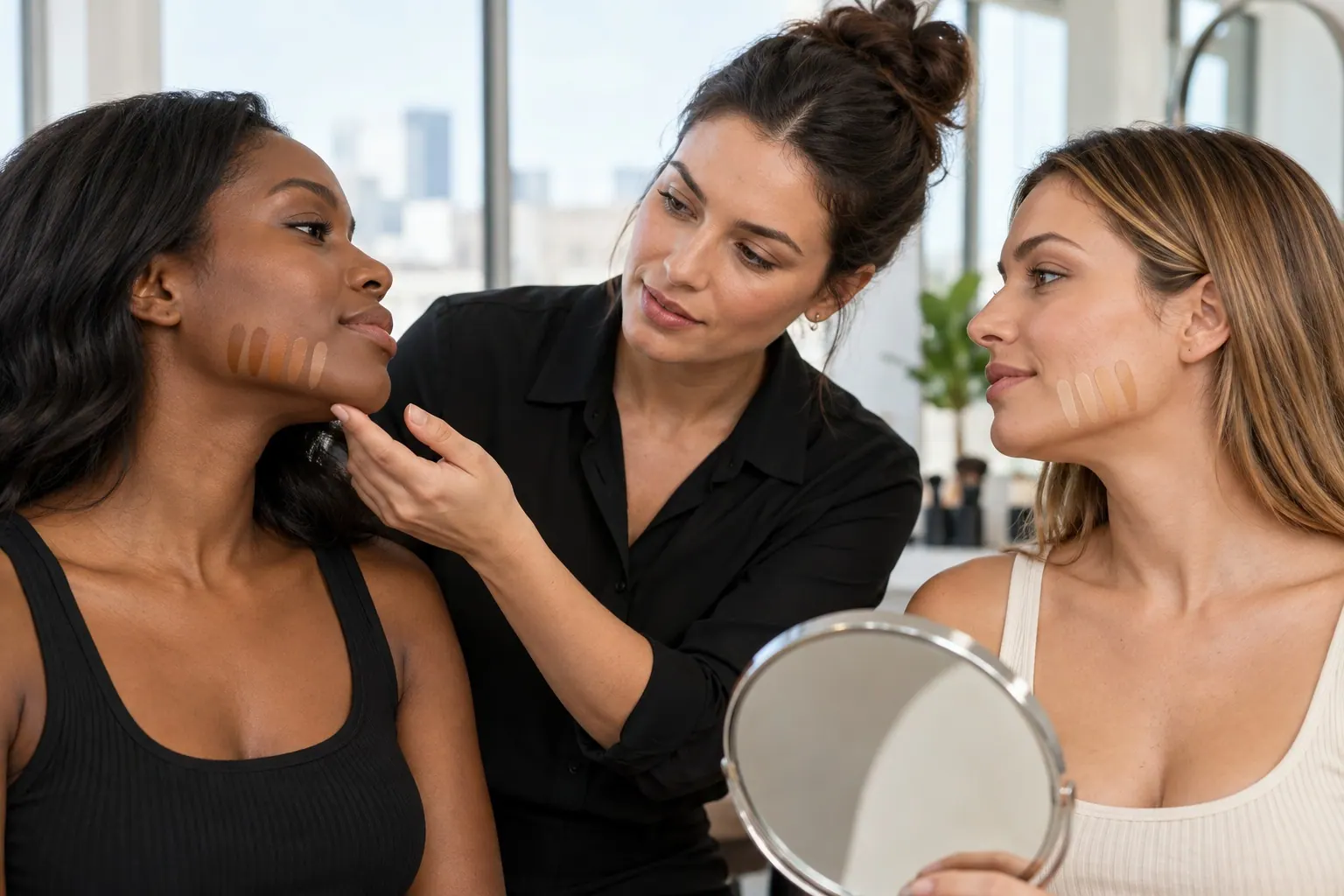
A salon already has a moment when a product can make sense: a stylist uses it during a service, explains what it does, and shows how the client could use it at home. That is a useful starting point for retail, but it does not guarantee that the client wants to buy or that the product will be profitable.
Salon retail works when the product genuinely connects to the service, the recommendation is clear and optional, and the business can fulfill the order at a contribution that justifies the work. The shelf is one part of the channel; staff time, inventory, follow-up, and customer trust are the rest.
Connect the product to the service
Start with the services the salon actually provides. For each one, ask what the client may need between visits, what the stylist already demonstrates, and what the product can reasonably help the client do at home. A haircut may lead to a styling conversation; a color service may lead to care instructions; a scalp treatment may lead to aftercare. These are prompts for a conversation, not automatic product prescriptions.
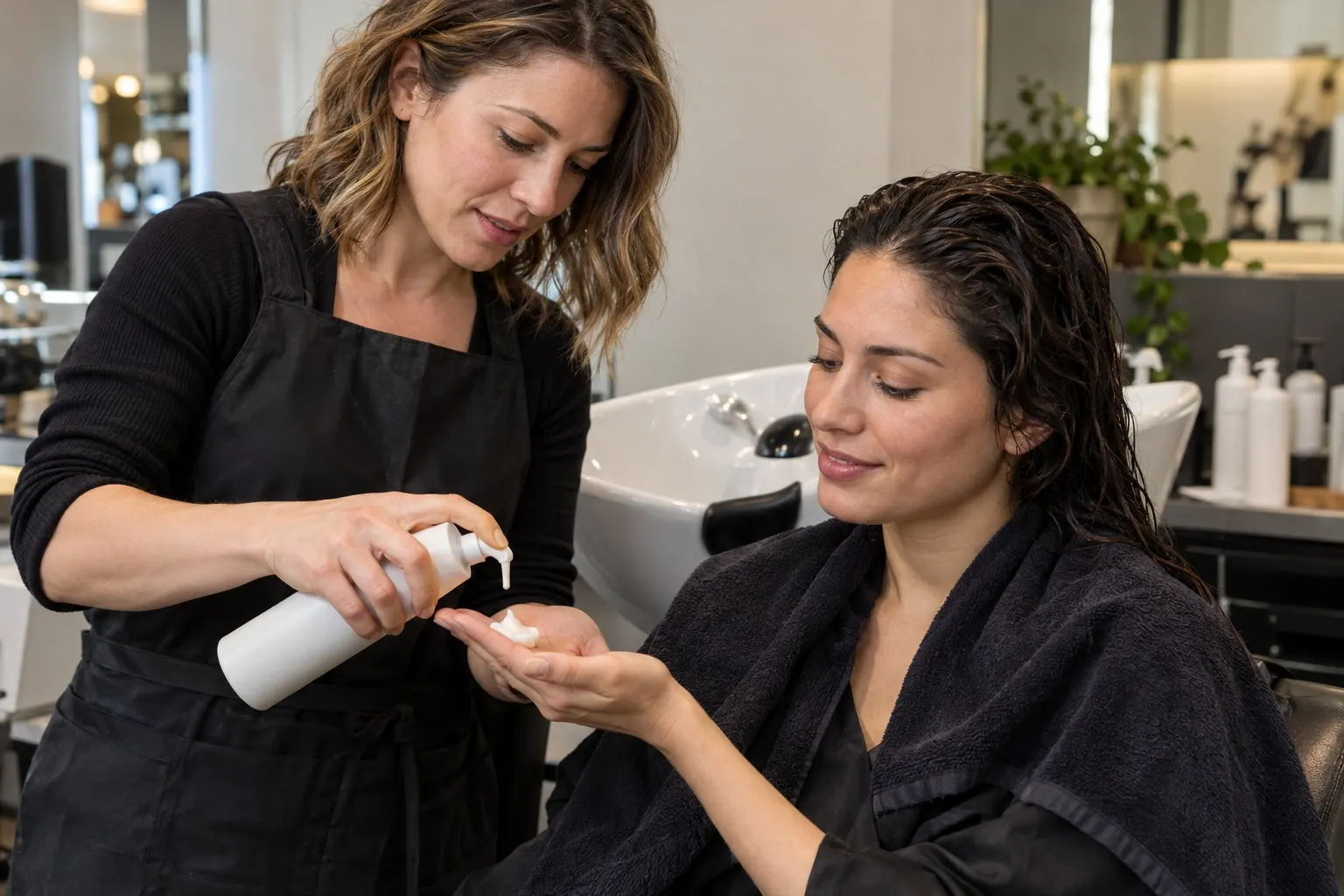
A useful recommendation explains the connection in plain language: “This is the leave-in we used to reduce frizz while styling. If you want to recreate the finish at home, I can show you how much to use.” Then give the client room to ask questions, compare products, or decline. Do not imply that a purchase is required to preserve the service result.
Map a product to a service only when the product fits the client’s needs and the salon can support the explanation. A shelf full of items unrelated to the services may add choice without helping the customer decide. A smaller assortment can be easier to explain, but no fixed product count works for every salon or clientele.
Measure retail as part of the appointment economics
Attach rate is one way to describe retail activity: the share of service visits that also include a retail purchase. Define the denominator consistently. Decide whether it counts appointments, completed services, or individual client visits, and specify whether one visit with multiple products counts once or more than once.
A second useful measure is retail contribution per service visit. Begin with what the customer pays, then subtract the product cost and the costs of completing that sale: payment fees, discounts, packaging, shipping subsidy, staff incentive, expected returns, and the labor needed for stocking and follow-up.
Retail contribution per service visit = retail contribution after variable costs ÷ service visits.
A hypothetical example: if 100 service visits produce 12 single-item retail transactions at $30 each, and each product costs $12, the sales total is $360 and the contribution before payment fees, staff time, incentives, tax, returns, and fixed expenses is $216. These figures illustrate the arithmetic only; they are not salon benchmarks or supplier prices.
Use both measures with context. A higher attach rate can coincide with low-value sales or heavy discounting. A lower rate may still be worthwhile if customers buy products that fit the service and contribute enough to support the work. Read transaction data alongside customer questions, returns, stockouts, and follow-up feedback before changing the assortment.
Build a shelf around real customer needs
A service-to-product map can help a salon decide what belongs on the shelf:
- Cutting and styling: products that help clients recreate or maintain a style between visits.
- Color services: items that fit the salon’s at-home care advice and the products actually used in the service.
- Treatments: aftercare products that match the treatment, its instructions, and the product’s substantiated use.
- Finishing services: products the client has just seen applied and can evaluate in context.
- Gifting: sets that are easy to understand, with clear contents and a specific recipient or occasion.
This is a working map, not a requirement to stock every category. If two products serve the same customer need, compare their role, cost, availability, and ease of explanation. If a product needs a claim the salon cannot substantiate or a technique the team cannot explain, choose a different item or improve the training before recommending it.
Train recommendations without turning service into a sales script
Staff should know what each product is for, how it is used, what it does not do, how much it costs, and what alternative is available if it does not suit the client. They need a simple way to answer questions and a route for reporting a product issue or customer complaint.
Practice recommendations in service context. Ask permission before moving from aftercare advice to a product suggestion. Describe what the stylist used and why, then let the client decide. Do not reward staff only for the number of transactions; that can create pressure and make customers doubt professional advice. If the salon uses commissions or another incentive, calculate it in advance, communicate it clearly to staff, and account for it in the sale’s contribution.
When the salon recommends its own label, say plainly that it is the salon’s product. If staff promote the product on the salon’s social accounts, the FTC says employees should disclose their relationship to the company; use clear wording and check the rules for the relevant market. (FTC: Endorsement Guides — What People Are Asking)
Choose a fulfillment model the salon can support
The salon can sell products from stock, order items for pickup, or direct customers to an online store. Each route has different costs and customer expectations. Stock on the shelf requires cash, storage, a count process, and a plan for slow-moving or damaged items. Ordering for pickup avoids some shelf inventory but requires a clear delivery estimate and a way to notify the client. Online ordering adds shipping and support responsibilities.
Blanka’s current help page describes three fulfillment routes: on-demand fulfillment after a customer order, inventory held at Blanka for fulfillment, and inventory shipped to the brand for self-fulfillment. The supplier describes different cash, delivery, and handling responsibilities for each. Confirm whether the exact product, branding, location, and order channel work with the route the salon intends to use. Do not assume a wholesale purchase for the shelf can automatically be combined with supplier-fulfilled online orders under one set of terms. (Blanka: Fulfillment options; Blanka: Wholesale)
Before committing to inventory, estimate a cautious order model using the salon’s own transactions and supplier quote. Include product cost, shipping into the salon, payment fees, discounts, staff compensation, damage or returns, and the staff time needed to receive, count, and sell it. Confirm best-before, storage, and product-handling information with the supplier where applicable. Avoid buying more stock just because a vendor catalog or launch plan contains many choices.

Keep the follow-up useful and compliant
A customer may prefer to reorder between appointments. Offer a clear online or pickup route, and send follow-up messages only in line with the customer’s expectations and the rules that apply where the salon operates. In the United States, commercial email must comply with CAN-SPAM, including accurate sender information, non-deceptive subject lines, a valid postal address, and an opt-out method. Other countries may set different consent and privacy requirements. (FTC: CAN-SPAM Act Compliance Guide)
Use reminders to help the customer find the same product or answer a question, not to assume a product has run out on a fixed schedule. If the salon records purchases, explain how customer details will be used, protect the records, and limit access to staff who need them.
Check labeling and responsibility for an own-label line
A salon that sells its own branded cosmetics should review the product label, safety information, and written agreement with the supplier before launch. Under US law, MoCRA defines the “responsible person” as the manufacturer, packer, or distributor whose name appears on a cosmetic label; duties include serious adverse-event reporting and product listing, subject to the applicable requirements and exemptions. The brand name alone does not settle every responsibility. Confirm who is named on the label and which party handles each obligation. (FDA: MoCRA)
Claims also matter. A cosmetic can be described in terms of appearance and use, but a claim that the product treats or prevents disease or affects body structure or function can bring drug requirements into scope in the United States. Check the product’s actual evidence and the rules of each sales market before staff use claims in a service or social post. (FDA: Cosmetics Labeling Claims)
Start with one service connection and review the evidence
Choose a service where the team already demonstrates a product or answers an at-home care question. Confirm the product is available, train staff on its use and limits, make the price and fulfillment path clear, and record sales, contribution, questions, returns, and stockouts. Review those observations after the salon has enough relevant transactions to learn from them; do not treat an arbitrary calendar period or a single busy week as proof.
Keep the item when it helps clients and its contribution supports the work. Improve the explanation when customers misunderstand it. Change suppliers or fulfillment when availability and service expectations do not match. Remove it when the product no longer fits the service or the salon cannot recommend it with confidence.
A salon becomes a retail channel through consistent, useful recommendations and dependable follow-through. The goal is not to turn every appointment into a sale. It is to make the right product available when it genuinely helps the client continue the service at home.