A beauty brand can launch without making Meta ads its main source of customers. Launch planning should identify which channels can create discovery, trust, and a reason to buy while paid advertising is limited or unproven.
“Organic” does not mean cost-free. A founder may spend on product samples, postage, photography, creator fees, affiliate commissions, software, and hours of work. Those costs are easier to overlook than an ad invoice, but they still belong in the launch plan. A launch can also use other paid channels or partnerships without depending on Meta; the choice is not between one platform and no marketing.
The goal is to build a small, measurable route from product explanation to customer action, then add paid reach when the offer and the economics can support a fair test.
Start with the customer and one offer
Choose the first customer group you can describe specifically and the product or set that addresses a relevant need for them. Define what the offer includes, what it costs, who it suits, and what it does not promise. In cosmetics, careful language matters: a product page should explain appearance and use without implying treatment or a guaranteed result that the brand cannot substantiate.
Then write down the main uncertainty. Is it whether people understand the product? Whether they want to try the shade? Whether the shipping cost blocks purchase? Whether a service client wants to take the demonstrated item home? A marketing activity is useful when it can help answer a real question, not simply because another brand uses it.
Set a baseline before launch: product-page visits, email signups, questions received, orders, contribution per order, returns, and the source customers say led them to the product. No single measure explains the whole journey. A view can indicate attention; an order shows purchase; contribution shows what remains after variable costs.
Build content that answers buyer questions
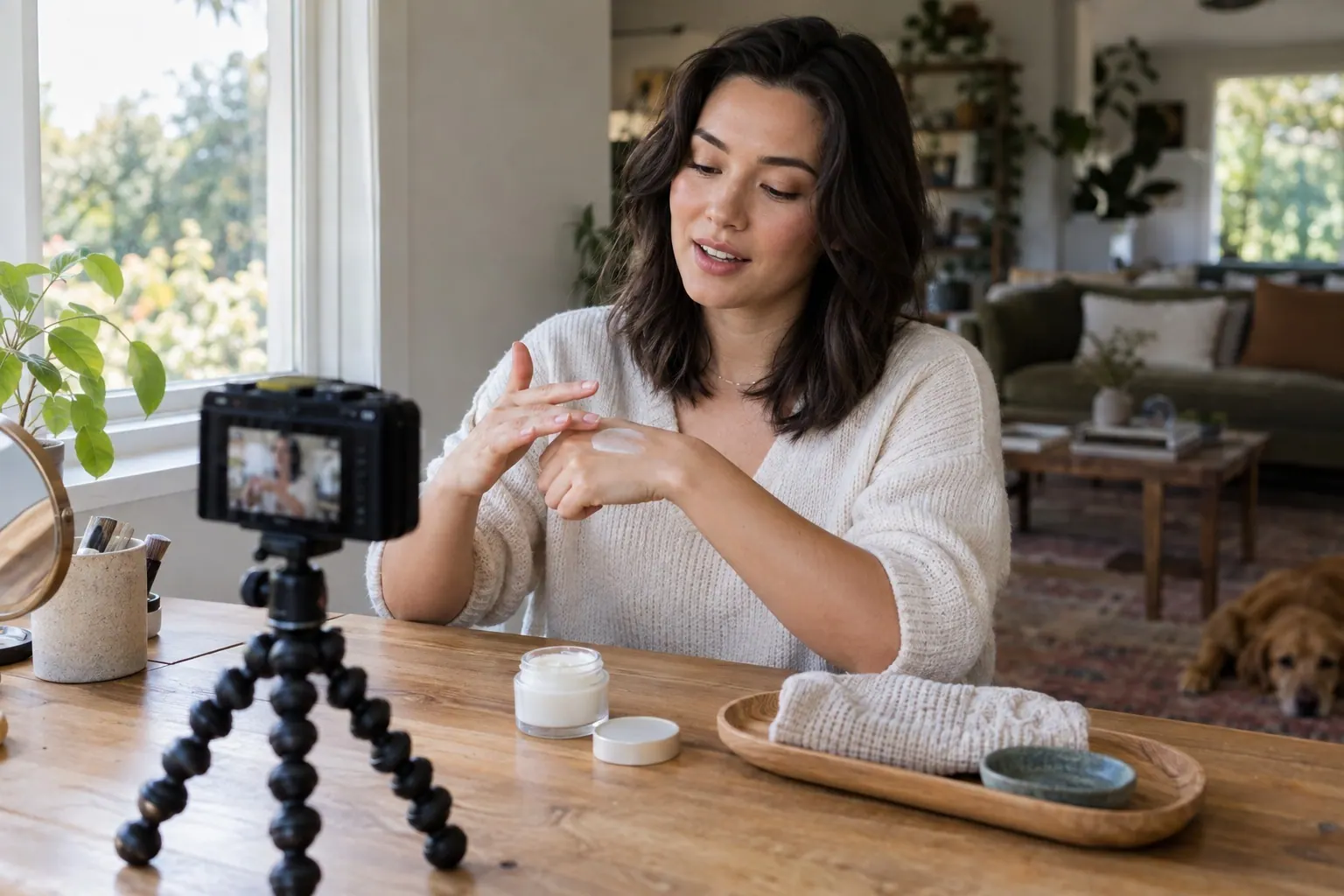
Founder content can show how a product looks and feels in ordinary use, explain how it fits into a routine, compare available shades, or answer common questions. It can also show the choices behind the brand: why a product made the line, how a sample was assessed, or what was changed after feedback.
Use a repeatable production process without making every post feel like the same advertisement. One product can support several useful angles: a close demonstration, a use-case explanation, a comparison of variants, an answer to an objection, and a customer question. Keep claims consistent with the product evidence and the market’s rules.
A post is not successful only when it goes viral. Useful early signals may include qualified questions, saves, visits to the relevant product page, email signups, or orders that can be connected to the post. Note which format and message produced each signal so the next piece responds to evidence rather than imitation.
Seed products with a clear expectation
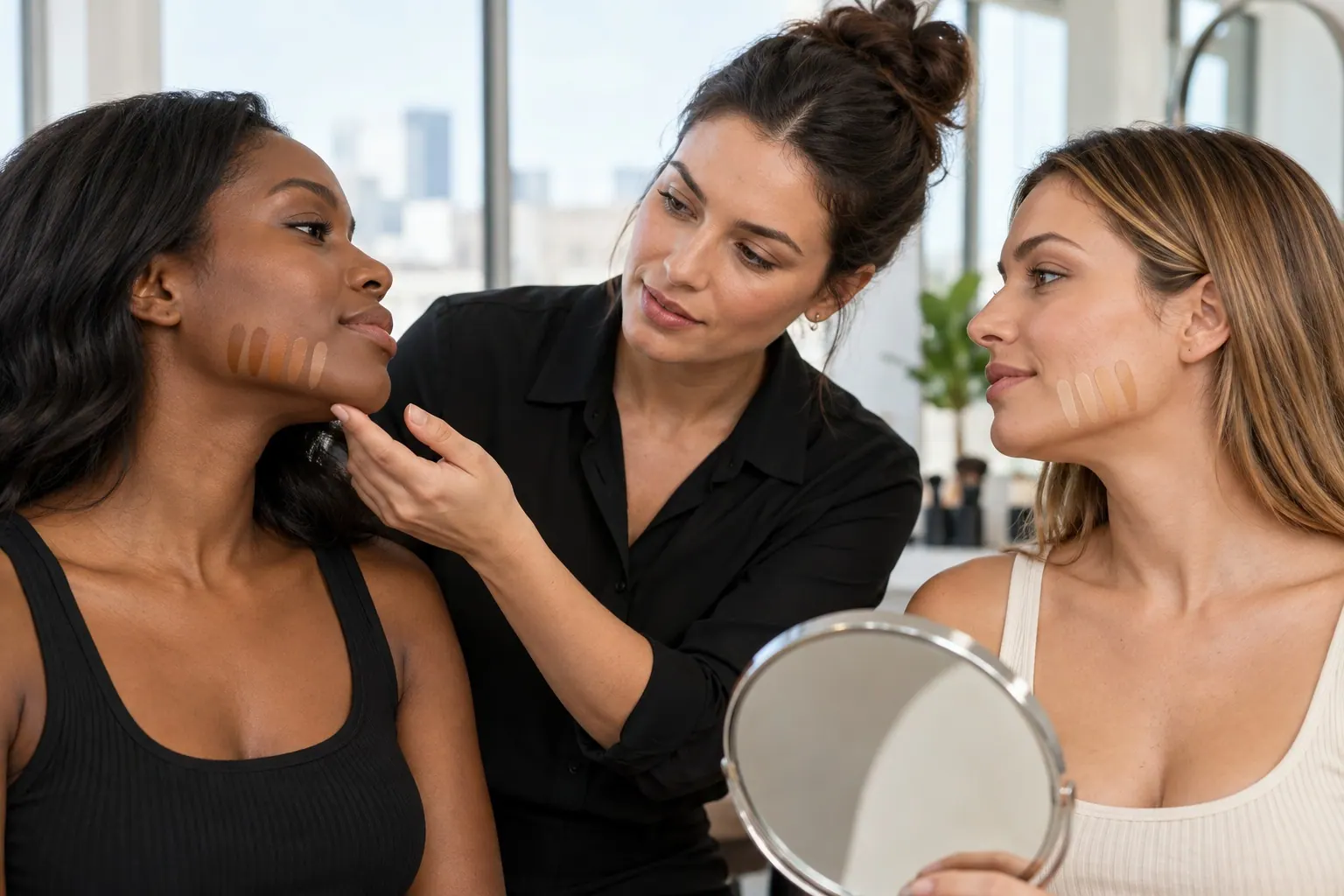
Product seeding can introduce a product to creators, makeup artists, salon professionals, or customers who already speak to the audience the brand hopes to reach. A gifted product does not guarantee a post, a positive review, or a sale. Invite people because their work and audience are relevant, explain why the product may fit, and make clear that there is no obligation to publish unless a paid agreement says otherwise.
If a creator does post an endorsement after receiving a free or discounted product, that relationship can be a material connection and should be disclosed clearly. The FTC’s guidance covers gifts as well as payment. Ask creators to follow the rules that apply to their audience and market; do not ask them to hide the relationship. (FTC: Disclosures 101 for Social Media Influencers)
Agree in writing on any fee, deliverable, timing, required disclosure, and permission to reuse the creator’s content. Receiving a product does not automatically give the brand unrestricted rights to repost a video in ads or on product pages. Record each package’s product and shipping cost, the creator relationship, posts received, and any attributable visits or orders.

Work with creators as partners, not as a follower-count formula
A creator’s audience size alone does not show whether a partnership is suitable. Review the content, audience relevance, past disclosure practices, engagement quality, fit with the product, and the creator’s expectations. A smaller account may be a good fit for a narrow community; a larger account may provide reach but require a different fee and production plan. Neither size guarantees conversion.
Begin with a brief that gives the creator accurate product information, relevant limitations, the commercial terms, and the required disclosure. Leave room for their genuine opinion and style. If a product is not right for them, an honest non-post or negative response is more useful than a scripted endorsement that damages trust.
Track the result against the purpose of the partnership. Awareness work may be judged by relevant reach and quality of conversation; a sales partnership may be judged by tracked orders and contribution after commission. Use unique links or codes where practical, while recognizing that a customer may discover a product in one place and purchase through another.

Make sampling and referral costs visible
Samples can help a potential buyer experience a product before committing to a full size. Their usefulness depends on the product, the cost of the sample and shipping, the audience, and what the brand hopes to learn. A sample sent at checkout, one included in a professional kit, and one sent to a creator are different activities; track them separately rather than treating every sample as a sale waiting to happen.
For each activity, record the number of samples distributed, the total product and postage cost, the response or redemption, and any resulting order or useful feedback. Where sampling is tied to an order, calculate whether the additional product and fulfillment costs still fit the order’s contribution. Where it is a creator seed, evaluate the content and relationship as well as trackable sales.
Affiliate relationships add another variable cost. Set commission from the order contribution after product, fulfillment, shipping, fees, discounts, and expected returns are considered. Tell affiliates how to disclose their commercial relationship, and make the terms and tracking method clear before they share a link or code.
Use email and customer relationships carefully
Email can provide a direct way to follow up with people who choose to hear from the brand, though delivery still depends on the provider, inbox filtering, and applicable privacy and marketing rules. Explain what subscribers will receive, send messages that match that expectation, and offer an easy way to stop marketing messages. In the United States, commercial email must comply with CAN-SPAM requirements including accurate sender information, non-deceptive subject lines, a valid postal address, and a working opt-out process. Other markets may require different consent and privacy practices. (FTC: CAN-SPAM Act Compliance Guide)
After purchase, help customers understand the product and how to get support. Ask for honest feedback without conditioning a reward on a positive review. A community can form around useful product education, professional relationships, or customer conversation, but it takes sustained attention and should have a clear purpose for its members.

Measure the full cost, including founder time
Compare channels using the outcome each one is meant to produce. For a creator seed, include the product, shipping, any fee, and the hours needed to identify, brief, and follow up with recipients. For content, record production time and the audience actions it supports. For an affiliate sale, calculate commission and contribution after all variable costs. For paid advertising, compare campaign spend and related fees with the orders and contribution it generates, while keeping attribution limits in view.
A simple contribution check is:
Contribution after marketing = net order revenue − product cost − fulfillment and shipping subsidy − payment fees − discounts − expected returns − creator or affiliate costs − paid media cost.
This is a decision aid, not a complete profit statement: fixed expenses such as subscriptions, design, legal work, and the founder’s wider operating time still need to be covered. Use the same definitions when comparing the paid and non-paid routes. Include the value of reusable content only when the brand has documented permission to use it and a clear, realistic way to do so.
Decide when Meta ads are ready to test
Paid social can help a brand reach people beyond its existing network and test creative against a defined objective. Meta’s own learning material starts with selecting a campaign objective and deciding how success will be measured; those choices should follow the business question, not the other way around. (Meta Blueprint: Introduction to campaign objectives)
Before spending, make sure the product page, checkout, fulfillment promise, and tracking are ready. Choose one question to test, such as whether a demonstration or a customer-use explanation brings more qualified product visits. Set the amount the business can afford to spend on learning, the outcome it will monitor, and the condition that will pause or change the test. Do not treat a particular daily budget, number of creators, follower range, or fixed launch calendar as a universal rule.
If paid results do not cover the variable costs and the business cannot explain the gap, revise the offer, page, creative, or audience before raising spend. If the test produces an encouraging result, repeat it under comparable conditions and check whether it persists. Keep at least one other way to reach customers active so a single platform does not carry the whole business.
Build the route in an order you can afford
A launch can combine product education, creator relationships, sampling, email, referrals, professional partnerships, search-friendly product information, and paid activity beyond Meta. Choose channels based on how the intended customer discovers and evaluates beauty products. For each, state what you want to learn and record its cost and response.
Begin with a clear offer and accurate product information. Publish useful demonstrations, sample deliberately, and follow up with subscribers. Review orders, contribution, feedback, and content permissions together; use that evidence to decide whether Meta can extend a message that already makes sense.
Reducing dependence does not require rejecting advertising. It means building more than one route to customers, setting honest claims and measurable tests, and spending only when another test can teach or return value.