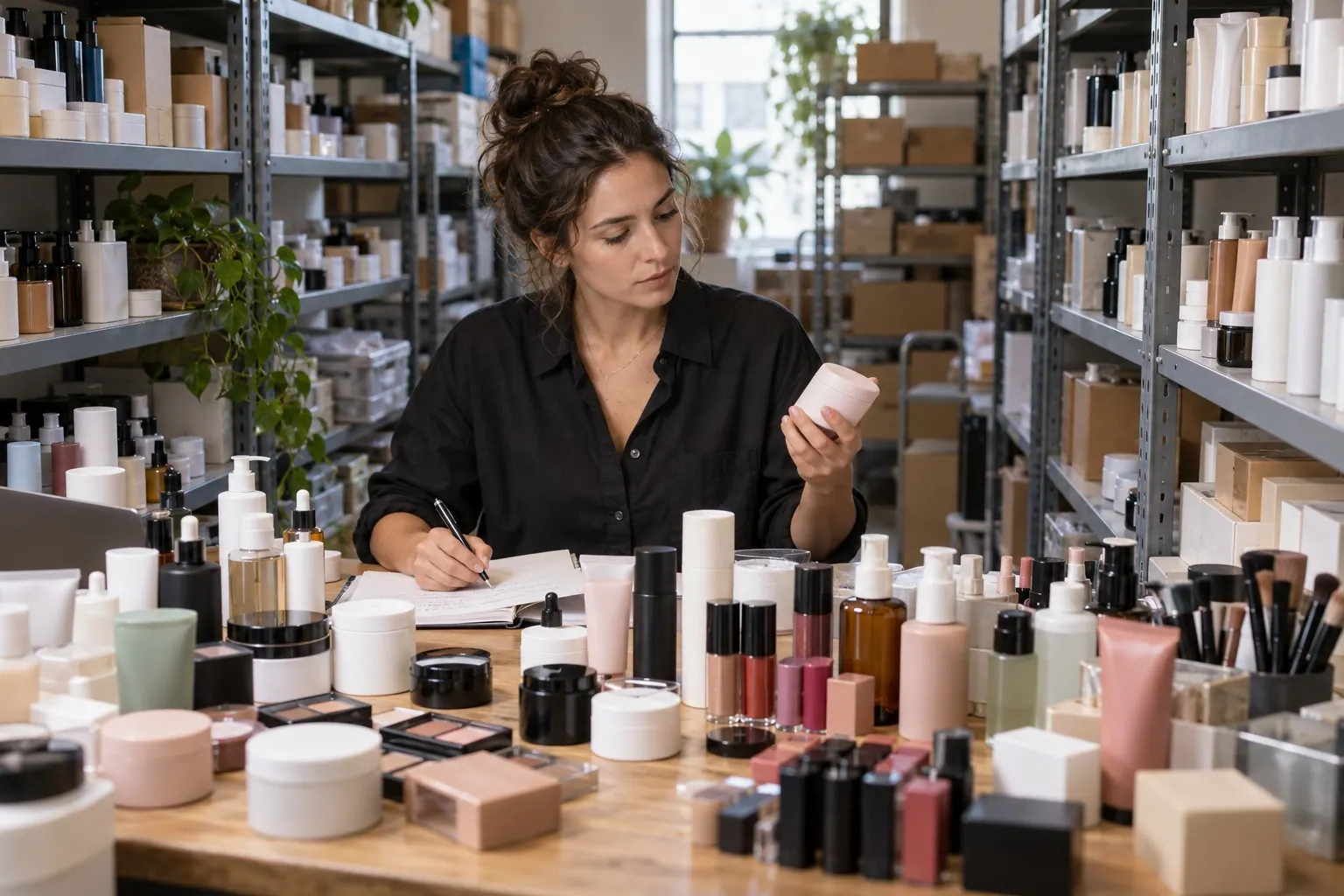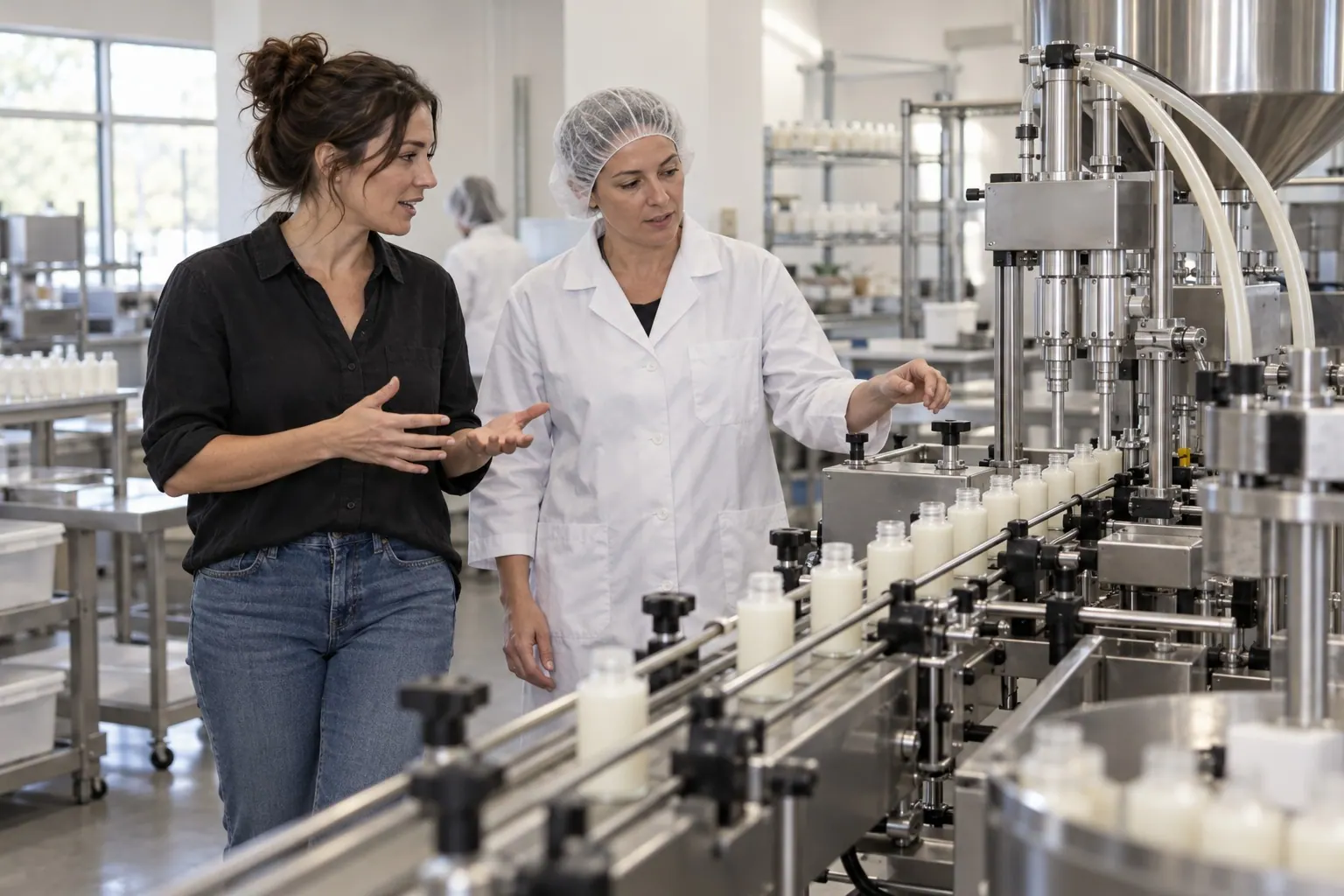
“Custom packaging” can describe anything from placing a logo on a supplier’s standard box to ordering a fully designed carton or assembling several products into a gift kit. Those options change who supplies the packaging, who prepares orders, which minimums apply, and what the customer receives. They are not interchangeable.
For a beauty founder, the right question is not whether custom packaging looks more premium. It is which part of the product and delivery experience needs to change, what the supplier will actually provide, and whether the added cost and work support the offer.
Separate the package from the product
A beauty order can involve several physical layers:
- Primary packaging holds the product, such as a tube, jar, bottle, or compact.
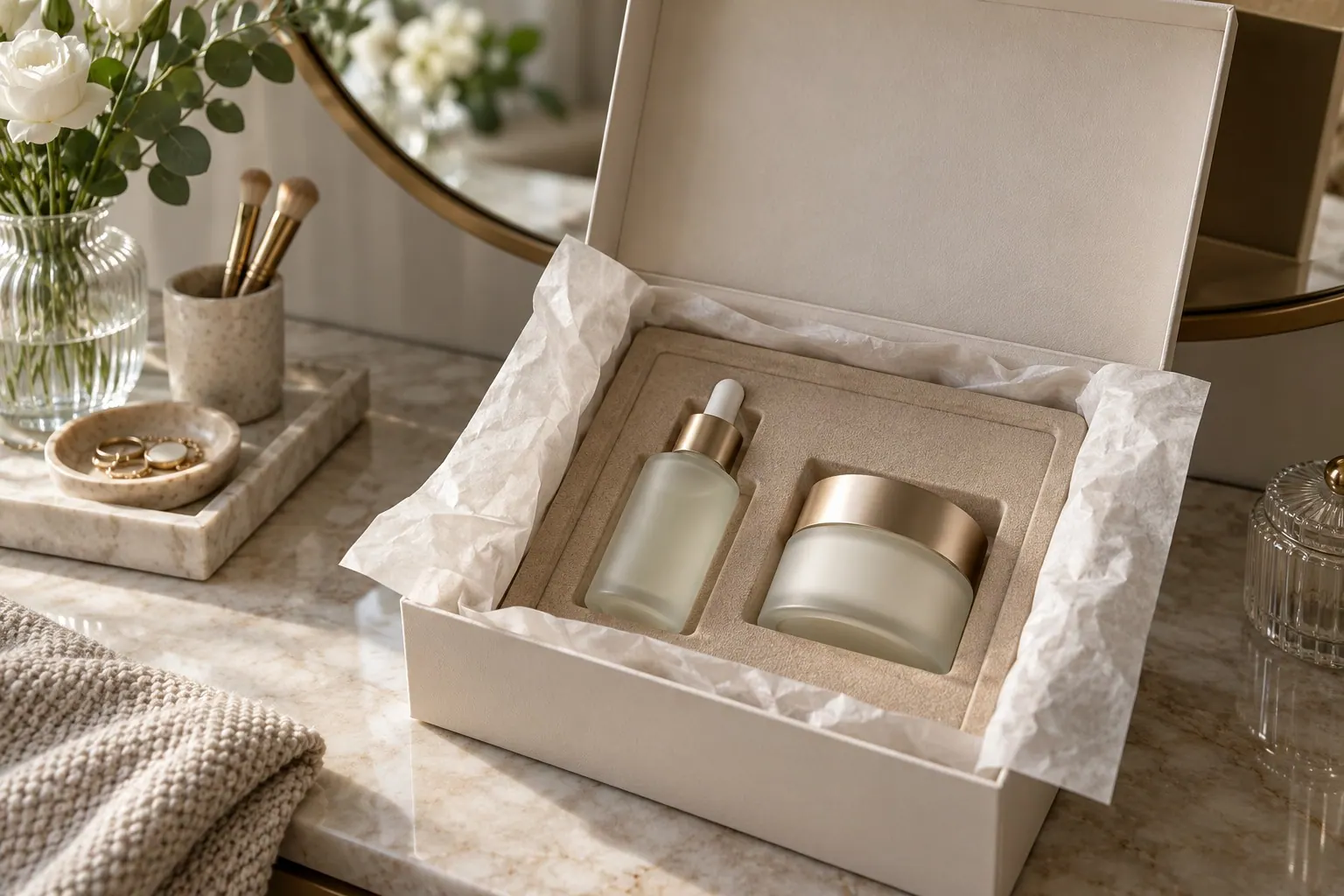
- Secondary packaging contains or presents that product, such as a carton or gift box.
- Shipping packaging protects the order in transit, such as a mailer or outer carton.
- A pre-packed kit combines multiple products in a bag or box before the customer orders.
A logo on an existing bottle or standard box changes brand presentation. It does not necessarily change the container, formula, label content, or shipping method. A custom carton changes a different part of the experience. A pre-packed kit adds assembly and inventory decisions. Custom formulation changes the product itself and should be costed and contracted separately from packaging.
When you ask a supplier for “custom packaging,” name the layer and the desired change. For example: “Can you print this artwork on the secondary carton for this specific SKU, and will that order be shipped to me for self-fulfillment?” A precise request makes the supplier’s answer easier to compare with the actual plan.
What Blanka’s current public terms describe
Blanka’s current customization guide says standard packaging is available in black or white, logos can be adjusted on products and packaging, and product labels are not fully customizable. Confirm the available packaging and branding options for the exact product before creating artwork. (Blanka: customization options)
Blanka’s current customization guide says fully custom product boxes with alternative colors, styles, or materials start at a 150-unit minimum. It separately describes options to choose Blanka packaging or provide packaging from another supplier, but the guide does not specify which fulfillment routes include storage and packing of custom boxes for each order. Use 150 units as the current published starting point, then request a written quote that identifies the SKU, per-SKU minimum, box cost, storage and assembly responsibilities, and order route before committing. (Blanka: customization options)
Pre-packed kits have a separate published offer. Blanka’s July 15, 2026 guide lists a 25-kit minimum and a US$1.25 kitting fee per kit. For custom boxed kits, it lists a 150-kit minimum; box cost varies by design, and the same kitting fee applies. Those kit terms do not replace or settle the minimum for a custom product box ordered separately. Confirm which offer applies to the exact set and fulfillment route. (Blanka: bundles and pre-packed kits)
Custom formulation is a different project again. Blanka Labs currently advertises a starting minimum of 500 units for a custom formula. That figure is attached to formula development, not a general packaging order. A founder considering both a new formula and a custom box should request a quote that breaks out development, product manufacturing, packaging, testing, assembly, and fulfillment. (Blanka Labs)
Calculate the full commitment
A per-unit packaging price does not show the full cost of a packaging decision. Ask for a quote that separates one-time costs, per-unit charges, minimum quantities, and who receives the finished material.
Expected launch commitment = product order + packaging minimum × per-unit packaging cost + setup or artwork charges + samples or proofs + assembly + inbound shipping + storage or self-fulfillment costs.
Then compare the per-order cost under the fulfillment route you expect to use. Include product cost, packaging used for each order, kitting, pick-and-pack labor, postage or shipping subsidy, payment fees, and expected damage or replacement costs. If you change from supplier fulfillment to packing orders yourself, also plan for receiving cartons, storing them safely, keeping stock accurate, and dispatching customer orders.
Treat a minimum as a cash commitment, not as a forecast of demand. Before ordering, ask what happens to unused packaging if the formula, container, branding, or kit changes. A custom carton can become unusable even when the product inside remains available. Confirm whether you own the artwork, dieline, or production files and whether you can use them with another supplier if the relationship ends.
Test a physical sample before approving production
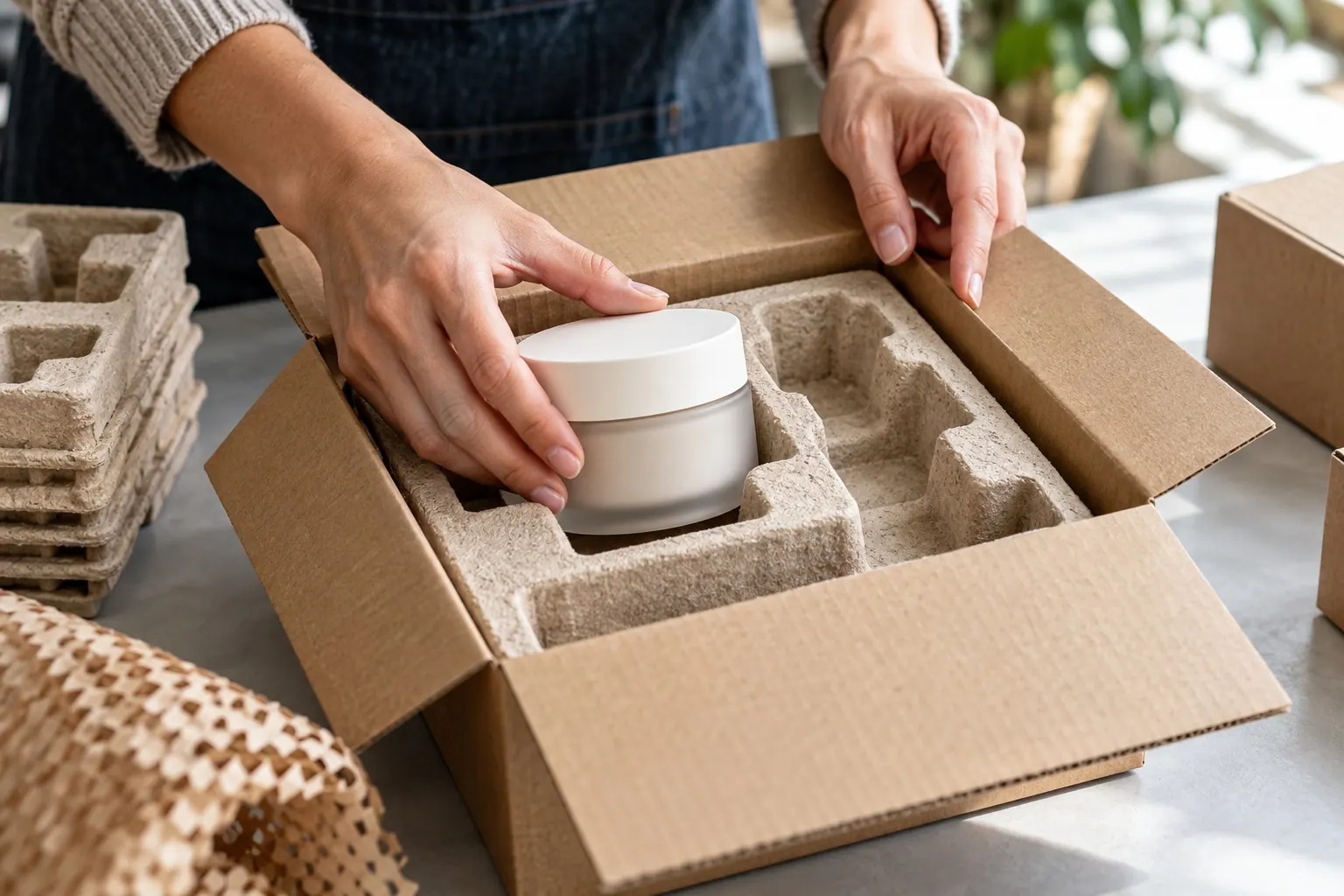
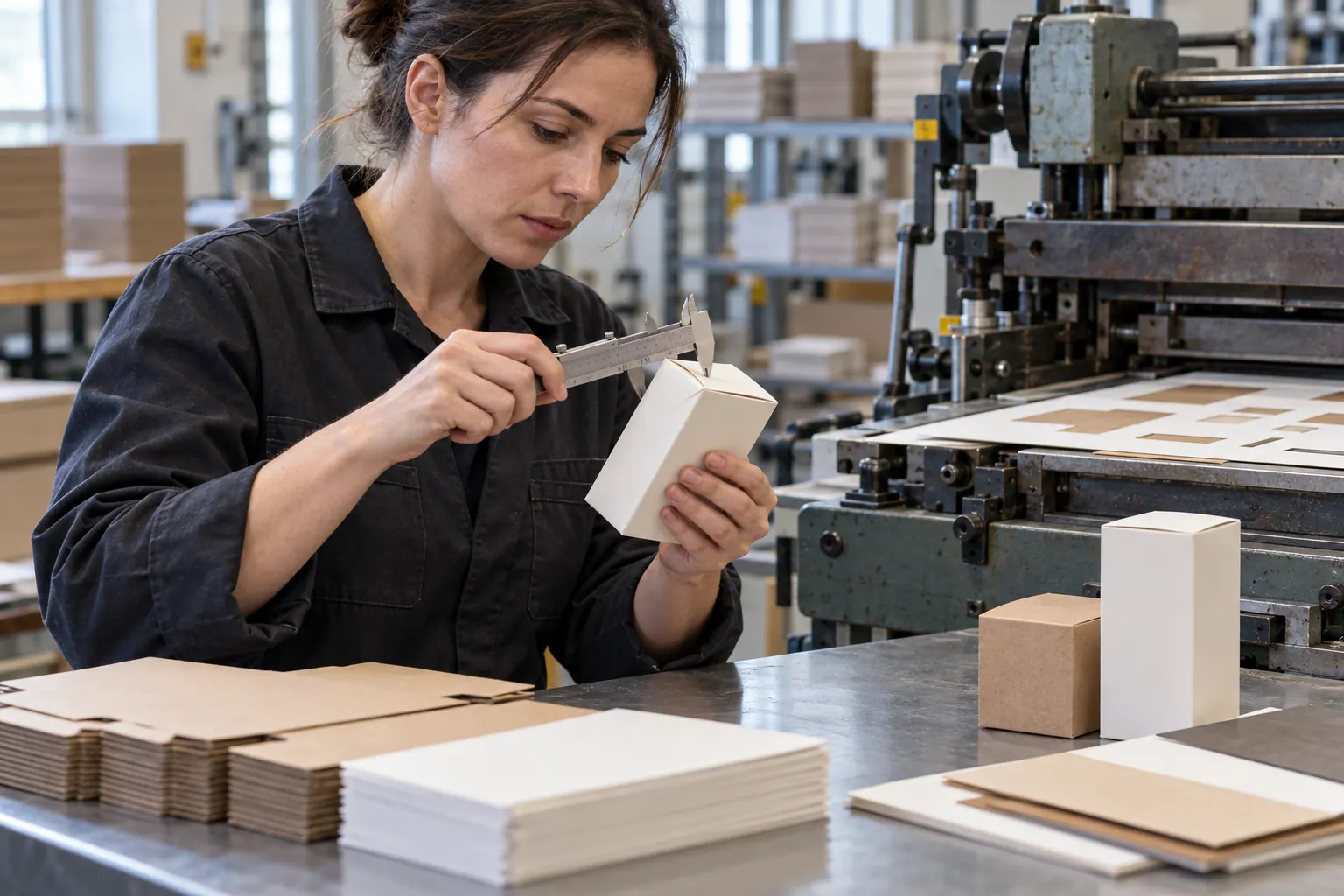
A digital mockup can confirm approximate artwork placement. It cannot confirm how the actual product fits, how the carton closes, whether the print and material match expectations, or how the packed order behaves in transit.
Ask for a physical sample or proof using the intended product and packaging combination. Check:
- the container, carton, insert, and outer shipping package fit together;
- the package opens and closes as intended and protects the product;
- required product information remains legible on the package;
- colors, finishes, and logo placement are acceptable under ordinary lighting;
- the assembled parcel’s dimensions and weight produce a workable shipping quote; and
- the supplier has confirmed who stores, assembles, and ships each component.
Do not approve production based on a generic mockup if the final SKU, finish, size, or shipping configuration is still undecided. Save the approved sample, artwork, supplier quote, and production specifications together so the next order can be checked against the same reference.
Check labeling and regulatory responsibilities
Packaging is part of the product information a customer receives. In the United States, MoCRA defines the “responsible person” as the manufacturer, packer, or distributor whose name appears on the cosmetic label. The law includes responsibilities such as serious adverse-event reporting and product listing, subject to the rules and exemptions that apply. Do not assume that a supplier’s role or a brand logo alone answers who is responsible; verify the label, product arrangement, written agreement, and current FDA requirements for the product. (FDA: MoCRA)
On October 29, 2026, FDA issued final industry guidance on implementing MoCRA’s mandatory cosmetics recall provisions. Build a written process that identifies who evaluates complaints, traces affected lots, coordinates with the responsible person, and communicates with customers if a product issue requires action. (FDA: Questions and Answers Regarding Mandatory Cosmetics Recalls)
Packaging and label requirements vary by product and sales market. If a product is sold outside the United States, check the rules where it will be placed on the market. A supplier can provide documents and production details, but the business still needs to understand which party is responsible for each required label element, product listing, safety record, and customer complaint process.
Choose the option that fits the customer and operation
Logo placement on a standard format may be enough when the product and delivery already fit the brand. A custom box may make sense when the exact size, material, color, or presentation matters and the order minimum fits the cash plan. A pre-packed kit can simplify the customer’s choice, but only if the products belong together and the added assembly and inventory work are covered. A custom formula belongs in a separate product-development decision, with its own evidence, supplier terms, and production plan.
The decision should connect three things: what the customer will notice, who will do the work, and what the order costs after it is delivered. If the package changes the shipping route, budget for that route. If the supplier changes its minimum, refresh the order model. If the desired change concerns the formula, do not treat a box quote as the answer.
Before paying a deposit, obtain a written quote tied to the exact product and package. It should state the minimum quantity, per-unit and setup charges, sample or proof process, production and delivery responsibilities, ownership of design files, and what happens to unused packaging if the project changes. Public supplier pages are useful starting points; the signed quote and agreement govern the actual order.
Custom packaging is not a single feature. It is a set of decisions about materials, branding, product information, assembly, inventory, and delivery. Name the exact change you need, verify the current supplier terms for that option, inspect a real sample, and calculate the full order before you choose it.