
A shade count does not tell a customer whether a makeup range will work for them. A range with many options can still cluster around similar depths, miss undertones, or show too little of the product on real skin. A smaller range can also be a thoughtful choice for a specific use or audience, provided the brand describes it honestly and can support the shades it offers.
The decision begins before a product page or campaign exists. A founder needs to connect the intended customer, the product’s role, the shades actually available from the supplier, and the content and inventory required to sell each variant with confidence.
Begin with the customer and the product category
Describe who the product is for, the situation in which they would use it, and what they need to see before choosing a shade. “A complexion product for everyone” is difficult to verify. A more useful brief names the audience and explains the job of the product without promising a result the formula cannot support.
The category changes the shade decision. Foundation, concealer, powder, blush, lip color, and eye products have different uses and selection cues. Do not apply one shade-count rule across all of them. For a complexion product, depth and undertone may both affect whether a buyer can find a plausible match. For other makeup, intensity, finish, and how the color appears on skin or lips may be more relevant. In every category, the test is whether the actual variants suit the audience and use the brand intends to serve.
Write the intended range in plain language before opening the supplier catalog. This gives the team a standard for assessing each item and prevents a large or attractive selection from becoming the strategy by itself.
Check the actual variants for each product
A supplier’s overall product count does not establish the shade range of an individual item. Open the exact product listing and record its available shades, names, descriptions, images, price, sample options, current fulfillment route, and any eligibility limits. Check each product separately; two products in the same category may not offer the same colors or terms.
Treat shade names as labels, not proof of how a shade will appear. “Warm,” “neutral,” and “cool” are not always used consistently across brands or suppliers. Compare the supplier’s description with physical samples and swatches where possible. Ask which variants are currently available, how a sold-out shade is handled, and whether the product can still be ordered through the sales channel you plan to use.
If the brand uses Shopify, each product variant can have its own details such as image, price, and inventory. Confirm that shade-specific images and stock will remain correct across the storefront and fulfillment process. (Shopify: Editing variants for an existing product)

Test shades on skin before committing to the offer
Product images and shade names are useful starting points, but they cannot substitute for inspecting the actual product. Order samples for the variants needed to understand the range. Confirm sample availability, price, shipping, and branding eligibility in the supplier account before building the budget; supplier sample offers and terms can change. (Blanka: How do I order samples?)
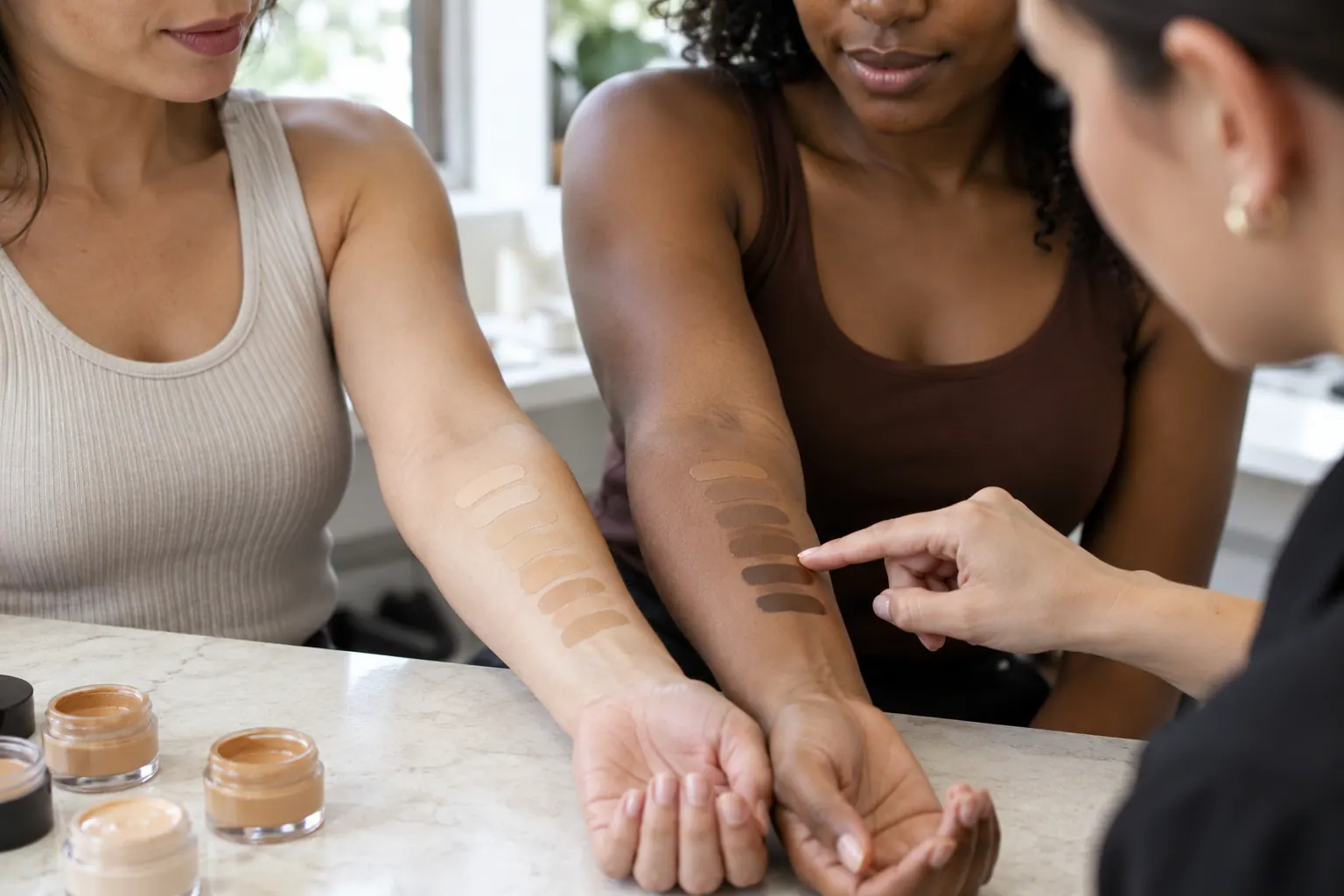
For a complexion product, plan a comparison that includes the range boundaries and the intermediate shades and undertones the brand expects to sell. For other color products, compare the tones and finishes customers will see as alternatives. Record the product, shade name, conditions, and what the wearer observed so one person’s reaction is not mistaken for a universal assessment.
Use consistent lighting when comparing a set of shades, then check how the product looks in ordinary indoor and outdoor light and in the camera conditions used for product content. Ask wearers for informed, voluntary feedback. Do not ask them to provide sensitive personal information that is not needed to assess the product. A sample review can reveal a mismatch or unclear description; it does not prove the experience of every potential customer.
Plan how customers will compare the shades
A shade range is only usable when buyers can understand the choices. Prepare accurate images or video for the actual variants you will sell. Keep lighting, camera settings, and application conditions as consistent as practical when making comparisons. Show the selected shade on skin or lips, identify the option shown, and explain anything that can change how the color appears on screen.
Avoid using one swatch photograph to imply that all shades are visible or that a single wearer represents the full range. Where a campaign uses multiple models, state which shade each model is wearing and keep the product details connected to the correct option. Do not retouch color in a way that changes the appearance of the shade.
The content plan is also an operations check. If a product has variants that cannot be photographed or explained accurately, the team may not yet be ready to make those variants easy to buy. A product listing should help a customer narrow the choice without suggesting a perfect match can be guaranteed through a screen.
Connect shade decisions to variant inventory
Treat every shade as a choice the store must describe, display, fulfill, and monitor. Depending on the supplier and commerce system, variants can have separate stock, images, and availability. Check what the storefront shows when one shade sells out, whether the supplier updates stock in time, and how the customer will be informed if a variant becomes unavailable.
Track shade-specific questions, orders, stockouts, returns, and replacement requests. These signals can identify gaps in the offer or in the product page, but they need interpretation. A return may reflect a shade mismatch, a changed expectation, damage, or another issue. Read customer feedback and service records before concluding that a shade should be added or removed.
Review the full order economics too. Calculate product cost, shipping and fulfillment, fees, discounts, and expected returns for the chosen variant and channel. If the provider charges differently by product or route, check each item rather than applying one margin assumption to the whole category. A shade that is listed but unavailable or uneconomic to replenish is not a reliable part of the customer promise.
Be precise about cosmetic claims
Shade choice and cosmetic claims are separate questions. A color or complexion product can be described in terms of appearance, finish, coverage, and use when the description is accurate and supported. In the United States, a product intended to treat or prevent disease, or to affect the body’s structure or function, may also be regulated as a drug even if it is sold as a cosmetic. Keep claims within the evidence and check the rules for each market. (FDA: Cosmetics Labeling Claims)
This matters when a brand discusses concerns such as acne or pigmentation. Do not assume a shade range, ingredient description, or supplier listing supports a treatment claim. Verify the product information and intended use before writing packaging, product pages, creator briefs, or advertisements.

Decide what to launch and what still needs work
For each candidate product, keep a short decision record:
- Customer and use: who the range is intended to serve and what the product helps them do.
- Actual variants: the supplier’s current shades, names, sample options, prices, and channel eligibility.
- Observed fit: what the sample review showed, who participated, and under what conditions.
- Customer explanation: the images, comparisons, product details, and limitations needed to help buyers choose.
- Operating plan: variant-level fulfillment, inventory updates, sellout communication, and contribution after variable costs.
- Open questions: what has not been confirmed and who will confirm it before publication or ordering.
Move forward when the product fits the brand’s intended customer, its shades have been inspected, and the storefront and operations can represent and fulfill them accurately. Resolve supplier terms and availability first; drop a product if the catalog cannot support the range the brand plans to promise.
A new brand need not promise every shade to every customer. It should show the actual choices, state what is missing, and avoid implying inclusion where a product is unavailable. Inclusive shade decisions come from honest sampling and presentation, plus reliable variant fulfillment—not shade count alone.