
A student asks after class, “Do you sell the leggings you wear in your videos?” It sounds like a simple product request, but the right answer depends on what those leggings are made to do—and what you are willing to promise about them.
For a yoga instructor, product decisions sit close to trust. A design can express the values of a studio or community, while a garment also has to fit, move, and feel right. Fourthwall can provide an online shop, catalog products, and fulfillment for eligible items. That infrastructure does not establish that a specific garment is suitable for a full practice, and it does not tell you what your students will want to buy.
This guide shows how to use the catalog as a starting point, separate product facts from performance claims, and build a small offer around the way your students actually practice.
Begin with the class, not the catalog
Write down what your students come to class for and what your teaching asks them to do. A restorative session, a heated vinyasa class, a strength-focused practice, and a beginners’ workshop create different contexts. The product that makes sense after a gentle evening class may not be the same one students expect to wear through a vigorous flow.
Then decide what role you want products to play. They could mark belonging, support an at-home practice, provide comfortable post-class clothing, or meet a specific equipment need. Those are different jobs. A shirt that expresses a studio phrase does not need technical claims; leggings presented as training wear do.
A short product brief keeps these choices visible:
- Who is the product for: current students, online followers, or both?
- When would they use it: in practice, before or after class, or in daily life?
- What must the product do physically, and which facts demonstrate that it does?
- Which sizes, colors, destinations, and price range fit the intended audience?
- What is the smallest product set that can express the idea clearly?
Use the brief to filter options before looking at designs. If no current listing fits a required use, that is useful information: you can choose another product role or source a garment designed for that purpose.
Read the exact product listing—and its limits
Fourthwall’s live catalog includes leggings and other apparel. One current All-Over Print Leggings listing identifies Sublicolor 301, with 82% polyester and 18% spandex, 6.78 oz fabric, sizes XS–XL, no minimum order, and fulfillment from the EU or US. The listing also displays a price and product description. These facts describe the item; they do not establish opacity at full stretch, moisture management, seam comfort, waistband stability in inversions, or shape recovery after repeated movement. (Fourthwall All-Over Print Leggings listing)
An 18% elastane blend does not tell you whether the leggings will work through a particular class. If you intend to describe leggings as suitable for practice, evaluate the exact item in the movements your students will do and make sure the product information supports the claims. If you have not checked those things, describe it plainly as printed leggings or leisurewear and avoid calling it technical or performance apparel.
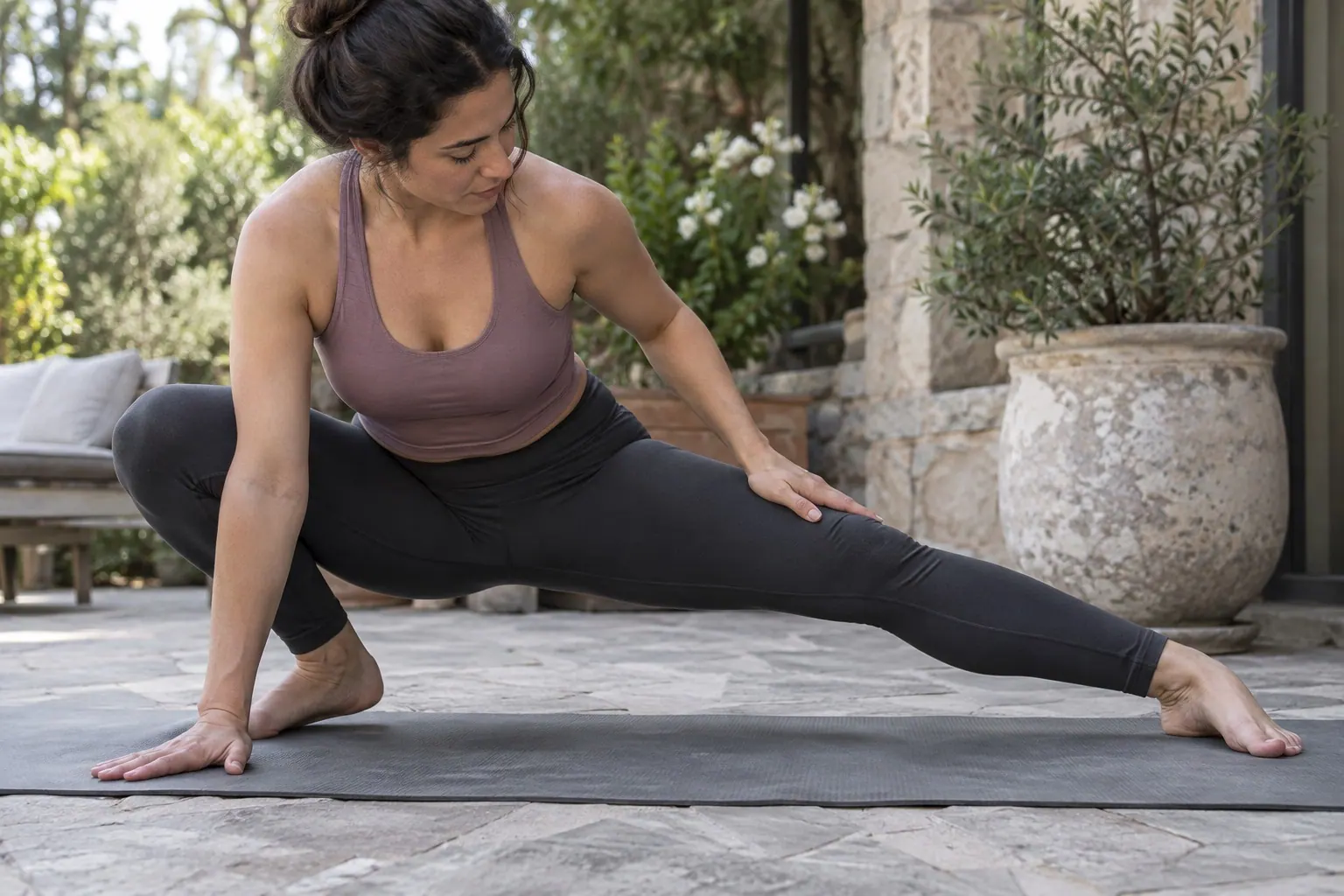
A sample gives you more evidence than a mockup. Fourthwall says samples are available at manufacturing cost. Check fit against the size guide, print placement, fabric feel, seams, movement, and care instructions. If opacity is part of your product promise, inspect the garment under the conditions in which it will be worn. A single sample can inform your own judgment, but it does not prove how every size, color, production run, or customer experience will behave. Keep the claim proportional to the check you actually performed. (Fourthwall sample-order guide)
Choose a product role your catalog can support
Yoga-related offers do not have to begin with performance leggings. Depending on the studio and student, a comfortable tee or hoodie, a tote, a mug, or a simple art print may better express the class community without making a technical apparel claim. The point is not that accessories are always safer or more valuable; it is that the product should match its intended use.
Think about each candidate in three columns:
| Candidate | Intended use | Evidence to check before listing |
|---|---|---|
| Practice apparel | Movement during the class you teach | Fit, size chart, stretch and recovery, opacity, seams, care, and a physical sample |
| Post-class clothing | Travel, errands, or relaxed studio time | Fabric, fit, print feel, sizing, care, destinations, and sample appearance |
| Studio object or accessory | Home practice or daily reminder | Dimensions, material, print quality, and whether the object has a clear use |
This is an evaluation tool, not a platform product ranking. The live catalog changes, and the relevant specifications vary by item. Check the exact listing for available sizes, print method, fulfillment regions, and current base cost. A product being present in the catalog does not mean it fits your studio’s brief.
Build a recognizable visual language
A studio’s identity can come from its name, neighborhood, teaching vocabulary, a distinctive class ritual, or a visual motif students recognize. Use those sources to build a design system: a considered type style, a small palette, or a recurring shape. A logo can be part of that system, but repeating it on every item is not the only way to create recognition.
Print method affects how a design appears and feels. Fourthwall’s current guide says products labeled “Printed” may use DTG or DTFx, selected by its fulfillment partner for the garment and artwork. DTG blends into the fabric; DTFx sits on top and may feel more noticeable. Embroidery supports up to six thread colors and calls for simple, bold artwork. Not every method applies to every product, so confirm the listing and design tool. (Fourthwall print-method guide)
For yoga apparel, also consider how the graphic behaves during movement: placement that looks centered in a mockup may shift or fold on a body in a pose. A sample lets you see the real garment and print together. If the design is primarily symbolic or studio-specific, explain its meaning in the product description instead of implying that the graphic improves the practice.

Price for the costs and the student’s context
A catalog cost is not a retail recommendation. Start with the exact product’s current base cost, then include payment processing, shipping choices, samples, design and photography work, promotion, taxes that apply to your business, and other costs you will carry. Decide what contribution per sale would make the effort worthwhile before setting a final price.
For an illustration, Fourthwall currently lists a Gildan 64000 tee from $9.50 and charges 2.9% plus $0.30 for US card processing. At a $28 retail price, the amount remaining after those two deductions is about $17.39. That is before shipping paid by the creator, tax, sample, design, promotion, refunds, and other expenses; it is not a profit forecast. The platform says catalog product costs are a flat deduction, with no additional percentage platform fee on catalog products. Check the current listing and payment fee before using this example for your own store. (Gildan 64000 listing; Fourthwall pricing and fee schedule)
The price also communicates what is included. If you price above a basic tee, explain the garment, fit, design, and why it belongs to the studio. Do not assume students will pay more simply because the instructor made the item. Ask for reactions to specific choices, and treat stated interest as an early signal—not the same evidence as a completed order.
Connect products and memberships without forcing a bundle
Fourthwall memberships can provide a separate way to organize paid content and community access. The current plan page lists a 5% platform fee on memberships for both Free and Pro, in addition to applicable payment processing. Fourthwall’s membership FAQ also says creators can make selected products available only to members or offer members-only promotions. These features can connect a product to a community, but they do not show that a student wants a subscription or an exclusive product. (Fourthwall plans and pricing; Memberships FAQ)
A membership should stand on the value of its own content, interaction, or access. A product can be an optional perk, an occasional release, or available to everyone. Make the offer understandable: what does the member receive, how often, and what happens if they cancel? Keep the apparel purchase optional so students can participate in class without having to buy clothing or subscribe.

Decide whether the garment belongs in class or in the studio shop
For an item students will wear during practice, make the sample answer a class-specific question: does the garment move with the poses, stay in place, and remain comfortable through the intended sequence and care routine? Describe only what that sample and the product documentation support. If the intended role is post-class or everyday wear, state that plainly and let the product’s fit, price, and studio identity carry the offer without implying performance testing.
Before publishing, make sure the available sizes and colors match the intended use, the total cost fits the studio’s pricing decision, and the checkout and shipping details are clear. A first release can be one useful studio item; class feedback, returns, and actual orders can show what deserves revision. A like or a member’s comment is useful context, not proof of wider demand.
For an instructor, honest product language is part of the teaching relationship. A studio tee can be a symbol of belonging. A technical claim asks for technical evidence. When the product, use, and description match, the shop can extend the studio’s identity without asking students to trust more than you can show.