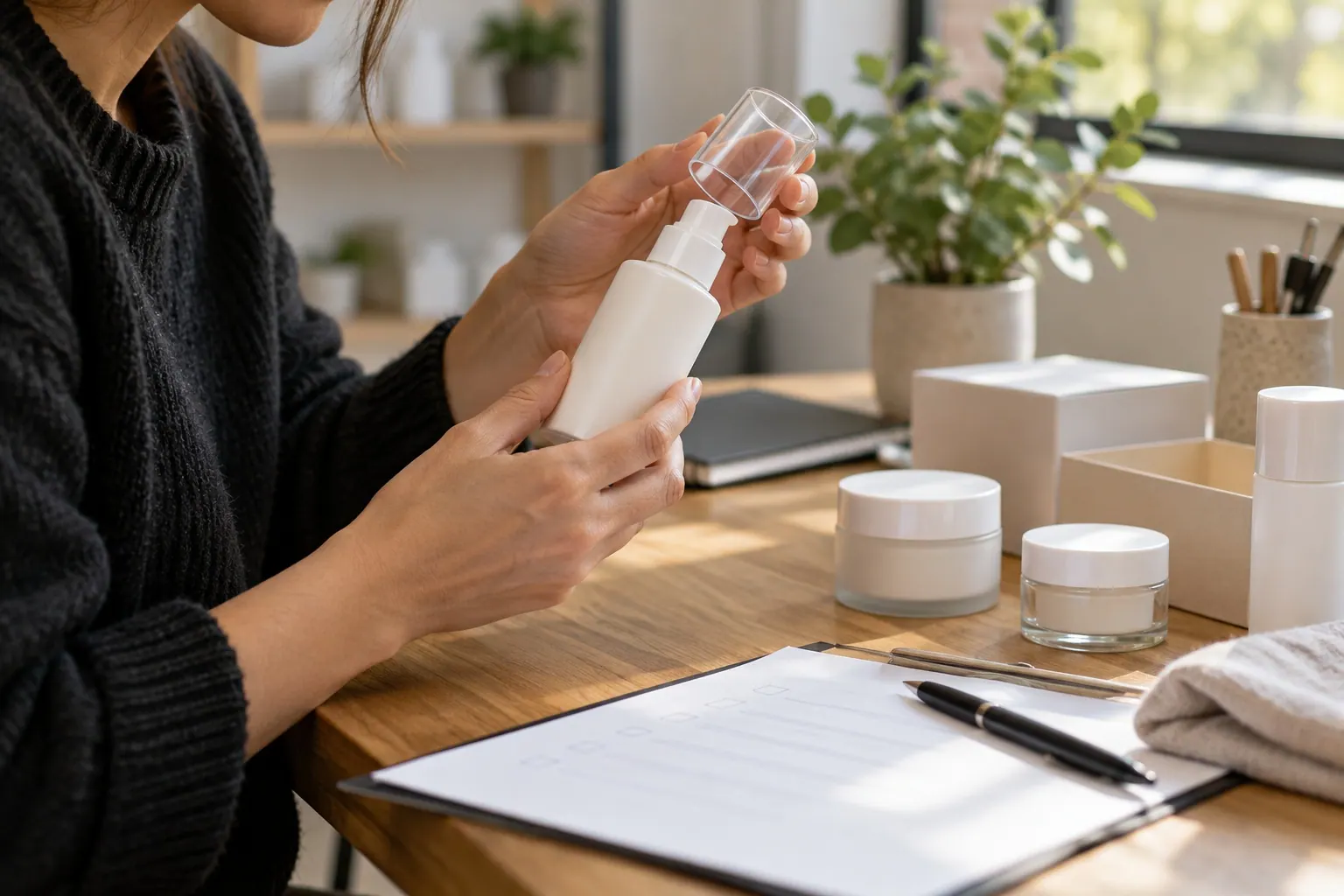
A founder sees the same moisturizer under several labels and asks the obvious question: should the brand create a formula competitors cannot copy? Sometimes that is the right next step. Often, the product itself is not the reason customers choose or ignore the brand. The difference may lie in whom the brand serves, the routine it explains, the service around the product, the packaging, or the trust it has earned.
Consider custom formulation when the current formula prevents a specific product promise the brand can substantiate and is permitted to make. A custom formula may add control and distinction, but it also brings development time, cost, documentation, testing, packaging decisions, and inventory commitments. Compare those obligations with the value customers could plausibly receive.
Separate the production models
Platform language can blur three different choices:
- Ready-made private-label formula: select a catalog product and apply your brand identity. You may sell through dropshipping or order stock, subject to the product and account terms.
- Bulk purchase of a ready-made formula: order a quantity of an existing SKU to obtain a different unit cost, packaging option, or fulfillment arrangement. This changes purchasing and inventory exposure; it does not make the formula exclusive.
- Custom formulation: commission a formulation project based on a documented product brief. Formula development, packaging, testing, minimum quantities, timeline, and commercial rights belong in the specific project scope.
Selfnamed’s current pages describe the ready-made catalog and dropshipping/wholesale options separately from custom product development. They also describe custom development through more than one service page. The public help pages list different timing and minimum-quantity ranges for their custom-formula pathways. Treat each as a separate offer. Before budgeting, request a written proposal that identifies the development route, milestones, sample rounds, safety and stability work, packaging, rights, MOQ, unit price, market, and what happens if the brief changes. (Selfnamed: How it works; Selfnamed Labs; Selfnamed Help: Custom formulation and packaging; Selfnamed Help: Can I have my own formula?)
Find the actual limit in the current offer
A product appearing on other shelves does not prove that a shared formula is holding your brand back. First write down the customer need the product should meet and the evidence behind it. Then examine the current offer:
- Can the existing SKU support the routine and use case you serve?
- Is the gap in the formula, or in positioning, explanation, packaging, or service?
- Does the manufacturer permit the claims and markets the brand needs?
- Can the product’s sensory profile, size, packaging, and supply meet the brief?
- What evidence would show that a different formula solves a customer problem rather than satisfying the founder’s preference?
If competitors sell a similar formula, that can create pressure on price. It can also show that customers understand the product category. A brand may still distinguish itself through a narrower audience, thoughtful education, professional service, reliable fulfillment, or a useful assortment. Customization can strengthen a clear position; it cannot create a position by itself.
Avoid treating “exclusive” as a complete strategy. Confirm the meaning of any exclusivity term: territory, sales channel, duration, formula ownership, intellectual-property rights, and whether the manufacturer may adapt or reuse related work. Put those terms in the agreement. A platform’s custom-development page may promise a commercial license under one service, while another offer may define rights differently.
Model the development decision
Start with the total incremental investment in custom development. Include the development fee, sample iterations, testing, packaging, artwork, regulatory review, launch content, and any first production order. Then compare the expected contribution from the custom option with the contribution from the strongest ready-made alternative.
A useful break-even question is:
Incremental units needed = additional fixed development and launch costs ÷ additional contribution per unit.
The denominator is not the custom product’s full selling price. It is the difference between contribution per completed order under the custom option and contribution under the alternative, after product cost, fulfillment, shipping subsidies, payment fees, refunds, and other variable costs. If the custom formula does not support a higher price, lower variable cost, or materially better conversion that you can substantiate with your own results, the additional cost may have no economic path to recovery.
Use low, expected, and high scenarios for price, volume, unit cost, timing, and refunds. Label each input as confirmed, quoted, or assumed. Include cash timing: a development project may require money months before a product can be sold, and inventory can tie up cash after launch. If the business cannot fund the downside case without harming its service operation, the project is not ready even if the top-line projection looks attractive.


Check responsibility, evidence, and market scope
The formula brief should say what the product is intended to do, how it will be used, which ingredients or formats are important, and which markets are in scope. Separate the desired product experience from the claims the brand hopes to make. A texture preference is a development goal; a claim about treating a condition or changing body structure is a different regulatory question.
In the United States, FDA says manufacturers and distributors are responsible for ensuring cosmetics are safe under labeled or customary use. MoCRA requires the responsible person named on the label to maintain adequate safety substantiation, subject to applicable requirements and exemptions. Ask the supplier which safety records, testing, and regulatory tasks it provides, and confirm which duties remain with your business. Do not infer that a platform’s general quality statement or a founder’s sample use covers every obligation for the final product. (FDA: Product Testing of Cosmetics; FDA: MoCRA)
If a product will be sold in the European Union, confirm the obligations for that market separately, including the responsible person, safety assessment and product information file, notification, and claims. A U.S. compliance statement does not settle EU requirements. The exact duties depend on the product, its claims, and the role of each company. (European Commission: Cosmetics)
The same discipline applies to formula claims. FTC guidance says objective advertising claims need a reasonable basis before publication; a custom brief or development process is not evidence that a product achieves a health or performance result. Preserve the documentation that supports each claim and have qualified professionals review claims and labeling in the relevant market. (FTC: Health Products Compliance Guidance)
Resolve the open requirements before committing
Move from a shared formula toward development only when the following are clear:
- Customer problem: a specific need appears in relevant customer conversations, service questions, returns, or purchase behavior—not only in competitor research.
- Formula gap: the ready-made catalog cannot meet the defined product brief, or its limitations are material to the customer experience.
- Evidence plan: the supplier explains how samples, stability, safety, packaging compatibility, and documentation will be handled.
- Rights and responsibilities: the agreement states what is exclusive, who owns or licenses the formula and design, who carries each regulatory role, and which markets are covered.
- Economics and cash: a conservative scenario shows how the additional investment could be recovered and the business can support the project timeline.
- Launch capacity: the team can handle quality questions, fulfillment, customer support, labeling, and post-launch monitoring.
A “no” or “unknown” at one of these gates is a reason to gather information, revise the brief, test the existing SKU, or pause. It is not evidence that the brand has failed.
Staying with a ready-made formula can be a strategy
A shared formula may be the right choice while a brand is proving its audience, learning which products fit a service, or building its retail process. Dropshipping and bulk buying carry different cash and inventory trade-offs; neither removes responsibility for accurate claims, labeling, customer experience, and support. Check live SKU prices and account terms rather than copying a catalog figure into a long-lived plan. (Selfnamed product catalog; Selfnamed pricing help)
There is also a middle path: keep the formula and improve a real part of the offer. Make the audience more specific, explain a routine clearly, choose packaging that suits the use, improve fulfillment, or provide service that a commodity listing cannot. Measure what changes. If a well-positioned offer still has a product-specific limitation, that evidence can make a later development brief more useful and reduce the risk of building a custom product around a guess.
Development should follow a documented customer need
Develop a custom formula when the customer need is specific, the ready-made alternative has a meaningful limitation, the supplier can define the project in writing, and the business can fund the work and obligations. Stay with a ready-made formula when the brand’s differentiation can still come from its audience, service, education, or operations—or when the evidence and cash do not yet support product development.
The formula is one part of a beauty brand. The stronger decision is the one that matches what customers need with what the business can document, deliver, and support over time.