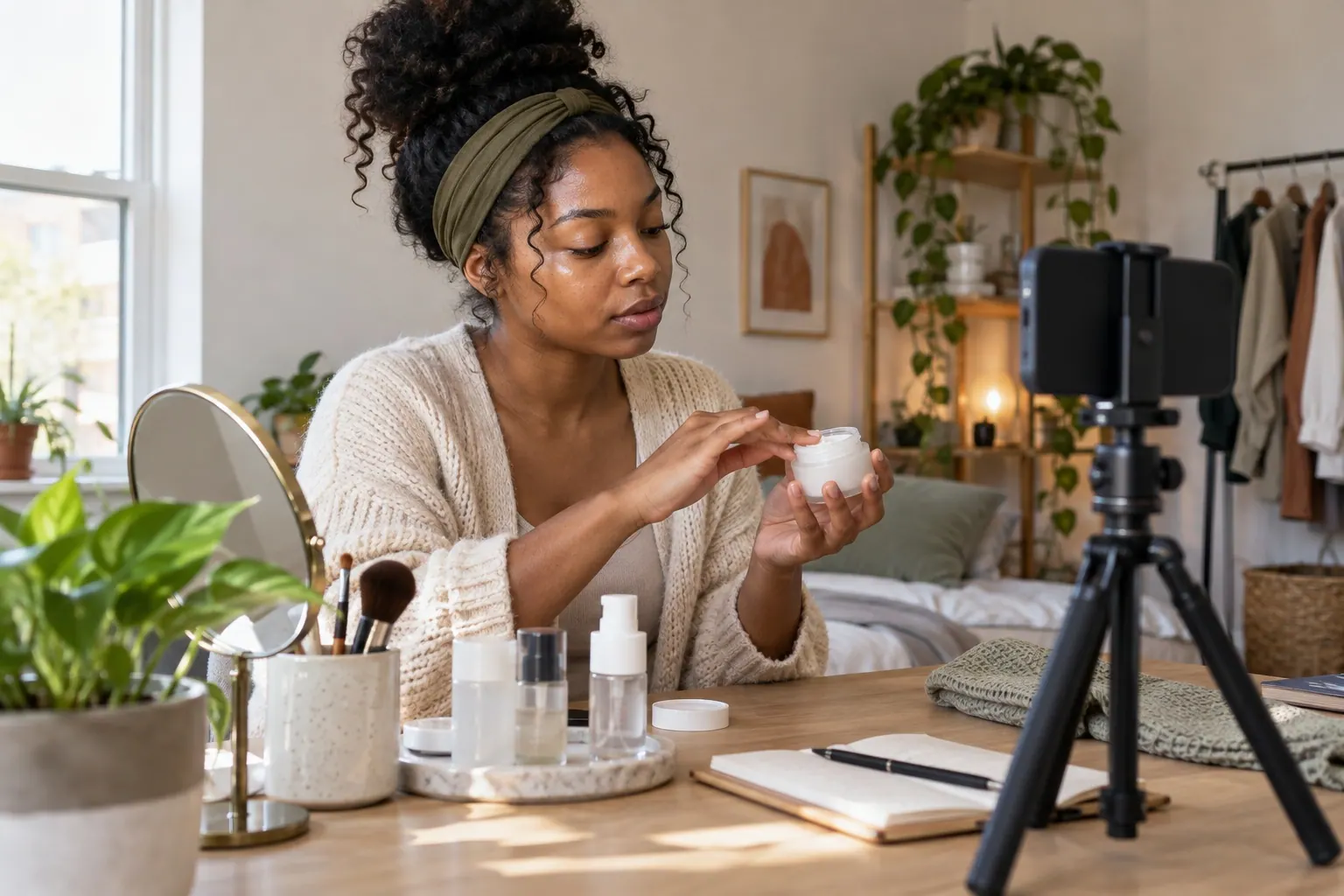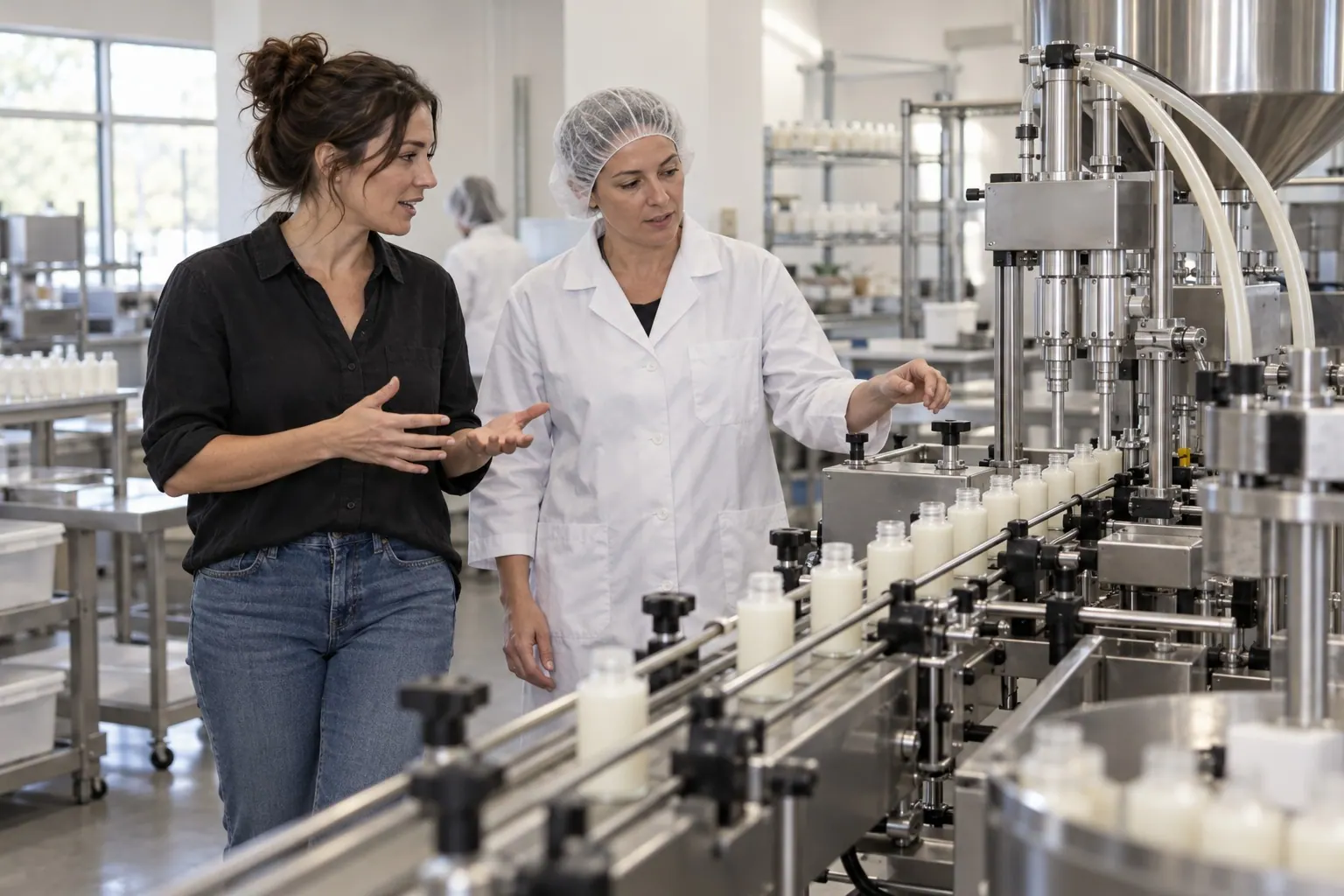
A skincare sample is easy to mistake for a small launch rehearsal. You open the package, try the formula, and imagine a label on it. That first reaction is useful, but it answers only a narrow question: how did this specific sample feel to you, under the conditions in which you tried it?
Choosing a formula for a brand requires more. You need to know what the supplier can document about the exact product, what you may responsibly say about it, how it behaves in the intended routine, whether the packaging and fulfillment fit your customers, and whether the numbers work after all costs. A sample review is the beginning of that decision, not a safety study or a market test.
Selfnamed currently offers sample sets that can be customized with branding and are intended to let businesses handle and compare products before launch. The public page is a useful starting point, but the available formulas, sample options, price, shipping, and terms can vary. Check the current product page and account terms for the exact SKU and destination before relying on a detail. (Selfnamed sample sets; Selfnamed Help: sample-set information)
First, define what the sample can answer
Separate the review into four questions:
- Product experience: How does the formula look, smell, spread, and feel when used according to its label?
- Product and package fit: Does the sample arrive intact, dispense as intended, and suit the routine and audience you have in mind?
- Evidence and claims: What documentation supports the product description, safety substantiation, certifications, and any proposed marketing claim?
- Business fit: Can you price, fulfill, support, and promote this SKU with a plausible contribution after costs?
These questions need different evidence. A founder’s notes can describe personal sensory observations. They cannot establish that a product is safe for everyone, treats a condition, or will produce the same result for customers. A supplier’s certification or testing statement should be checked against its scope, date, exact formula, and permitted use in your market.
Identify the exact formula and market
Before opening the sample, record the product name, SKU, formula or revision identifier if provided, size, destination market, order date, and supplier page. Save the product description and any documents that accompanied the order. A catalog name alone may not distinguish a formula revision or package variation.
Ask the supplier for the documents relevant to your next decision. Depending on the product and market, that may include a full ingredient list, directions and warnings, available safety information, claims support, certification documentation, packaging specifications, and responsibility for label or notification tasks. Do not assume a general platform statement applies to every formula. Ask which document covers the exact SKU and who is responsible for each step.
Keep marketing claims separate from supplier language. A phrase such as “tested,” “natural,” or “dermatologist approved” can imply a specific kind or level of evidence. Request the underlying document and the exact wording the supplier permits you to use. If the scope is unclear, leave the claim out until it is resolved.
In the United States, FDA says cosmetics must be safe when used according to labeled directions or in the customary or expected way. FDA does not maintain a universal list of tests required for every cosmetic; manufacturers and distributors remain responsible for safety. This is why a founder’s sample checklist should not be presented as a substitute for the responsible party’s safety substantiation. (FDA: Product Testing of Cosmetics; FDA: MoCRA)
Inspect delivery and packaging
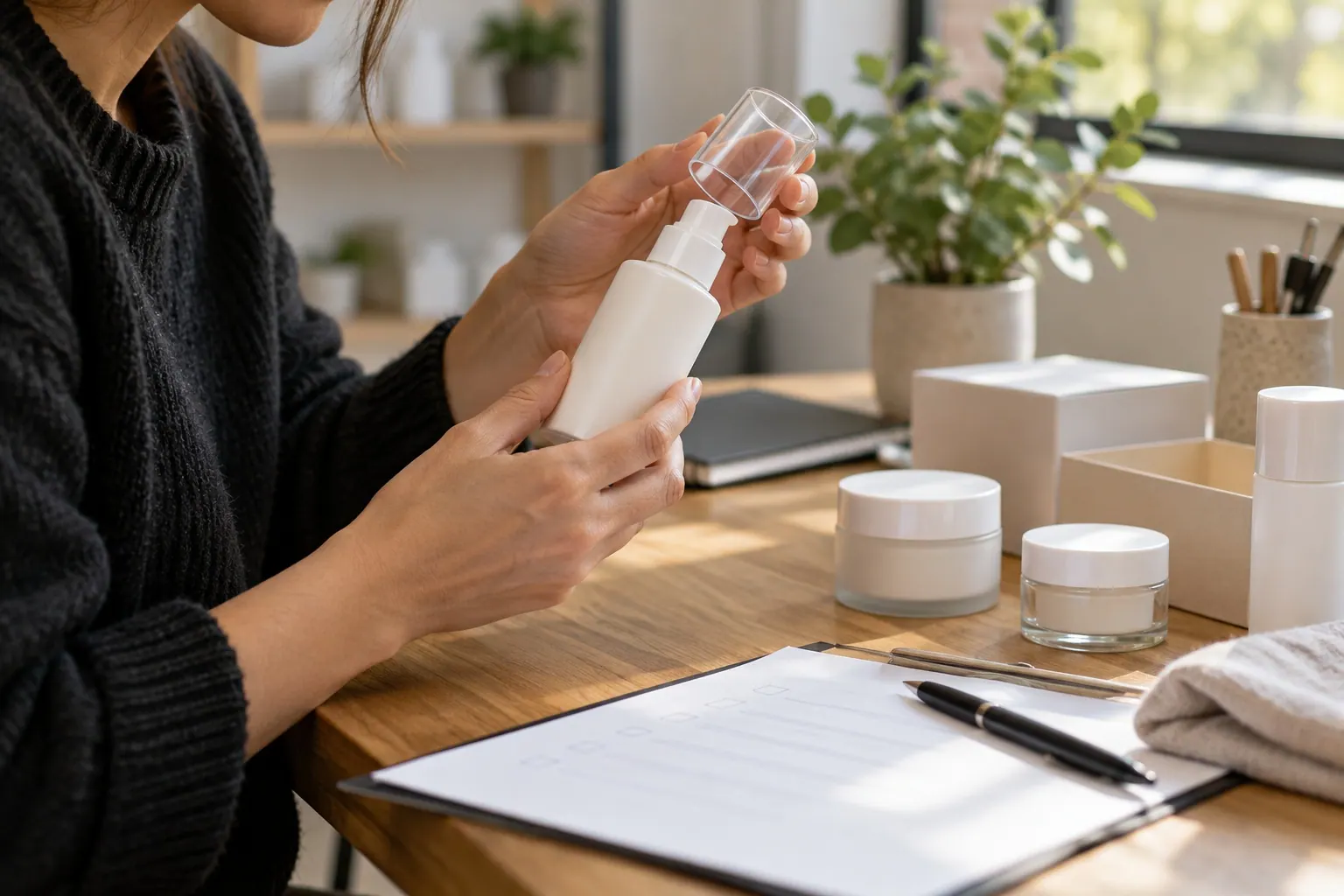
Photograph the package as it arrived. Note visible damage, leakage, a broken seal, a loose cap, or a pump that does not dispense. Record the date and contact the supplier about defects before treating the sample as representative of a customer order.
Then check the container in the ordinary way described by its instructions. Is it comfortable to hold? Can you dispense a reasonable amount? Does the closure protect the contents between uses? Is the label legible and durable under normal handling? Avoid inventing stress tests, such as extended heat exposure or deliberate contamination, unless the supplier or a qualified packaging professional has specified a safe method. A founder’s informal test should not be mistaken for package validation.
If the sample includes a branded mock-up, inspect it for layout and legibility only. Confirm the final label requirements separately for each sales market, formula, and business role. A sample label or design preview is not proof that a commercial label is complete.
Record sensory observations consistently
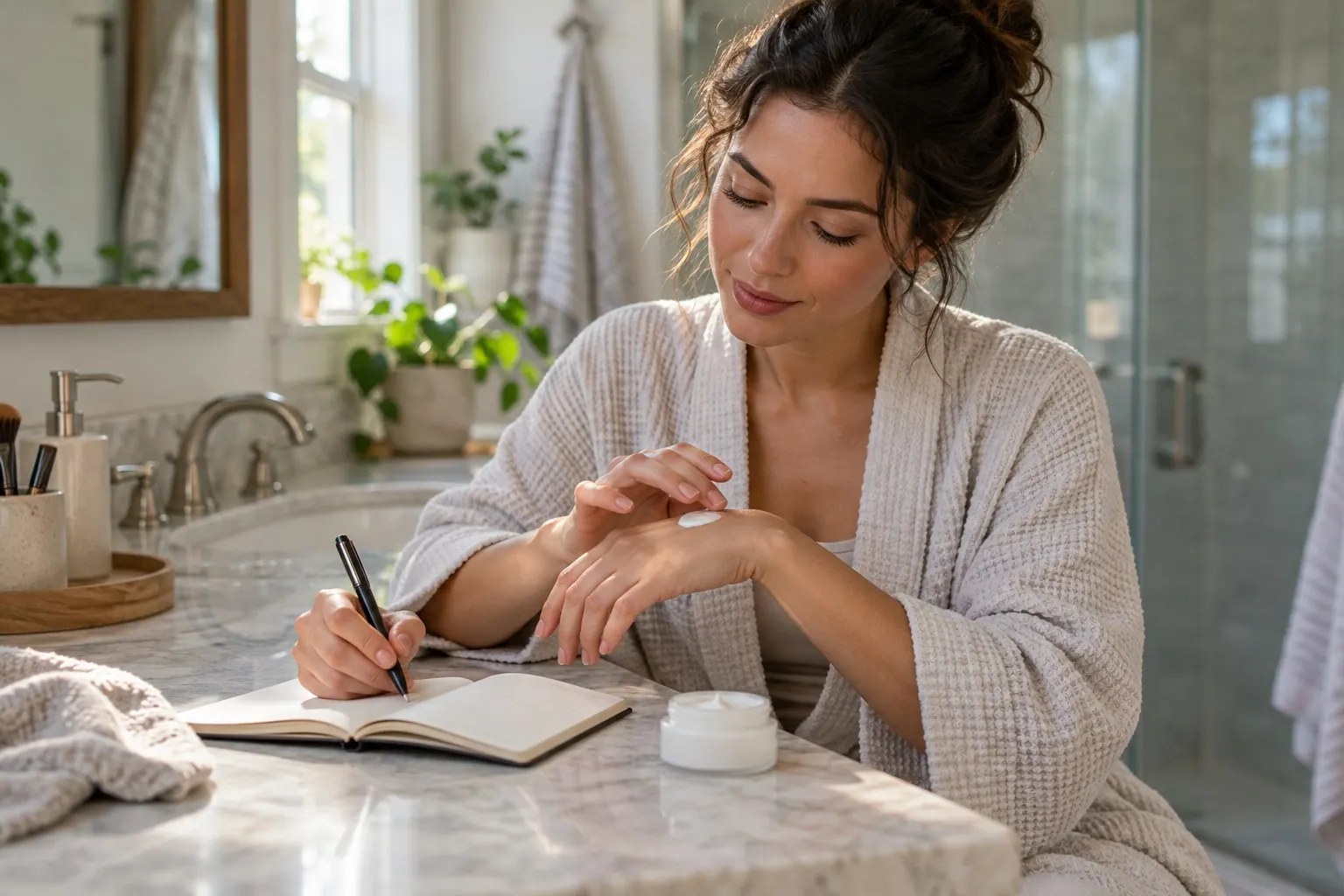
Use the sample only according to its instructions. Do not change the amount, frequency, or application area to force a dramatic result. If the product causes a concerning reaction, stop using it and seek appropriate professional advice; do not turn a single personal experience into a medical conclusion.
Create a simple log with the same fields each time:
- date and product identifier;
- where and how it was used, following the label;
- texture during application and finish afterward;
- scent, if present, and whether its intensity fits the intended audience;
- dispensing or packaging issues;
- any unexpected experience, recorded factually;
- conditions that might affect the observation, such as other products used.
Describe what you noticed rather than diagnosing why it happened. “The cream felt tacky for me after application” is an observation. “The formula repairs the skin barrier” is a product claim that needs appropriate evidence. Personal notes are valuable for selecting a brand fit and writing accurate sensory copy; they do not establish a general outcome.
Review claims and safety evidence as separate work
A cosmetic sample can show how one unit feels. It cannot establish the safety of every batch, provide evidence for a clinical claim, or show how a broad customer population will respond. Review the supplier’s documentation with the party responsible for the product and its label. Escalate gaps to a qualified regulatory or safety professional before making a launch decision.
In the United States, the FTC evaluates express and implied advertising claims for truthfulness and substantiation. A founder’s observation or a tester’s sincere statement does not automatically substantiate an objective claim about product performance. Testimonials and expert endorsements can also communicate claims that the advertiser must be able to support. Keep proposed copy next to the evidence that supports it, and remove language that reaches beyond that evidence. (FTC: Health Products Compliance Guidance; FTC: Endorsement Guides questions and answers)
The FDA also explains that a cosmetic promoted to treat or prevent disease, or to affect the structure or function of the body, may meet the definition of a drug under U.S. law. Classification depends on intended use, including claims and context, not merely on what the product looks like. Review the exact wording and destination market before publishing product copy. (FDA: Is It a Cosmetic, a Drug, or Both?)
Use feedback carefully
If you invite other people to handle or try a sample, use a written, consistent set of questions and explain what you are collecting and how their feedback may be used. Do not ask leading questions such as “Did it make your skin look better?” Ask about observable experience: packaging, dispensing, texture, scent, routine fit, and what remains unclear.
Treat a small group’s responses as directional feedback about those participants, not as a representative study or proof of likely sales. Record how the group was recruited, whether anyone received a free product or other benefit, and whether you plan to quote or feature their comments. In the United States, the FTC says a free product or other material connection may need clear disclosure when a review is used as an endorsement. Never condition a product on a positive review or present selected praise as a typical result without the support and context required for the claim. (FTC: Endorsement Guides questions and answers)

Check whether the business case works
Do not select a formula because the sample feels premium or because a supplier advertises a bulk discount. Build a SKU-level estimate from current figures. Include product cost, sample cost, package design, shipping, payment and marketplace fees, taxes, refunds, customer support, promotion, and the founder’s time. Separate confirmed costs from assumptions and confirm which party handles fulfillment, returns, and customer communication.
A useful calculation is:
Contribution per completed order = sale proceeds − product and fulfillment costs − payment and platform fees − expected variable costs.
Then compare the contribution with the work and cash required to generate the order. Use a low, middle, and high scenario if the inputs are uncertain. A margin calculation is not a sales forecast. A “no minimum order” option, where available for the exact SKU, can reduce the need to buy stock in advance; it does not guarantee demand, favorable unit economics, or a particular delivery experience. Verify current terms and destination availability directly. (Selfnamed product catalog; Selfnamed fulfillment and shipping)
Make the decision with evidence, not a magic score
Use a one-page decision record with four outcomes for each question: confirmed, needs clarification, not suitable, or not applicable. Record the evidence beside the outcome.
| Review area | Evidence to keep | Decision question |
|---|---|---|
| Formula identity | SKU, revision, ingredient list | Do I know exactly which product I reviewed? |
| Product experience | Dated sensory log | Does its observed feel fit the intended use and audience? |
| Packaging | Arrival photos and dispensing notes | Did the sample arrive intact and function as expected? |
| Claims and safety | Supplier documents and qualified review | Can the responsible party support the planned use and wording? |
| Market and label | Destination-specific checklist | Are roles and label steps clear for the market? |
| Economics and operations | Current quote and cost model | Can the offer work after all relevant costs and work? |
| Customer feedback | Questions, participant context, disclosures | What did this small group say, and what can it not prove? |
Stop and resolve a material gap before committing to a launch: an unidentified formula, missing instructions, a damaged sample, an unresolved safety or labeling question, a claim without support, or unclear fulfillment responsibility. If the gap cannot be resolved, choose another SKU or pause. A polished package cannot compensate for a decision you cannot explain.
The sample is a decision tool
A useful review records the question, sensory notes, current documents, and evidence still missing. Some samples will be rejected because their feel or package does not fit; others may justify a deeper safety, regulatory, or commercial review. Either result directs the next hour, dollar, and claim toward evidence that can resolve a real decision.