Two Yoycol listings illustrate why a studio buyer should read each product page. The All-Over Print Women’s Yoga Leggings is listed at $6.59, in sizes S–6XL, with 92% polyester / 8% spandex, a garment weight of 0.26 kg and a fabric weight of 230 g/m². The Women’s High-Stretch Tights is listed at $9.29, in sizes S–2XL, with 87.5% nylon / 12.5% spandex and a garment weight of 0.099 kg. Yoycol lists an average production time of 7 days for the tights. These product-level facts are a starting point for comparing options, not evidence of their fit or performance. (Yoga Leggings; High-Stretch Tights) (Yoycol — Yoga collection and product data)
The listings offer useful comparison points, but they do not explain why the prices differ or which garment will suit a particular class. A studio should first decide whether it is buying merchandise or practice wear; that intended use determines what the sample needs to prove.
Reading the Two Leggings Like an Activewear Buyer
The High-Stretch Tights listing provides composition, garment weight, size range and a production estimate. It reports 87.5% nylon / 12.5% spandex and a garment weight of 0.099 kg; its description characterizes the fabric as smooth, lightweight and stretchy. Those are the seller’s product claims, not comparative test results. The listing shows an average production estimate of 7 days, 10 days for 90% of orders and a 14-day production guarantee. Shipping is additional and depends on destination and method. (product listing)
The Yoga Leggings listing currently specifies 92% polyester / 8% spandex, 0.26 kg garment weight, 230 g/m² fabric weight and sizes S–6XL. It lists cold machine washing with similar colors and advises against bleach, ironing and dry cleaning; it lists tumble-dry low. Its price is $6.59 for 1–9 pieces, $6.27 for 10–49 and $5.94 for 50 or more. Confirm these details in the live product page and order summary. The broader listed size range may matter to a studio roster, but a size chart and sample fitting are still needed. (product listing)
The current displayed prices differ, but the listings do not establish what causes the difference or which product offers better value. A studio should compare its order total, sample quality, size coverage, care needs and intended use before deciding what to stock.
The Compression and Support Problem
The product copy can describe a garment, but the studio still needs to decide what it can responsibly promise about performance.
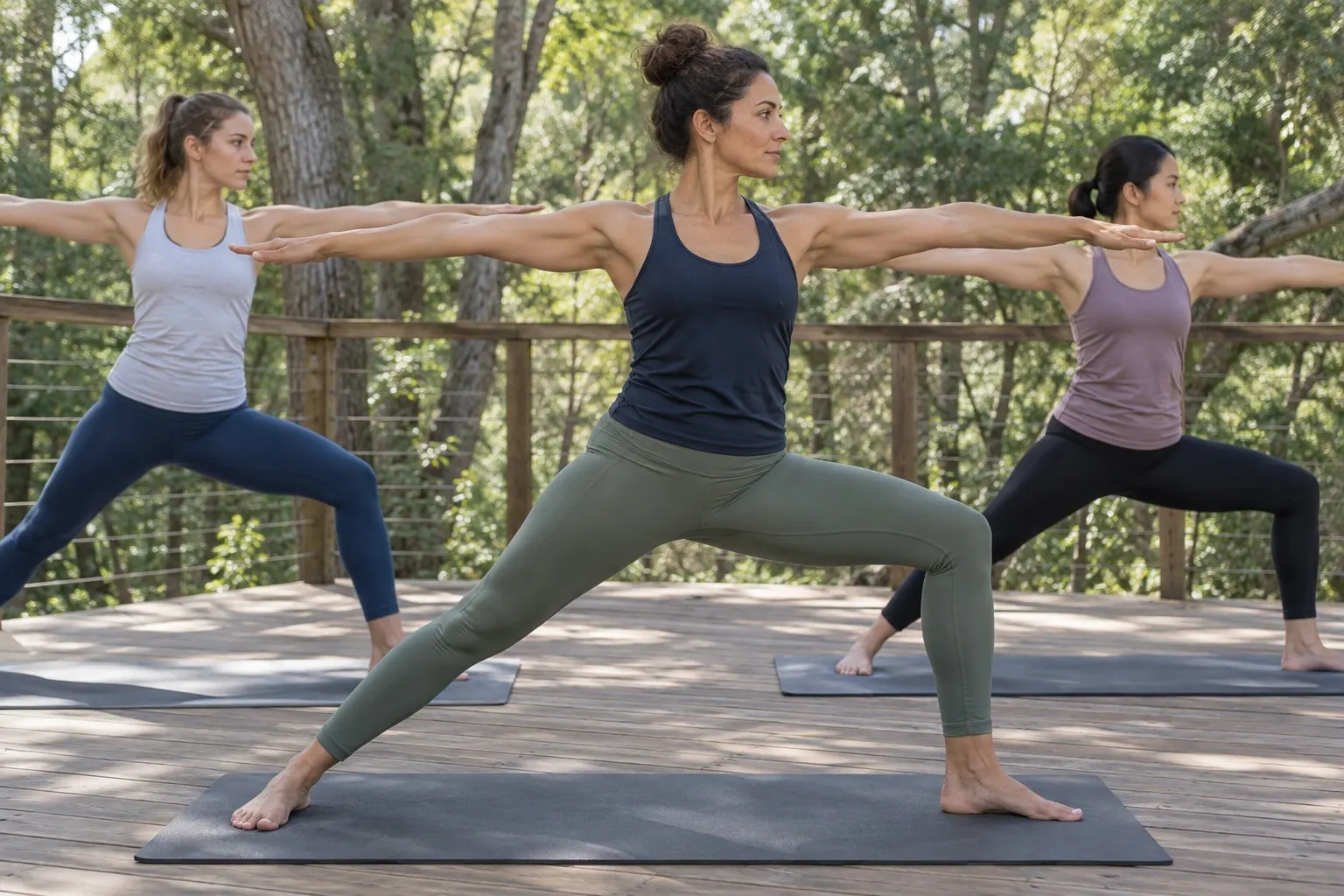
A category label such as “yoga leggings” or “sports bra” does not establish compression, opacity during a squat, waistband construction or bust support. Fiber percentages and fabric weight are not substitutes for those product tests. The current yoga leggings listing publishes 230 g/m²; the tights listing provides garment weight but no fabric-weight figure in the product details reviewed. Neither page gives a compression rating or a squat-opacity result.
For either legging, test waistband fit, coverage, movement and care with representative wearers. For a bra or top, assess the exact construction, coverage and support during the activities the studio plans to recommend it for. Keep those performance claims out of the product copy until the specific item has been checked; a crop top suitable as merchandise is not automatically a support garment.
Merchandise Versus Practice Wear: Two Different Businesses
The buying standard changes with use. A garment worn through class needs evidence about movement and repeated care; a top sold as an expression of studio identity needs design and fit approval. Those are different promises to the customer:
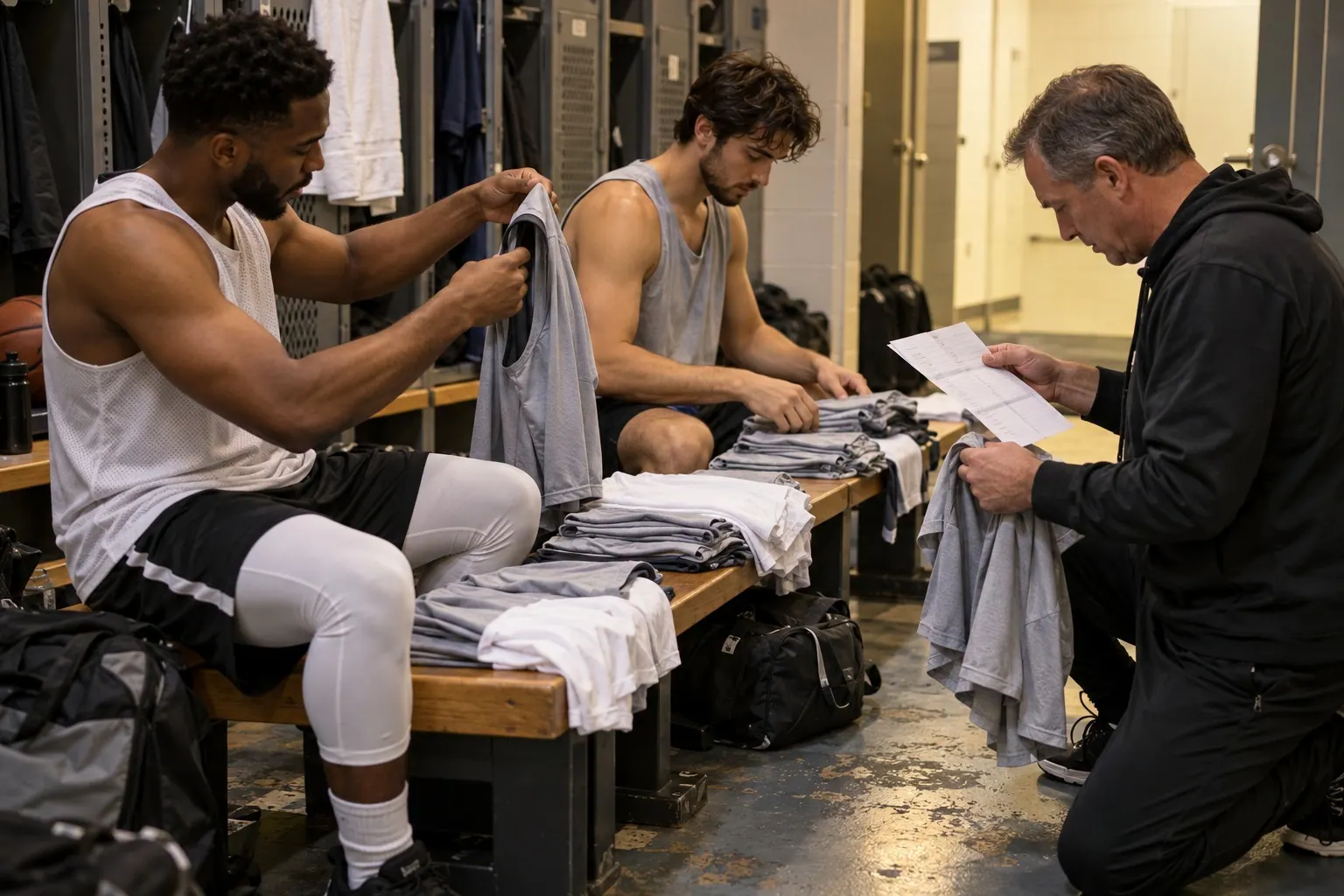
Practice wear is activewear: worn through sweat, stretch, inversions, and repeated use. It is qualified by composition, construction, opacity, support, and care after repeated use. Practitioners will judge the studio’s recommendation by how the garment behaves on the mat.
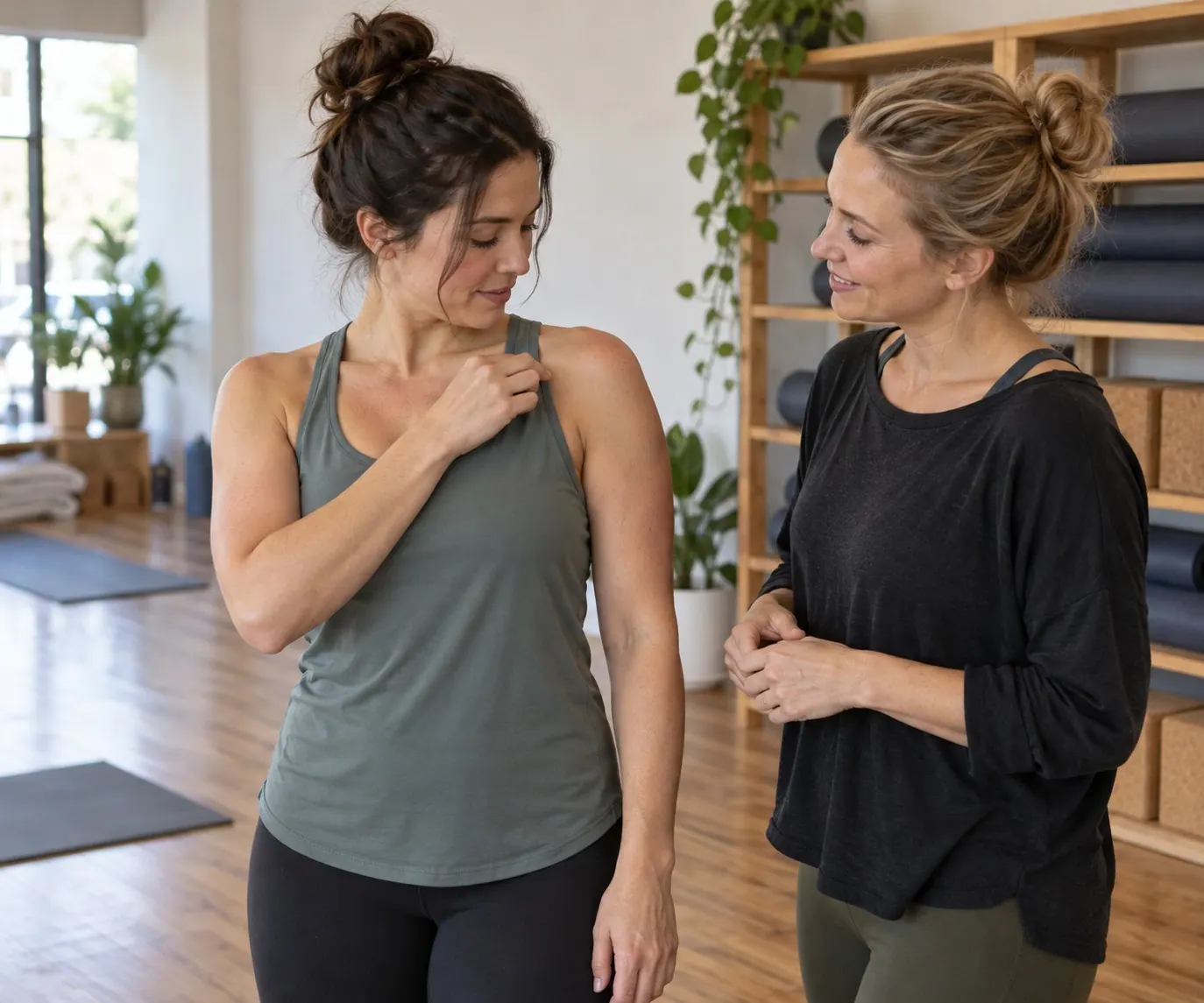
Studio merchandise is lifestyle apparel: the relaxed tee, the cropped top, or a printed legging sold as an expression of the studio. It still needs approval for fit, print, care and accurate product description, even when the studio makes no claim that it supports a particular practice. Its buyers may be community members expressing affiliation.
Yoycol lists both activewear and casual apparel, but a studio should distinguish its merchandise standards from any practice-wear or support claims. A design sample may be enough to assess print and fit for a casual product; a garment marketed for practice needs a more demanding evaluation, including movement, opacity in realistic lighting, care and repeated use. The studio should define what it has actually tested before recommending the product.
Wash Care: The Activewear Exception
Follow the selected product’s current care instructions rather than inventing a studio-wide claim. Both listings reviewed advise cold machine washing with similar colors and no bleach, ironing or dry cleaning; both allow low tumble drying. A studio may offer extra care suggestions only when supported by the product documentation and should avoid promising a particular garment lifespan without testing.
The Studio Program, Assembled
| Program layer | Lead product (verified) | Qualification bar |
|---|---|---|
| Instructor practice wear | High-Stretch Tights listing: 87.5/12.5 nylon-spandex, 0.099 kg, sizes S–2XL | Wear testing for fit, opacity, movement and care |
| Community practice wear | Yoga Leggings listing: 92/8 polyester-spandex, 230 g/m², sizes S–6XL | Sample fit, opacity during movement and size-curve coverage |
| Tops / bras | Product-specific construction and sizes | Sample with representative wearers; substantiate support claims |
| Studio merchandise | Casual printed apparel | Design review and sample for fit/print |
| Retail packaging | Any available branding service on the selected product | Confirm options and additional cost in the live listing |
Both cited listings are made to order and have no minimum order quantity. The Yoga Leggings category listing shows an average production estimate of 4.6 days, 5.8 days for 90% of orders and a 10-day production guarantee, while its product page describes a typical lead time of 2–4 business days. The tights page lists 7 days average, 10 days for 90% and a 14-day guarantee. Production is not transit: shipping time and cost vary by destination and shipping method. A studio should confirm the live estimates, sample lead time and order total before announcing a launch date. (Yoga Leggings listing; tights listing; shipping information)
Before selling either item as class wear, decide whether the available evidence is a listing, a single wearer’s review, or a repeat-use trial. Keep the product description at that level. That lets a studio offer merchandise confidently without turning a category label into a performance guarantee.