A new beauty brand does not need to begin by buying reach. It needs a clear product promise, useful demonstrations, and a way to learn which people respond and why. Content, creator relationships, professional recommendations, affiliates, and email can all contribute, but each asks for different resources and produces different evidence.
These channels are not free. They require time, samples, shipping, commissions, service, or careful coordination. Their value is not that they guarantee sales; it is that they can help the founder learn how to explain the product and where customer interest comes from before committing more money to paid promotion.
Begin with the product evidence
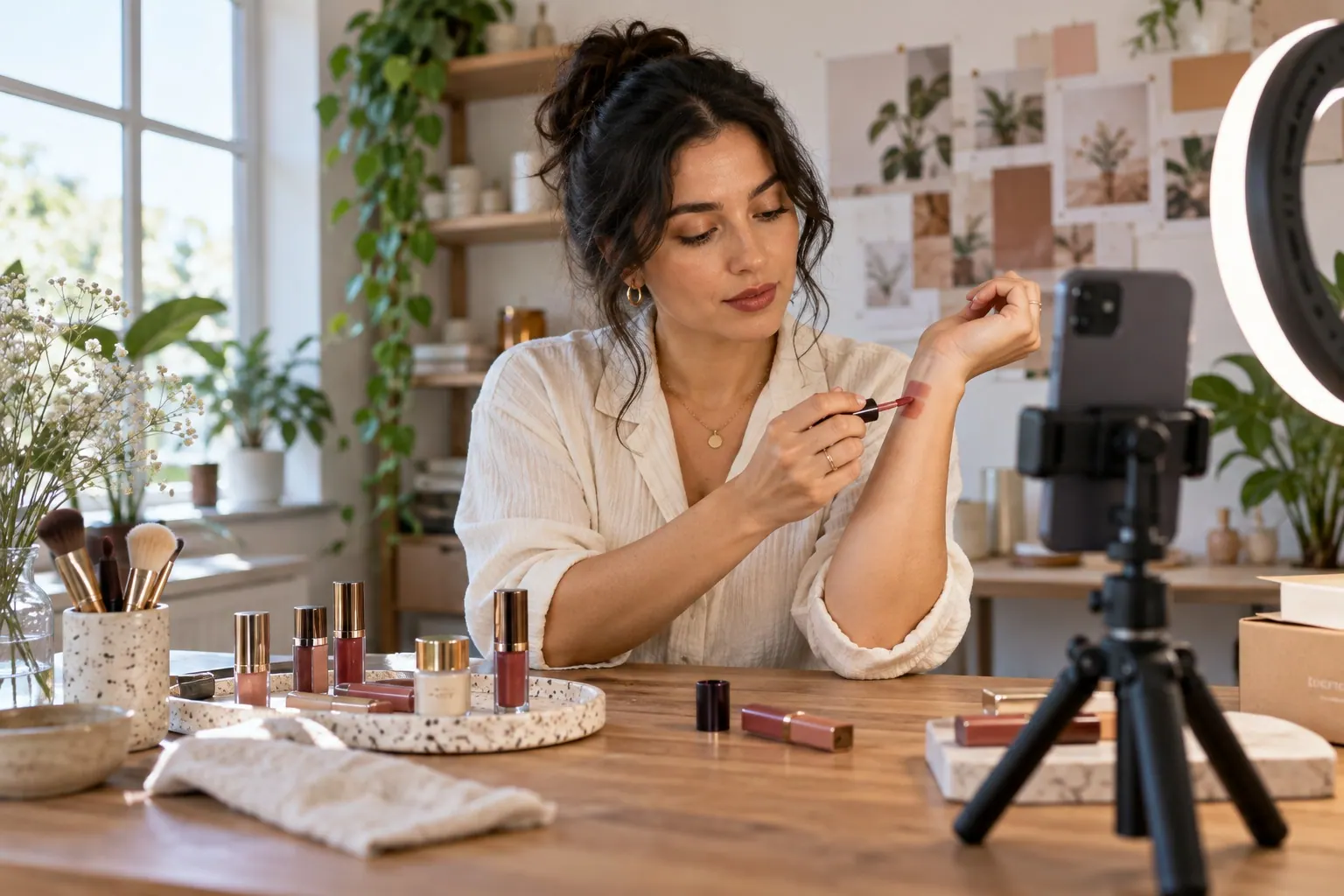
Before inviting attention, define who the product is for, what it does, what it does not promise, and what a buyer needs to know to decide. A shade demonstration, a comparison of finishes, or an explanation of application can be more useful than a polished brand announcement when the customer is still asking practical questions.
Use samples and product tests to support what you say. Keep personal observation separate from supplier information and from claims that need independent substantiation. In the United States, FDA says cosmetics claims must be truthful and not misleading; statements that a product treats disease or affects body structure or function may bring it under drug requirements. Rules differ by market, so confirm the claims and labeling requirements where the brand sells. (FDA: Cosmetics Labeling Claims).
Build a repeatable founder-content practice
Founder content works best when it answers questions the intended customer already has. Choose a few formats that fit the product and the founder’s capacity:
- Show how a shade or finish looks under more than one ordinary lighting condition.
- Explain what the founder learned from a sample and what remains unverified.
- Compare two products only when the difference is meaningful to the buyer.
- Demonstrate application, packaging, or a routine without promising a result the evidence cannot support.
- Answer a recurring customer question in a clear, short format.
Record the question behind each piece of content, the intended audience, the link or next step, and the response it receives. A high view count can show distribution; it does not establish that a product fits, that a viewer trusts the claim, or that a sale will be profitable. Comments, saves, product-page visits, questions, and completed orders answer different questions and should be read separately.
Choose a posting rhythm the founder can sustain while still serving customers and checking product details. Review what is useful after enough examples exist to compare; a fixed number of posts or days cannot guarantee that a channel has been adequately tested.
Invite creators with clear terms
Product seeding means offering a product to a creator so they can decide whether to use it or discuss it. Before sending anything, be clear about whether a post is requested, what product is included, who pays shipping, whether the creator may decline, and whether the brand wants permission to reuse any content. Permission to repost, edit, or use a creator’s image in an advertisement should be agreed in writing with its scope and duration.
Choose partners for audience fit, the questions their viewers ask, the way they explain beauty products, and whether their content suits the brand. Follower count alone does not show that their audience wants this product. Start with a small, trackable collaboration that the brand can fulfill and review carefully; do not promise a creator a particular result.
If a creator receives a free or discounted product with an expectation that they will promote or discuss it, the relationship may be material and should be clearly disclosed when they endorse the product. The FTC’s guidance distinguishes that arrangement from a sample provided to anyone without a promotional expectation. Make disclosure instructions understandable and near the recommendation; a platform label may not communicate every relationship by itself. (FTC: Endorsement Guides FAQ).

Develop professional relationships carefully
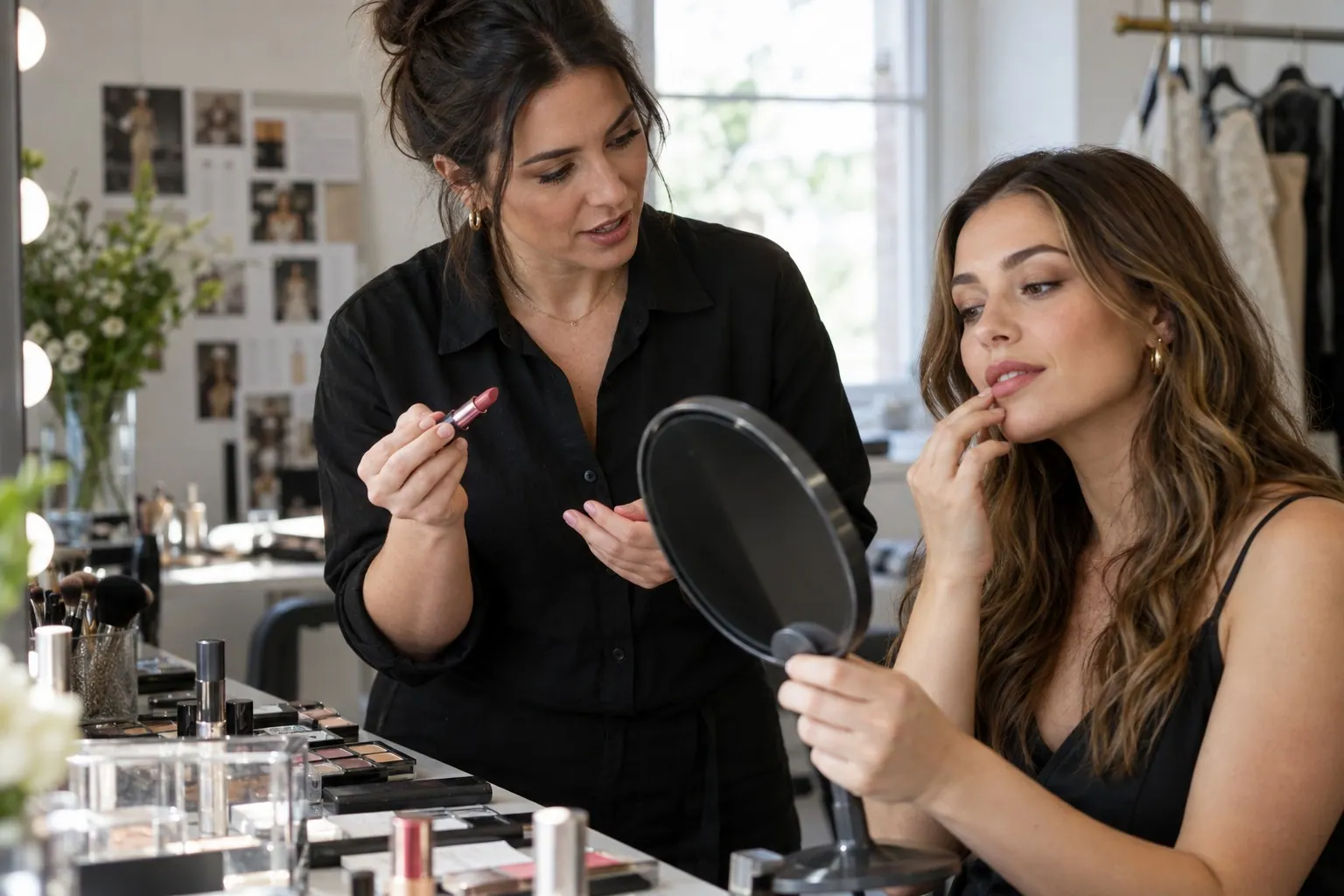
Makeup artists, salons, and other beauty professionals may help customers discover products in the context of a service. Approach them with a specific reason the product fits their work, a sample they can evaluate, and clear terms for any purchase, display, referral, or paid recommendation. Ask what would make the product useful in their setting instead of assuming that professional status automatically guarantees trust or sales.
If the relationship includes payment, free products, discounts, commissions, or another benefit connected to a recommendation, disclose it clearly. Keep the professional’s actual experience and opinion intact, and give them accurate product information. If a professional buys inventory for resale, document price, order size, delivery, return, and restock terms before treating the channel as a growth source.
Use affiliates only when the economics support them
An affiliate program can make recommendations measurable through a link or code and pay a commission when a qualifying purchase occurs. Set the commission after calculating the contribution available on the order:
Contribution after referral = net order revenue − product and fulfillment costs − payment fees − discounts − expected returns or replacements − affiliate commission.
Include any shipping subsidy and recurring platform costs in the broader business calculation. Define which orders qualify, how returns affect commissions, when payment occurs, whether coupon sites may participate, and what content or claims are allowed. A tracking link shows attribution according to the system’s rules; it does not prove the affiliate caused every purchase.
Affiliates should disclose commissions clearly near their recommendations. Do not assume that “affiliate link” alone is understood by every reader. The FTC guidance recommends clear disclosure of the financial relationship so people can evaluate the endorsement. (FTC: Endorsement Guides FAQ).
Build an email relationship with permission
An email signup should offer a useful reason to hear from the brand: a launch update, a shade guide, a restock notice, or a concise product education series. Explain what messages subscribers can expect, collect only what is needed, and make it straightforward to unsubscribe. An email service provider stores and processes the list; the brand still needs to manage consent, access, security, and applicable privacy duties.
In the United States, the FTC’s CAN-SPAM guidance covers commercial email and includes requirements such as accurate sender information, a non-deceptive subject line, a valid postal address, and a working opt-out process. Other jurisdictions may impose different or additional consent rules. Check the requirements that apply to the sender and recipients before importing contacts or starting a campaign. (FTC: CAN-SPAM Act Compliance Guide).
Community can grow through useful exchanges rather than manufactured loyalty: answer shade questions, invite feedback with consent, and ask customers before featuring their photos or comments. A subscriber list is a communication channel, not proof of ownership over a customer’s attention or a guarantee of repeat sales.

Measure what each channel teaches
Track the audience, offer, direct costs, time, content, clicks, questions, orders, refunds, and follow-up for each channel. Label links where useful, while allowing for cross-channel discovery.
| Channel | Useful evidence | Costs and limits to track |
|---|---|---|
| Founder content | Questions, saves, product-page visits, and orders tied to a clear next step | Production time, consistency, and platform distribution changes |
| Creator seeding | Product fit, honest feedback, disclosed posts, and permissioned content | Sample and shipping costs, usage rights, and uncertain posting or sales |
| Professionals | Product evaluation, trial requests, and documented wholesale or referral interest | Samples, margin, service needs, and replenishment terms |
| Affiliates | Tracked orders and contribution after commission and returns | Commission, attribution limits, discount stacking, and partner oversight |
| Signups, clicks, unsubscribes, questions, and purchases | List quality, sending costs, consent, and applicable email rules |
Views and purchases answer different questions. Choose measures that show whether people notice the content, understand the offer, visit a page, buy, or return. These signals guide the next experiment; they do not guarantee results.
Decide when paid promotion is ready
Paid promotion is testable when the audience, offer, product evidence, fulfilment capacity, and contribution after variable costs are clear. Organic response can suggest a message to test; paid visitors still need separate measurement.
Set an affordable test budget, define conversion and contribution measures, and decide what would stop, revise, or extend the test. Cheap impressions or one successful post are not enough to scale; compare actual order economics, service workload, returns, and cash timing.
Organic work cannot replace product quality, reliable fulfillment, accurate claims, or workable pricing. It gives the founder a way to learn before increasing acquisition costs: share useful evidence, build transparent relationships, measure responses, and invest when results support the next step.